Can you train harder AND smarter?
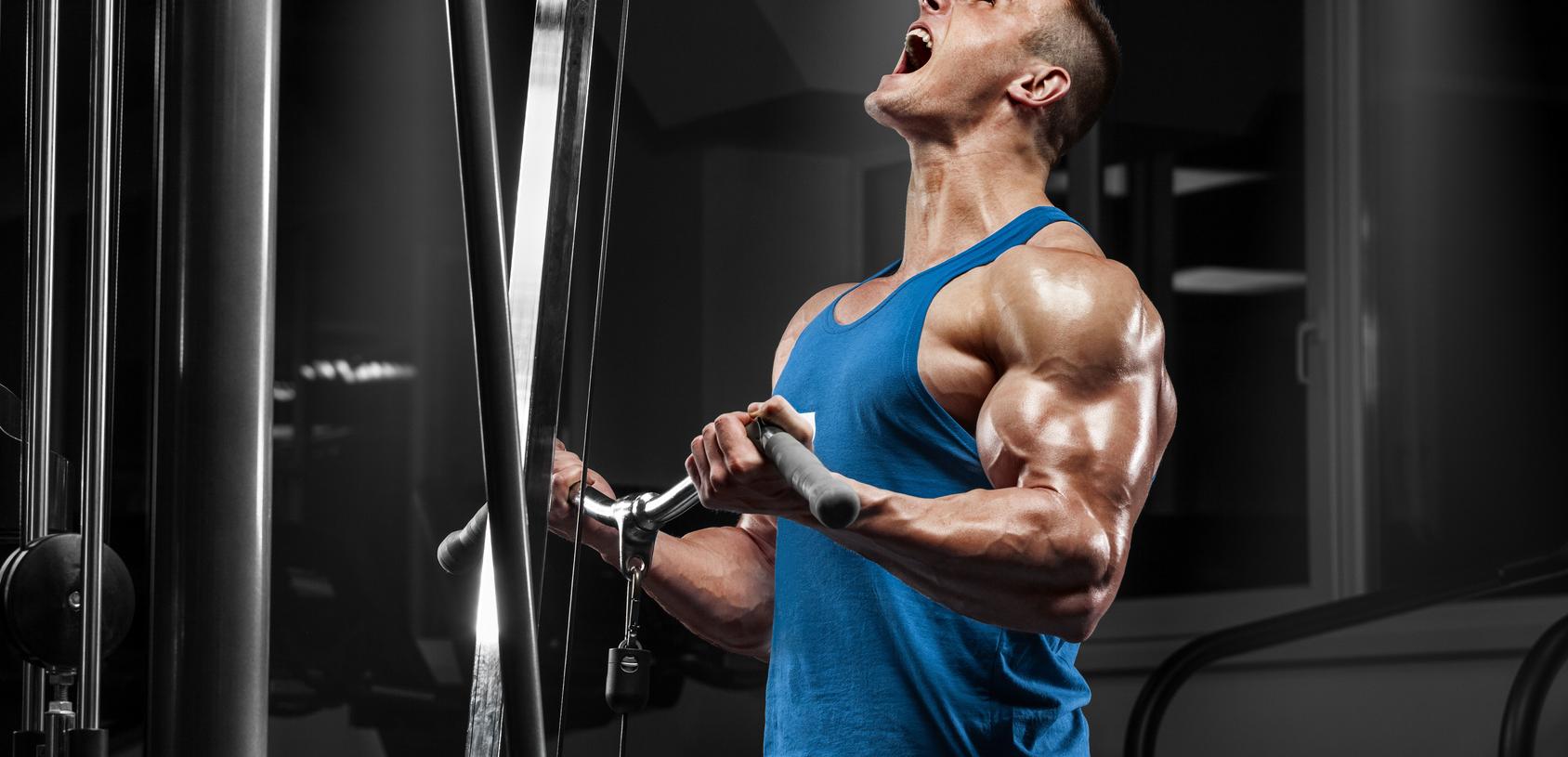
If you go to a gym and watch people train, you'll observe that most lift the weight up and down for a given number of reps, then put it down so they can resume toying with their phones. Most people will terminate their set when things start to get difficult, while others will push on and grind out a few more increasingly difficult reps.
The more determined will continue grinding out reps until the bar is travelling at snail's pace and eventually refuses to budge any further.
This latter approach is known as training to “momentary muscular failure” and many studies (not all) indicate this produces superior results when compared to non-failure training.
But a set doesn't have to end when you hit failure. If you've got an iron will, you can always step up to the next level and enter the realm of beyond failure training. This involves the use of intensity techniques that allow you to extend the set when mere mortals would have long since put the weight down.
Such techniques include forced reps, negatives, drop sets, rest-pause and partial reps. These techniques are especially popular among proponents of single set training, which helps explain why it is commonly referred to as High Intensity Training, or HIT (not to be confused with High Intensity Interval Training, or HIIT, a time efficient method for improving your cardiovascular conditioning).
While beyond failure training is often viewed as hardcore and a test of one's mettle, its ultimate purpose is not to prove one's toughness but to stimulate greater strength and hypertrophy gains.
So are set-extending intensity techniques effective for those purposes? Have they been shown in controlled experiments to produce greater strength and muscle gains than regular training?
The content below was originally paywalled.
Unfortunately, despite their widespread and decades-long use, little research has been performed on the efficacy of beyond failure techniques.
Forced reps - where a partner provides just enough assistance to help you complete an extra repetition or two - are commonly performed in the gym, sometimes as an intensity technique, and often inadvertently as a safety technique during "spotting." Despite their common use, I've not been able to find any studies comparing forced reps with regular training.
Continuing with partial reps after no more full reps can be completed is another way of training beyond regular failure, but again, no-one has bothered to test it against regular training.
The use of eccentric only (or negative) reps once regular failure has been reached is popular among HIT proponents, but apparently not with sports researchers.
The most studied set extension technique is drop sets, or what some researchers refer to as "breakdown" sets. This involves performing a set to failure, quickly decreasing the weight on the bar or machine, then immediately performing more reps to failure. There is no set rule as to how many "drops" one should perform; 1-3 drops seems to be the real-world norm, although researchers have studied the effect of up to 9 weight drops in a single set.
Some researchers have also examined a technique called rest-pause, which involves reaching failure then taking a brief rest (usually 5-15 seconds) before attempting more repetitions.
Because our focus is on time-efficient training, in this article I'll focus on studies examining these techniques in the context of single-set training. In some of these trials, all the groups performed single set training with one group performing regular sets and others using drops or rest-pause. In others, a single set group using these intensity techniques was compared with a group performing regular multiple set training.
Let's start with drop sets.
Berger and Hardage 1967 (single set only)
Berger and Hardage randomly assigned 50 technical college students with no previous weight training experience to one of two groups. Little baseline information was provided about the subjects, other than they were all male, untrained, and averaged 178.4 cm in height and 74.3 kg in weight. The initial mean bench press of the standard group was 155 lb, compared to 165.38 lb for the group that performed drop sets.
Both groups performed only the bench press exercise, three times a week for 8 weeks.
One group performed a single set of 10RM bench presses in standard fashion. The other group also performed 10 repetitions for one set, but each repetition required a maximum or near maximum effort. This was achieved by using the subject's 1RM load for the first repetition, then reducing the load gradually to allow a further 1-2 repetitions, until 10 reps had been completed.
This type of training would be risky and cumbersome when performed with free weights, so the training was performed on a Universal Gym. These are pin-loaded machines that were especially popular in gyms during the 1970s and 80s. The pin-loaded weight stack allowed researchers to quickly lower the weight so the subject could continue his set with minimal time lag.
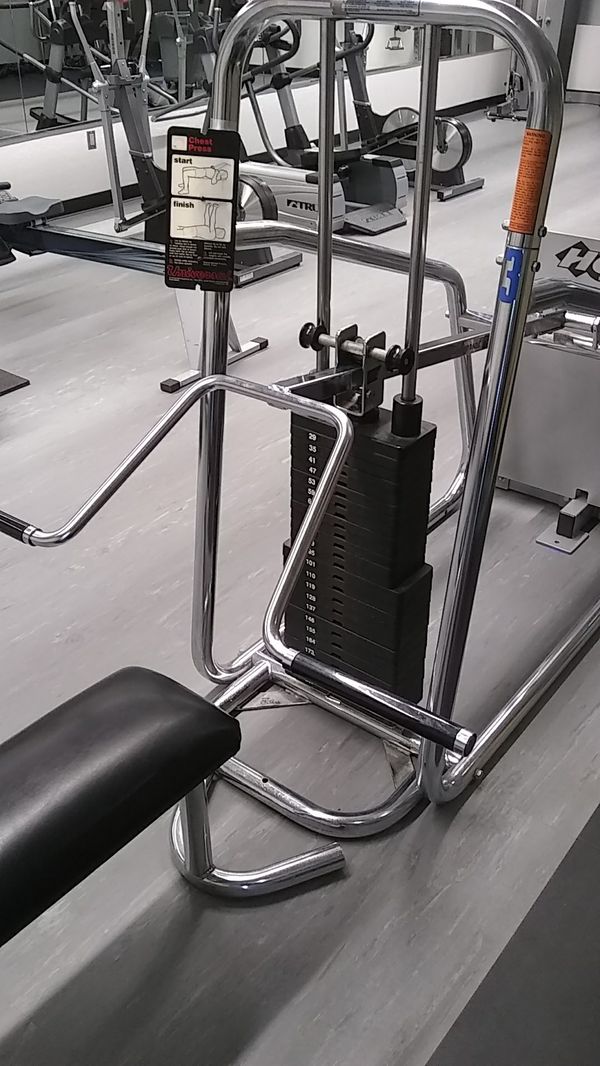
After 8 weeks, the standard set and drop set groups increased their 1RM on the Universal bench press by 21.66 lb and 29.81 lb, respectively. The difference in improvement was statistically significant, leading the authors to conclude their version of drop set training was superior to regular 10RM training.
Like Berger's oft-cited 1962 study comparing 1, 2 and 3 sets, this was a brief paper that lacked a lot of the detail now routinely included in modern papers. Regrettably, the weight training routine involved a single exercise, which is not how people train in real life. Berger and Hardage, however, would by no means be the last sports researchers to conduct experiments involving only a single exercise, as you'll learn shortly.
The real-life applicability of this study is limited. A set comprised of 9 drops is not practical, or safe, for use with free weights. It requires the use of pin-loaded equipment. Solo performance would be possible on machines where the weight pin is within reach of the user, otherwise a training partner or trainer would be required to quickly adjust the weight. Also, for safety reasons, I wouldn’t recommend thrice-weekly performance of a 1RM, which is effectively what the first rep of the drop set in this study was.
Fisher et al 2015 (Single Set Study)
Years later, Fisher et al compared two types of drop set routines with a straight set routine. Forty-one subjects (13 men and 28 women) were randomly assigned to one of three groups (5 people dropped out during the study). All subjects had at least 6 months of resistance training experience.
The three training interventions all involved single-set training to momentary muscular failure, performed twice per week. The exercises were performed using Nautilus, MedEx and Hammer Strength machines. A whole body routine was employed on both days, but with different exercises.
The control group performed all exercises for a single set of 8–12 repetitions to momentary muscular failure, with no further drop sets.
The other two groups were instructed to perform drop sets, but only on chest press, leg press, and pulldowns. These exercises were only performed in the first workout of the week. So of the 16 work sets performed each week, drop sets were used on only 3. Less than a fifth of the sets in the intervention routines contained the actual intervention. You might ask what the point of the study was, but the authors may have been working on the principle of avoiding too much of a good thing. Intensity techniques like drop sets place greater demands on your recovery abilities, although a mere 3 sets using the drop method, only once per week, seems a bit sparse.
For the chest press, leg press, and pulldown exercises, one drop set group performed a single set of 8–12 repetitions to momentary muscular failure, then immediately reduced the load by around 30% and continued performing repetitions to failure.
For these same three exercises, the other drop set group used a heavier load permitting only 4 repetitions; upon reaching failure, they decreased the load by around 20% and continued performing repetitions to failure, then reduced the load by a further 20% and again performing repetitions to failure.
There was an uneven balance of males to females between groups. The male:female ratios for the straight set, drop set and heavy drop set groups were 6:5, 3:8 and 2:12, respectively.
Participants were asked to refrain from any exercise away from the supervised sessions. The authors make no mention of dietary advice and present no nutrition data for the participants.
The participants were not tested for strength, only muscular endurance. At baseline, the subjects performed as many reps as possible with their estimated 8-12RM on the chest press, leg press, and pulldown exercises. This procedure was repeated at study's end. All groups increased the number of reps they could perform with this baseline weight, with no statistically significant difference between groups.
Little change was seen in body weight, fat mass and lean mass for any of the groups. The results did not change when male and female subjects were analyzed separately.
Given that drop set training comprised such a minor portion of the intervention workouts, it’s not surprising it failed to achieve any noteworthy effect.
Geissing et al 2012/2016 (single set vs multiple sets)
This German study involved 43 university sports students in their 20s, randomized to one of three groups:
Control (no weight training);
Single-set group + drop sets;
Traditional 3-set group.
Groups 2 and 3 trained twice a week, Monday and Thursday, using a whole body routine comprised of 7 Nautilus machine exercises and 2 body weight exercises (crunches and push-ups).
The workout was performed circuit-style, where subjects moved quickly from one exercise to another with little rest. After warming up, the HIT group performed a single circuit. The 3-set group, which performed 3 circuits in a session, rested 2-3 minutes between each circuit.
The 3-set group performed each set in traditional fashion, beginning with their 10 rep maximum (10RM) weight and terminating the set when it became impossible to perform another repetition using proper form. Once they were able to perform 15 reps, the weight was increased.
The single-set group also began training using their 10RM to failure. However, upon initially reaching the point of momentary muscular failure, they didn't terminate the set and move to the next exercise. Instead, the weight was immediately decreased by 10-15%, and the subjects resumed lifting the lighter weight to failure (usually another 2-3 reps). The weight was then decreased again by a further 10-15%, and the subjects again squeezed out a few more reps to failure.
The training phase of the study lasted ten weeks. Subjects were tested at weeks 0 and 11 for changes in 'strength' and body composition.
The 'strength' test was in actuality a muscular endurance test, where the subjects did as many reps as possible with 50% of their initial 10RM on every exercise, at week 0 and 11 (crunches and push-ups were performed using bodyweight only).
The subjects' body weights, fat mass, muscle mass, and water mass were also tested at weeks 0 and 11 via a Tanita bioelectrical impedance device.
This was a mixed study involving males and females. The only baseline characteristics reported were gender, age, height, weight and BMI. Male subjects were similar in both groups for these characteristics. Compared to the 3-set group, female subjects in the HIT group were slightly taller and lighter on average.
The two training groups were poorly balanced in terms of male subjects, with 7 men in the HIT group compared to only 4 in the 3-set group. The absolute numbers of females in each group were a little closer to parity, with 7 in the HIT group and 10 in the 3-set group.
Prior resistance training experience of the subjects was not reported; all we know is that they were "engaged in recreational sports."
Another shortcoming, which the authors acknowledged, was the lack of any dietary control or nutritional assessment. We know nothing about what or how much the participants ate during the study.
The Results
At week 11 the drop-set group, compared to the 3-set group, was able to perform far more repetitions with their initial 10RM on every exercise except two: The leg extension and crunch (crunches don't lend themselves to drop-set training and were presumably performed in traditional fashion).
However, perhaps due to the small number of subjects involved, only the differences in calf raise, bicep curls and leg curls attained statistical significance.
As for body composition, there was little mean change in body weight, body fat and fat free mass in either group. Body fat increased by 1.58% in the 3-set group, and barely changed in the HIT group (-0.2%). This is not surprising for a study involving only 2 hours or less per week of training, and where the subjects most likely ate their usual diet.
You'll notice I italicized the word mean above. There are two reports available for this study: the 2016 peer-reviewed paper, and a 282-page book published in 2012 that included not just the group means, but the individual results for each subject. I'll focus here on the muscle mass changes given that, along with strength gains, muscular hypertrophy is typically the key goal of weight training.
The individual male results were a mixed bag.
In the 3-set group, one male gained 2.2kg of muscle mass, two others gained 0.2 kg and 0.7 kg, respectively, while another lost -1.2 kg.
In the HIT group, five male subjects gained between 0.1 kg and 2.2 kg, while the remaining 4 lost between -0.7 kg and -2.4 kg of muscle mass.
The number of male subjects is too small and too disparate between groups to tell us anything of value.
The female results showed a more distinct pattern. In the 3-set group, five of the 10 women lost between -0.1 kg to -3.5kg of muscle mass, one experienced no change, while three gained between 0.2 kg and 1.8 kg. For some reason, the book contains no individual body composition or strength change data for the tenth subject (participant "b26").
In the HIT group, six of 7 women gained muscle mass, with 3 participants gaining 2.2 kg to 2.3 kg. The sole exception was a female participant who lost -1.7 kg.
So the stars of this study were the female HIT subjects. Interestingly, when the study participants were asked about their personal satisfaction with the improvements they made in terms of muscle gains and fat loss, the males in the 3-set group were the least satisfied (averaging 3 out of 10). Not surprisingly, the HIT females were the most satisfied (6/10), followed closely by HIT males (5.6/10) and 3-set females (5.3/10).
Why did the female HIT subjects make the best muscle mass gains?
For muscular hypertrophy to occur in slimmish folks normally requires an excess of calories. In the absence of a caloric excess, it is possible for a "repartitioning" effect to occur. That is, for body fat to supply the calories required to produce the extra muscle mass. Fat is burned and muscle is built at the same time. It's the best of both worlds, but becomes less likely the leaner one becomes. Females, however, generally carry more bodyfat than males, which increases the potential for a repartitioning effect to take place.
Of the 6 HIT women who gained muscle, only one experienced a decline in body weight. She and two other women lost body fat; those other two did so despite increasing their bodyweight, indicative of a repartitioning effect. The other three increased body weight and body fat, indicative of a caloric excess that increased overall body, fat and muscle mass.
So these results tentatively suggest that, if sufficient calories are available from diet or body fat stores, the single set/drop set routine is superior for muscle mass increases.
The authors report that average workout time for the 3-set group was around 60 minutes, whereas the single set subjects took around 40 minutes to complete their sessions. Total training time over the 10 weeks was around 20 hours and 13.5 hours for the 3-set and HIT groups, respectively.
This was a small study with numerous limitations. Prudence prevents us from getting overly excited about small studies, because their results are more liable to the potential influences of uneven randomization, outliers (subjects with unusually large responses) and plain old chance. What it did show was that HIT drop set training can achieve good results with less time commitment.
Ozaki et al 2017 (single set vs multiple sets)
This Japanese study involved nine young men in their 20s who had not performed regular resistance training during the previous year. They were instructed to avoid other physical activities and not change their diet during the study.
The training regimen in this study involved a single exercise. Participants performed dumbbell curls two days per week for the first 2 weeks and 3 days per week in most of the final 6 weeks.
Each arm was randomly assigned to one of the following three conditions:
3 sets of 80% 1RM
3 sets of 30% 1RM
1 set of 80% 1RM, with four additional drop sets at 65%, 50%, 40% and 30% 1RM without recovery intervals between sets.
For the HIT group, five dumbbells of appropriate weight were prepared before the start of the training sessions and were exchanged within 5 seconds after reaching failure.
There were only 9 subjects in the trial. Being humans, each participant had only 2 arms, so they performed 2 of the above 3 training strategies during the study. This meant there were 6 subjects in each group.
Muscle growth was analyzed via a cross-sectional MRI mage of the biceps. All groups increased the thickness of their biceps to a similar degree.
The 3 x 80% RM group and the single set/drop set group experienced statistically significant gains in 1RM strength on the dumbell curl, although the absolute increases were small in all groups.
The 3 x 80% RM group and the single set/drop set group experienced statistically significant increases in the amount of torque generated during a 5-second isometric (static) contraction. No change was seen in the low load 30% RM group.
Not surprisingly, the 30% RM group experienced the greatest improvement in reps-to-failure with a 30% RM load. After 8 weeks, this group was able to knock out another 51 reps with their 30% RM on average, while the HIT group managed another 21 repetitions. The 80% RM group, in contrast, performed 12 less reps with 30% RM after 8 weeks, despite increasing their 1RM strength.
The major finding of this study, concluded the researchers, was that a single high-load (80% 1RM) set with additional drop sets descending to a low load (30% 1RM) without recovery intervals can simultaneously increase muscle thickness, dynamic strength, isometric torque, and muscular endurance in untrained young men. Furthermore, these training effects were achieved with significantly lower training time compared to typical resistance exercise protocols using high load only or low load only.
Fink et al 2018 (single set vs multiple sets)
This study was also conducted in Japan, although one of the co-authors of the paper was US researcher Brad Schoenfeld.
Sixteen active male college students (20-32 years) participated in the study. All had previous recreational experience in strength training but did not regularly train for more than 1 year before the experiment and agreed to refrain from any other strength training during the study.
The participants were randomly assigned to either a drop set group or normal set group. Both groups were well balanced at baseline in terms of age, height, weight and % body fat.
Once again, the training regimen consisted of a single exercise. This time, it was the cable triceps pushdown.
The drop set group performed a single set with an initial 12RM load, decreasing the weight by 20% each time failure was reached. This procedure was repeated for a total of 3 drops. Every time the point of failure was reached, a staff member adjusted the weight stack pin in order to minimize time loss between load changes.
The normal set group performed 3 sets to failure at 12RM with 90 seconds rest between sets.
The participants were asked to record total calories consumed every day for the period of the experiment. Self-reported dietary intake was similar between the two groups.
After 6 weeks, the HIT group’s triceps cross-sectional area increased 10% compared to a 5.1% increase for the 3-set group. However, the difference between groups was not statistically significant.
Both groups significantly increased their triceps push-down 12RM, with no significant between-group difference.
The Rest-Pause Method
Before discussing the paucity of research examining rest-pause, it's worth noting there are various ways to implement this technique.
The late Mike Mentzer was a big fan of performing a maximum single, followed by a 10-second rest/pause, then another maximum single. Another 10-second rest was allowed before performing the third rep. This third rep sometimes required a weight drop of about 20 percent, followed by up to a 15-second pause due to increasing fatigue. Mentzer thought four reps was best, "as you will not have the energy to exert yourself maximally after that."
I've tried this style of rest-pause, and didn't get much out of it. It's not a popular practice in gyms; whether that's because people are scared of using maximal weights, or others have experienced the same uninspiring results I did, I can't say. At any rate, I would advise novices to avoid it due to the maximum weights involved - three 1RMs and near-max in quick succession presents an increased risk of injury. The overriding consideration in training is safety , and I'm not about to advise anyone to tempt fate for the sake of a technique with so little evidence behind it.
A more commonly performed, and safer, method of rest-pause is to take a set to failure, rest briefly while taking some deep breaths, then squeeze out some more reps. A particularly grueling version of this method is the infamous "breathing squat." The traditional practice is to do a set of barbell back squats with one's 10RM, but strive for 20 reps by taking as many deep breaths as necessary between reps 10 and 20.
Giessing et al 2014 (single set only)
This study was headed by the same German researchers who performed Giessing 2012/2016 discussed above. In this trial, they compared three different variations of single set training:
Single set with repetitions performed to self-determined repetition maximum, meaning when they determined an inability to complete further repetitions if attempted (i.e. they predicted momentary muscular failure on the next repetition and thus ceased the set at that point), for a maximum of 12 reps;
Single set to actual momentary muscular failure (i.e. when they reached a point of concentric failure during a repetition), for a maximum of 9 reps;
Single set with repetitions performed to self-determined repetition maximum, then further repetitions with 5-20 seconds of rest between reps, for a maximum of 18 reps.
So in this study, the rest-pause group was not really training beyond momentary muscular failure. They began the rest-pause reps after subjectively concluding they were approaching failure, but sometimes several more repetitions can be performed in this state.
Regardless of the variation, all groups performed the same whole body routine twice a week and weight was increased after the cited number of maximum reps was attained.
Seventy-nine participants (54 males, 25 females) began the study, but due to attrition strength results were only available for 66 subjects and body composition outcomes were available for only 49 participants.
The groups were generally well balanced in terms of baseline characteristics, the exception being the ratio of males:females. This was 1.67:1, 2.43:1 and 3.33:1 in the RM, MMF and RM + rest-pause groups, respectively.
Strength was measured using an isometric testing device on several upper and lower body exercises. Isometric tests involve exertion against an immovable object at a fixed limb angle, so this study didn't assess actual improvements in the ability to successfully lift heavier weights.
The poorest isometric strength gains were seen in the non-failure group. The MMF group and the non-failure/rest-pause groups experienced greater improvements, with the effect size generally higher for the MMF group.
Body composition outcomes were measured with a Tanita bioimpedance device. No significant body composition changes were observed in the non-failure group.
The MMF group demonstrated statistically significant improvements in total muscle and fat percentage (i.e. a reduction in fat mass and non-significant increase in muscle mass).
Whole body changes for the non-failure/rest-pause group did not achieve significance and effect sizes were lower compared to the MMF results).
To recap, this study tells us little about rest-pause as a beyond-failure technique because it kicked in before the subjects reached MMF. What this study does indicate is that a half-assed set with additional rest-pause reps is better than a regular half-assed set.
It also tends to reinforce that training to failure is better than not training to failure. Training to what we subjectively believe to be one rep short of failure is not always that, because people can surprise themselves with how many extra reps they can really squeeze out when they grit their teeth and train like they mean it.
Prestes et al 2019 (single set vs multiple sets)
In this Brazilian study, the rest-pause group performed an initial set with 80% 1RM until failure. They then took a brief 20 second rest, before performing more repetitions to failure. The procedure was repeated until 18 repetitions had been achieved.
To equalize the repetition volume, the multiple set group performed 3 sets of 6 repetitions with 80% RM, with 2 minutes rest between sets.
Twenty-two subjects entered the study, but 4 were subsequently excluded due to non-compliance. Unlike the above studies, this RCT involved trained subjects who were accustomed to training 3-5 days per weeks with split routines and 3-4 sets of 8-12RM per exercise with the goal of muscle hypertrophy.
The 6-week program for each group consisted of four sessions per week in a split routine, in which each body part was trained twice-weekly.
The training sessions lasted around 57 and 35 minutes for the traditional and rest-pause methods, respectively.
According to the researchers, there were no differences in self-reported dietary intakes between the two groups.
The men in the rest-pause group possessed, on average, substantially higher body weight and muscle mass at baseline (by around 15 kg for both measures).
Both groups experienced similar increases in 1RM strength on bench press, leg press and bicep curl.
For localized muscular endurance, the rest-pause group performed significantly greater repetitions only on the leg press exercise, after adjusting for baseline performance. No difference between groups was observed on the bench press or bicep curl.
Muscle thickness of the arm, thigh and chest were tested before and after the six-week training period via ultrasound. Greater increases were seen for muscle thickness in the rest-pause group, but the effect sizes were small; only the difference in thigh thickness reached statistical significance.
Little change in body mass, body composition or circumference measurements occurred, and there was little difference between groups in these outcomes. The exception was body fat, which declined by 1.4 kg and 0.4 kg in the 3-set and rest-pause groups, respectively.
Conclusion
From the less-than-optimal research conducted to date, drop sets appear to be at least as effective, and more effective on some measures, than either single or multiple sets performed in standard fashion.
The rest-pause research involving single sets to date is terribly sparse. In one study, the rest-pause group did not train to MMF before instigating rest-pause, which tells us little about its utility as a beyond-failure technique. The other study weakly suggested benefits for rest-pause training, but the results were spotty and the body composition changes largely non-significant. The baseline characteristics were uneven, with a significantly higher mean body weight in the rest-pause group. The one meaningful take-home point is that the results attained by the single set/rest-pause group were achieved in less time than those attained by the multiple set group.
If you are new to resistance training, or are recommencing the weights after a long hiatus, then don't concern yourself with intensity techniques just yet. Focus on performing your work sets to failure, progressively increasing the weight used, and developing solid, safe technique on all exercises.
The Mandatory “I Ain’t Your Mama, So Think For Yourself and Take Responsibility for Your Own Actions” Disclaimer: All content is provided for information and education purposes only. Individuals wishing to make changes to their dietary, lifestyle, exercise or medication regimens should do so in conjunction with a competent, knowledgeable and empathetic medical professional. Anyone who chooses to apply the information on this substack does so of their own volition and their own risk. The author/s accept no responsibility or liability whatsoever for any harm, real or imagined, from the use or dissemination of information contained on this substack. If these conditions are not agreeable to the reader, he/she is advised to leave this substack immediately.
Leave a Reply