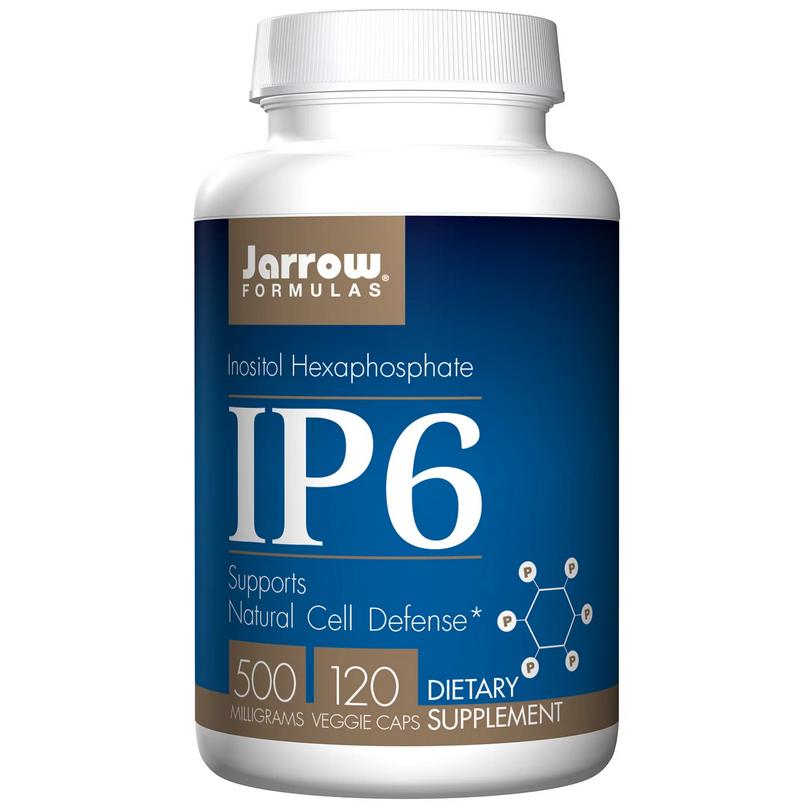
In response to my recent article about iron reduction, a reader wrote with some questions about IP6. I've decided to create a standalone post in response, as IP6 is something I've been regularly asked about over the years.
The content below was originally paywalled.
IP6 is the commonly used acronym for a substance variously known as inositol-1,2,3,4,5,6-hexakisphosphate, inositol hexakisphosphate, myo-inositol hexaphosphate, phytic acid and phytate.
If you've read about the anti-nutrients found in plant foods, most notably whole cereal grains, you'll recognize those last two terms. Phytic acid/phytate is well-known for its ability to bind to minerals like calcium, magnesium and iron, greatly reducing their absorption from dietary sources and instead increasing their excretion.
Anti-nutrients like phytic acid are one of the reasons I recommend avoidance or at least minimal consumption of whole cereal grains. Researchers who've studied malnourished populations in developing countries have also experimented with low-phytate foods in an attempt to improve nutritional status in those countries, where diets low in meat and high in minimally processed grains are common.
Which begs the question: Why would anyone want to take phytic acid as a supplement?
Interest in IP6 focuses on two main benefits: A possible anti-cancer effect, and its potential to reduce bodily iron stores.
Most of the IP6 cancer research has involved in vitro and animal experiments. Researchers from the University of Maryland School of Medicine, Baltimore, for example, found rodents supplemented with IP6 showed significant reduction in tumor number, incidence and multiplicity. Supplemental dietary fiber from bran (high in phytate) did not show any statistically significant effect on tumor incidence or growth.
Research in humans, unfortunately, is scarce. In one small pilot study of lung cancer patients, published in 2006, the authors reported a hefty 18-gram daily dose of IP6 produced a significant increase in rate of regression of preexisting atypical lesions over 3 months. However, this was not a RCT with a control group, rather the decrease was ascertained via comparison with the control group of a previous study.
Another small 3-month pilot study in breast cancer patients, published in 2010, found no difference in cancer markers but improvement in subjective quality of life scores.
In 2019, Mayo Clinic researchers reported on a melanoma patient who declined traditional therapy and opted to try over the counter IP6+inositol instead. "To our surprise," wrote the authors, "the patient achieved a complete remission and remains in remission 3 years later."
The product the patient took featured IP6 + inositol (800 mg/220 mg), five tablets in the morning and five in the evening daily. Scans performed six months later showed “significant improvement”, with further shrinkage occurring until the patient went into complete remission around 2 years after starting the supplement.
Please note I am not a doctor, I am not making any cancer treatment recommendations, only reporting on what has been published.
As for iron reduction, there is amazingly little research on the effect of IP6 for this purpose, as I explained to ML who recently asked:
"What is your current stance on IP6 to lower iron? Is it still recommended? Personally, I have been it on and off at 2g once a day though on an irregular basis (2-7 days gap between doses) and found that sometimes it seems to lower it, other times it seems to do nothing.
I also want to add that I donate blood as frequent as 'legally allowed' in my country, which is quarterly donation. Admittedly this is not as frequent as desired, but I noticed blood donation unsurprisingly produced the greatest reduction of ferritin in me sometimes a reduction of 100 mcg/l. The volume of blood donated is ~450-470mL (~1 pint). But since my baseline ferritin is numbering in the hundreds, I need another method to keep it low in between blood donations,hence my usage of IP6.”
My response:
"There is surprisingly little published research on the effect IP6 has on blood iron indices such as serum ferritin. Of the sparse trials involving oral IP6 supplementation in humans, the only one I could find reporting on serum ferritin was Sanchis 2018, and it's not much help.
In this study, Spanish patients with type 2 diabetes and no other major health complications were initially randomized to one of two groups. Both were given the same dietary instructions, but patients in the intervention group were additionally instructed to take 1 capsule of 380 mg of calcium-magnesium IP6 (Broken Laboratorios), three times daily with each main meal.
This was a crossover study, so those receiving IP6 for for the first 12 weeks underwent a 12-week washout period, at which time they ate the prescribed diet minus the IP6 capsules for a further 12 weeks. Those following the diet only during the first 12 weeks followed the same schedule in reverse.
Mean serum ferritin levels were already fairly low in the patients; median levels of serum ferritin were 49-55 mcg/l at the start of each 12-week phase.
After the 3 month intervention, serum ferritin had not significantly changed in either intervention (+2.74 mcg/l versus −0.86mcg/l in the IP6 and control treatments, respectively). Despite the lack of effect on ferritin, serum levels of HbA1c and advanced glycosylation end products (AGEs) were reduced in the IP6 phases compared to the control phases.
So that pretty much leaves us to self-experiment. To be honest, the response I've had from the few readers who've tried IP6 hasn't been great. I remember one saying his serum ferritin didn't change.
The first time I tried IP6 was mid-2000s. I'd have to pull my blood work out to give exact figures, but from memory my serum ferritin dropped from the 220s to the 130s, which is a hefty drop. At that point, I switched over to phlebotomy. I'd been researching the topic and the two main interventions being used by researchers were phlebotomy or deferoxamine (aka desferrioxamine or desferal, a medication used to remove excess iron or aluminum from the body).
I hadn't experienced any adverse effects of IP6, I just wanted to switch over to phlebotomy as it was the most widely-studied method. In addition to iron removal, I suspected that there might be an additional health benefit simply from removing blood and having your body generate 'fresh' blood to replace it. I've read similar musings elsewhere, but am not aware of any science to support it.
When I used IP6, I took a level teaspoon first thing in the morning on an empty stomach. I may have possibly been washing it down with grapefruit juice, which is known to enhance the absorption of certain supplements and drugs, but I can't recall for sure.
A few years ago, in response to reader questions and some of the uninspiring results they reported, I decided to try IP6 again and monitor the effect on my serum ferritin. That experiment came to a quick end when, within a week or so, I noticed my teeth starting to feel 'chalky'. It was weird, I suspected the IP6 was causing me to excrete minerals other than iron at an accelerated rate, so I quickly stopped. I was taking mineral supplements at the time.
Because of the dearth of research with IP6, and my suspicion it causes greater loss of non-iron minerals than phlebotomy, I recommend the latter.
If you exceed the upper reference range of serum ferritin, you could try asking your doctor to write up a script for more frequent withdrawals. This is actually standard treatment for hemachromatosis, but convincing many doctors you have iron overload is difficult unless your ferritin reading is off the chart.
If you can't get your doctor on board, you could try supplementing IP6 more consistently as a back-up to your periodic phlebotomies. I'd try it on a more regular basis, being sure to supplement with a good trace mineral formula (Trace Minerals Research and Vitacost have good ionic liquid mineral formulas). As noted, the research is terribly deficient in this area, so close self-monitoring will be necessary.
The other strategy is to up your volume of endurance exercise, although how effective that will be if your ferritin is in the hundreds is hard to predict. I have no trouble keeping my serum ferritin low during the warmer months, because my cycling mileage is higher. However, the effect seems to be in keeping my serum ferritin low after it has already been brought back to low end of normal range.
Good luck and keep me updated on how you progress."
The Mandatory “I Ain’t Your Mama, So Think For Yourself and Take Responsibility for Your Own Actions” Disclaimer: All content is provided for information and education purposes only. Individuals wishing to make changes to their dietary, lifestyle, exercise or medication regimens should do so in conjunction with a competent, knowledgeable and empathetic medical professional. Anyone who chooses to apply the information on this substack does so of their own volition and their own risk. The author/s accept no responsibility or liability whatsoever for any harm, real or imagined, from the use or dissemination of information contained on this substack. If these conditions are not agreeable to the reader, he/she is advised to leave this substack immediately.
Leave a Reply