I'm confident most readers know nothing good comes from bingeing on booze or chronic heavy drinking. But what about moderate alcohol intake?
It's the question any conscientious athlete who imbibes alcohol has wondered: "Will having a drink or two negatively impact my training?"
Despite the fact alcohol is the world's most widely used - and abused - drug, the research examining the effect of long-term alcohol consumption on training progress is very sparse.
Let's take a look at what the research has found so far.
A Very Especial Study
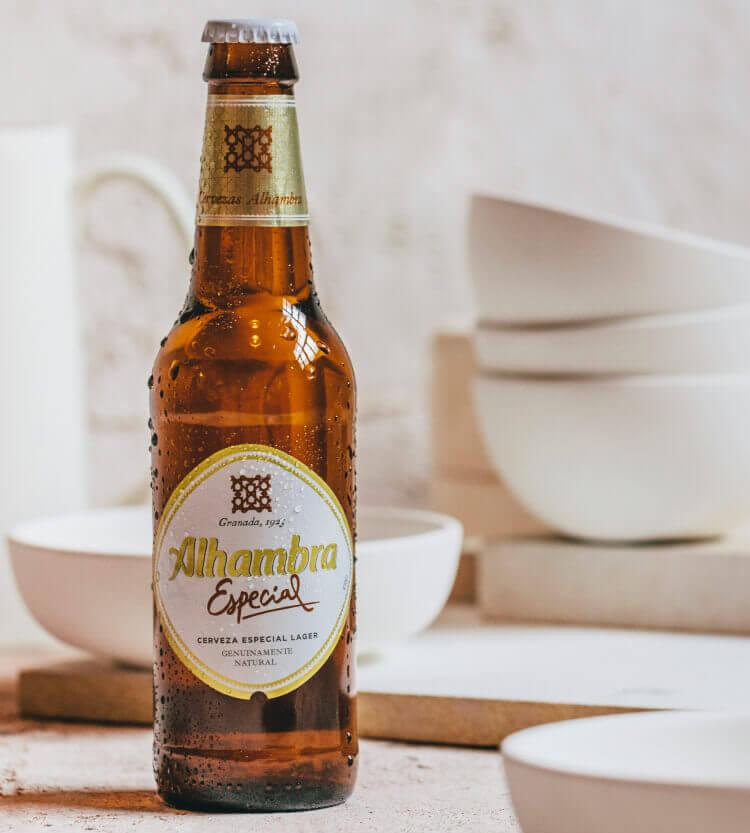
I'll kick things off with a study featuring two things dear to my heart: Spain and Alhambra beer.
The content below was originally paywalled.
In what was dubbed the BEER-HIIT study, researchers from the University of Granada set out to determine the effects of moderate alcohol consumption on a 10-week training program. They recruited healthy, young males and females (mean age 24) and had them train twice per week for the duration of the study.
The training was classed as HIIT, but also resembled what was once known as circuit training. Eight weight-bearing and bodyweight exercises (frontal plank, high knees, TRX horizontal row, battle rope, squat, deadlift, push up, and burpees) were performed in circuit fashion with a brief active rest between sets, for a total of 2 circuits. The exercise sessions were preceded by dynamic stretching and concluded with passive stretches.
The training participants were divided into four groups, all of which were instructed to consume the same amount of beverage from Monday to Friday. The volumes of fluid ingested were 660 ml for men and 330 ml for women (men ingested 330 ml with lunch and 330 ml with dinner, women ingested 330 ml with dinner).
The beverages were:
Alhambra Especial® lager beer, 5.4% alcohol;
Cruzcampo® alcohol-free beer;
Sparkling water;
Sparkling water with added vodka.
A fifth group of non-training subjects served as the study’s control sample.
Given that 12.7 ml of pure alcohol (ethanol) equals 10 grams of ethanol, the amount provided by the Alhambra Especial® and water+vodka drinks was 28 g and 14 g daily for men and women, respectively. Current alcohol guidelines in Spain recommend no more than 4 standard drinks (= 40 g pure alcohol) daily for men, and 2 standard drinks for women.
The alcohol groups were strictly instructed to drink a moderate amount of alcohol on weekends (660 ml/day for men and 330 ml/day for women). Those in the non-alcohol groups were requested to refrain from alcohol during weekends.
Two papers have been published for this study, one discussing body composition changes, the other detailing changes in various fitness parameters.
Compared to the non-training control group, all training groups gained around 2 kg of lean mass and lost an average of 1.4 kg body fat, with no differences according to beverage intake.
Absolute and relative VO2max increased in all the training groups, with no influence of beverage type.
All the intervention groups similarly improved total hand grip strength.
Power improvements were assessed via four types of jump test: squat jump, countermovement jump, Abalakov jump, and drop jump.
All training groups experienced similar improvements in all four jumps, with the exception of the water+vodka group. In that group, male participants experienced a slight worsening in countermovement jump performance, and both males and females experienced a slight deterioration in the Abalakov jump test. The differences were small and non-significant, so whether this was a chance finding or a real effect of vodka remains unclear.
What this study did show was that, in healthy young Spaniards, moderate daily consumption of beer with meals had no negative effect on body composition or fitness-related outcomes.
Alcohol and Exercise in Sedentary Australian Men
In an Australian study published back in 1993, sedentary men aged between 32-41 were recruited. Eligibility criteria included a minimum weekly ethanol intake of 210 ml. The men also had to have been performing less than 30 minutes of vigorous activity per week.
Of the seventy-five men that entered the study, mean BMI was 26.3 and average weekly ethanol intake was 481 ml (around 55 g ethanol daily).
The men were assigned to one of four groups:
Usual alcohol consumption, plus light exercise;
Usual alcohol consumption, plus vigorous exercise;
Low alcohol consumption, plus light exercise;
Low alcohol consumption, plus vigorous exercise.
Men assigned to the low-alcohol groups received six 750 ml bottles of Swan Special Light Lager (0.9% alcohol) weekly, while those in the usual consumption groups were given the same quantity of Swan Lager (5% alcohol). Ethanol intake dropped markedly in the low-alcohol group, but barely changed in the usual consumption group.
The exercise routine in this study consisted of three sessions per week of stationary cycling. Subjects in the light exercise group pedaled against zero resistance. Those in the vigorous group performed a warm-up, then cycled at 60-70% of maximum workload for 30 minutes, finishing with a 5-minute cool-down.
As you might expect, there was no change in VO2max in the light exercise groups. Both of the vigorous exercise groups experienced significant improvements in VO2max, with near-identical improvements in the low-alcohol and usual alcohol intake groups.
The only body composition markers measured were BMI, which remained unchanged in all groups, and waist:hip ratio, which declined slightly and similarly in the two vigorous exercise groups.
In contrast, systolic and diastolic blood pressure fell in the no-alcohol groups only (by 4.7 mmHg and 1.9 mmHg, respectively).
These are the only two studies I have found so far looking at the effect of chronic alcohol consumption on training results. Clinical trials of any sort involving chronic alcohol consumption are rare, due to ethical considerations and the potential health risks of randomizing people to consume alcohol.
There have been several studies that examined the effect of acute alcohol consumption on performance and/or recovery during and after single bouts of exercise. I'll discuss some of the relevant ones below.
Alcohol versus Glycogen Replenishment
Vigorous activity depletes glycogen stores in muscle, and this depletion is largely responsible for the famous "hitting the wall" or "blowing up" phenomenon, where an athlete feels like they've run out of gas. This is why it is now common for athletes in events lasting an hour or more to consume a carbohydrate drink while training or competing. It's also important for people engaged in regular, vigorous training to replenish glycogen stores promptly between training sessions. Failure to do so can lead to prolonged glycogen depletion, impaired recovery, poor performance, immune suppression, muscle loss and increased susceptibility to low-carb brainwashing about "fat adaptation".
No-one wants that.
Australian researcher and author Louise Burke and her colleagues examined the effects of alcohol intake on post-exercise muscle glycogen restoration in well-trained cyclists. All subjects completed vigorous bouts of glycogen-depleting exercise lasting over two hours on 3 separate occasions, adhering to a different recovery protocol in random order:
A control diet, composed exclusively of high glycemic index carbohydrate-rich foods. Carb intake equated to 7 grams per kg bodyweight per 24 hours.
An alcohol + carbohydrate diet, consisting of the control diet plus 1.5 g/kg of alcohol consumed as vodka (divided into 6 equal doses and consumed every 30 minutes during the first 3 hours of recovery).
An alcohol-displacement diet, also featuring 1.5 g/kg of alcohol. However, in this condition, the energy equivalent of this alcohol was countered by removing an equal amount of carbohydrate from each of the meals. Thus, total carb intake in this condition was 4.4 g/kg per 24 hours.
After eight hours, glycogen replenishment was significantly lower in the alcohol-displacement condition compared with control, and there was a trend to lower replenishment with the alcohol + carbohydrate diet.
At 24 hours post-exercise, glycogen storage was still significantly lower with the alcohol-displacement diet compared with control treatment. However, there was no difference in glycogen storage after 24 hours of recovery between the alcohol + carbohydrate and control diets.
So when alcohol partially replaces carbohydrate intake after vigorous exercise, it impairs glycogen replenishment both 8 and 24 hours afterward. Consuming alcohol in lieu of carbohydrates after vigorous activity isn't very smart, but participants of team sports like rugby and Australian Rules football have never been known for their intellectual prowess. Their drunken, degenerate post-game antics are a regular fixture of local media coverage, so use them as a great example of what not to do.
In this study, consuming alcohol in addition to a high-carbohydrate intake resulted in slightly lower but statistically non-significant glycogen replenishment at 8 hours post-exercise, but no impairment whatsoever at 24 hours. It's important to note that the amount of alcohol used in this study was large, and resulted in a mean blood alcohol level that peaked at 0.12 - almost 2.5 times the legal Australian driving limit.
So please don’t try it at home. Or anywhere else.
Alcohol's Effect on Muscle
New Zealand researchers have examined the effect of consuming alcohol after resistance-training workouts. Their studies used heavy eccentric exercise, which is the lowering or "negative" portion of a weight training movement. This method was chosen because it reliably causes significant muscle damage, which reliably gives researchers something to measure.
Their first two studies (Barnes et al 2010 and 2011) subjected men to workouts containing 3 sets of 100 maximal eccentric quadriceps contractions on two separate occasions in crossover fashion. In both studies, men were fed a mixed meal immediately after the workout, then 30 minutes later given either Smirnoff vodka and orange juice or orange juice only over a period of 90 minutes.
The amount of alcohol administered in the first study was 1 g per kg of bodyweight; in the second study, it was 0.5 g per kg of bodyweight.
As expected, the bouts of heavy eccentric exercise resulted in significant reductions of peak and average torque in the quadriceps at 36 and 60 hours post-workout.
The 1-gram alcohol dose significantly worsened these reductions, indicating impaired recovery.
The 0.5 gram dose appeared to have minimal impact, although at 60 hours differences in peak and average eccentric torque were noted, with the OJ group returning to above previous values and the OJ+vodka group still showing a small loss. The differences, however, were not statistically significant.
The third NZ study featured eight female subjects and a dose of 0.88 g alcohol per kg bodyweight. The researchers officially concluded alcohol produced no detrimental effect on torque at 36 and 60 hours post-workout, but Figure 1 of the paper does show greater reductions in isometric, concentric and eccentric torque at both time points for the alcohol treatment, excepting eccentric torque at 60 hours.
The researchers did note in the discussion and limitations sections of the paper that the low participant number may have rendered the study statistically underpowered, with some p-values not quite reaching significance. That a near significant effect despite the low subject number existed for peak isometric tension (p = .077), the researchers noted, "suggests that alcohol may affect isometric muscular performance up to 60 hr post ingestion compared with that of orange juice."
It should be noted that the exercise protocols in the NZ studies bear little relevance to the average trainee. Seriously, anyone performing 300 heavy eccentric repetitions per workout is clearly a few tiles short of a roof.
In Parr et al 2014 (of which Louise Burke and noted sports scientist Stuart M. Philips were also co-authors), eight physically active males completed 3 experimental trials comprising 865 reps on the leg extension (at 80% of 1 repetition maximum), followed by continuous (30 minutes, 63% of peak power output) and HIIT cycling (10 x 30-second sprints at 110% PPO, separated by 30 seconds of active recovery).
Again, anyone outside of a lab performing 865 repetitions per workout on the leg extension probably needs some life guidance, but let's push on.
Immediately, and 4 hours post-exercise, the subjects consumed either:
500 mL of whey protein (25 g protein);
The same amount of protein plus alcohol (1.5 g/kg body mass);
25 g of maltodextrin (carbohydrate) plus alcohol (1.5 g/kg body mass).
Subjects also consumed a carbohydrate meal (1.5 g carbohydrate/kg body mass) at 2 hours post-exercise.
The alcohol ingestion protocol began 1 hour post-exercise and was consumed in 6 equal portions of 1 part vodka (60 ml) to four parts orange juice (240 ml) during a 3-hour period.
Muscle biopsies were taken at rest, 2 hours and 8 hours post-exercise.
Despite the high alcohol intake, blood alcohol levels peaked at 0.06 and 0.056 in the alcohol+carb and alcohol+protein treatments, respectively.
The key finding of this study was that post-workout mTOR signaling (involved in cell growth and protein synthesis) and rates of muscle fibre protein synthesis, were impaired by the ingestion of 1.5 g/kg of alcohol.
The effect was most evident (37% reduction in rates of myofibrillar protein synthesis) when alcohol was consumed in the absence of post-exercise protein, as is likely to occur when intoxication reduces an athlete’s compliance to sound recovery practices (i.e., they’re too busy getting plastered with their similarly clueless teammates).
However, even when protein was consumed in amounts shown to be optimally effective to stimulate myofibrillar protein synthesis during post-exercise recovery, the intake of alcohol reduced MPS by ~24%, representing only a partial ‘rescue’ of the anabolic response compared with protein alone.
Conclusion
The Spanish BEER-HIIT study found that moderate drinking, at levels below Spain's recommended upper limit, had no negative impact on body composition or training outcomes in free-living adults in their 20s and late 30s/early 40s.
The Australian study found not-so-moderate drinking, at levels above Australia’s current recommended upper limit, seemingly had no negative impact on the response to cardiovascular exercise in otherwise sedentary men. However, regardless of exercise intensity, only the low-alcohol groups in that study experienced a drop in blood pressure.
Interestingly, current Australian drinking guidelines for men are similar to those of Spain, which have been criticized for being among the laxest in the world.
Both countries deem a "standard" drink to contain 10 grams of ethanol, and set the upper daily limit of alcohol consumption at four standard drinks for men. Even the United States - not exactly a country that springs to mind when one mentions moderation - recommends limiting alcohol intake to 2 drinks or less in a day for men and 1 drink or less in a day for women. France, renowned for red wine and champagne, recommends a similar limit to the US.
But while Spain sets the upper limit at 2 standard drinks for women, Australia - in its sickening eagerness to be a woke dystopia that ignores the very real differences between genders - irresponsibly sets the same upper limit for women as men, at 4 standard drinks daily.
Authorities here are clearly non-plussed by the fact that a recent global alcohol study found Australian women to be the most likely female population to end up in an emergency ward due to alcohol intoxication.
Gotta work that depopulation agenda from all angles, I guess...
Australian women make an interesting case study in this regard. After decades of complaining about toxic masculinity, they seem hell-bent on doing all they can to make themselves as unattractive as possible to non-toxic males. They then wonder why Australian men increasingly turn to foreign brides in their search for a non-alcoholic, non-feral life partner.
But I digress.
The studies examining the effect of alcohol on recovery from resistance-training workouts used amounts that would equate to 37.5 g - 112.5 g for a 75 kg individual, consumed during a 3-hour period beginning 30-60 minutes after training.
While two of the eccentric-workout studies concluded there was no detrimental effect of 0.5 g/kg or 0.88 g/kg on post-workout recovery, a close look at the data in those studies reveals decrements whose statistical significance may be masked by small subject numbers.
The relevance of these studies is hampered by the fact they involved ungodly volumes of heavy eccentric contractions. Never in all my years on this planet have I seen or heard of someone doing 300 heavy negatives per workout. If I ever do, I'll probably approach them and ask in the most compassionate voice I can muster, "R U Ok?"
The Barr study is more representative of how many people train, although 865 reps on the leg extension is getting a wee bit ADD. That study found, to no-one's surprise, that an immoderate alcohol intake following the workout impaired muscle protein synthesis, even after ingestion of a high quality protein source (whey protein).
If you drink moderately - truly moderately - with meals, the evidence so far suggests it will have little-to-no impact on your training.
That same evidence suggests that immoderate alcohol intakes after training can impair muscle recuperation and growth. I hope none of my readers drink heavily or engage in binge drinking; if so, it's a self-destructive behavior that needs to be remedied pronto.
As I've stated previously, if you don't currently drink, there's little reason to start. The claim that moderate drinking reduces mortality looks to be a feel-good fudge stemming from research that failed to account for the presence of recent abstainers who were forced off the drink due to health problems.
Stay classy,
Anthony.
Leave a Reply