We interrupt our coverage of B-grade crisis actors to bring you a series of nutritional supplement articles that might extend your life.
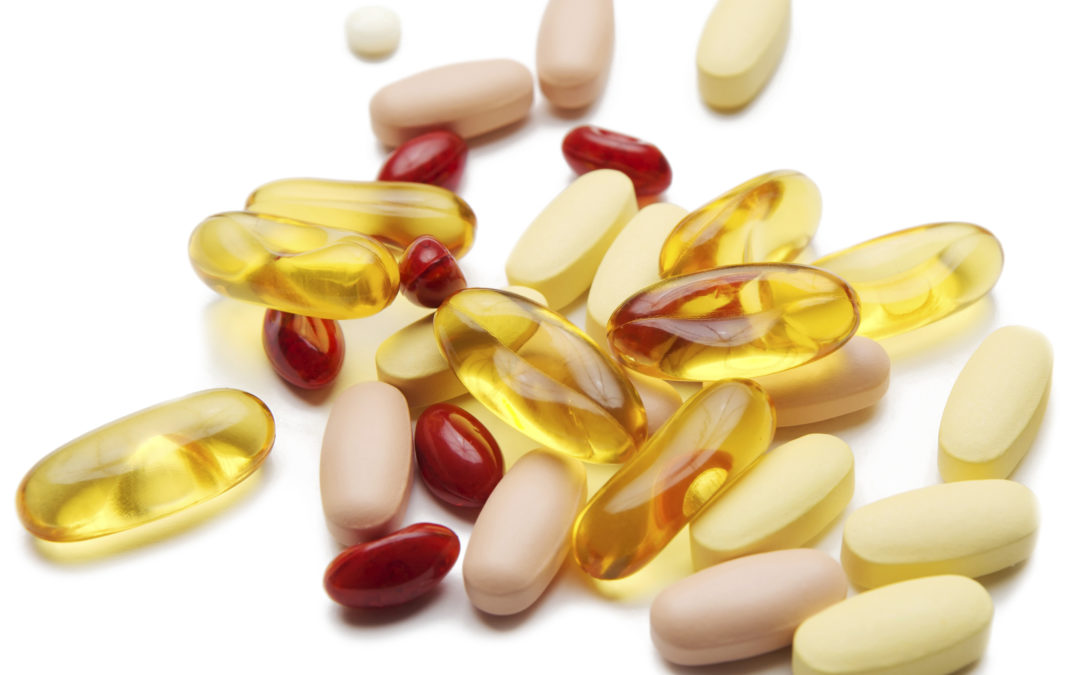
A few weeks back, media outlets ran a story about a “major” and “massive” study that supposedly found no mortality benefit for multivitamin supplements.
"Multivitamins are mostly useless, finds study of nearly 400,000 participants," declared a National Post story that was picked up by MSN.com.
“Daily multivitamin supplements don't help you live longer, study shows,” wrote ABC News. Other media outlets, like The Guardian, CBS and Fox, ran similar headlines.
The Epoch Times also ran the story, but it seems reporting on something that fails to make you live longer has limited clickbait appeal. So it upped the ante and ran with the headline “Large Study Links Daily Multivitamin Use to Increased Mortality Risk.” (Bold emphasis added)
What’s going on here?
The Usual Bollocks
The “major,” “massive” study recently appeared in JAMA and it has an interesting back story - one that may help explain why an otherwise yawn-inducing paper made headlines.
The content below was originally paywalled.
The paper was authored by an Erikka Loftfield and eight of her colleagues from the National Institutes of Health (NIH). You know, the same institution whose Fauci-led subsidiary, the National Institute of Allergy and Infectious Diseases (NIAID), partnered with Moderna to produce a deadly mRNA pseudo-vaccine.
The release of that ‘vaccine,’ along with the Pfizer version, has triggered an unprecedented wave of illness and excess mortality. Which in turn has triggered a massive wave of denial and diversion.
Witness the highly-triggered response of the pharma-industrial complex when Dutch researchers recently suggested the vaxxxines might have something to do with the well-documented excess mortality seen post-rollout.
Lo and behold, shortly after that bout of overly defensive hysteria we now have the media headlining a study dumping on multivitamins.
Was this done to help divert attention away from the deadly clot shots?
Further muddying the waters is JAMA’s choice of invited commentary. For those of you who don’t spend much time analyzing glorified medical tabloids, it’s customary for the large journals to invite ‘experts’ to write up a commentary on their lead article. That commentary is usually a page or so in length and runs at the front of the same issue that the lead article appears in.
JAMA (formerly Journal of the American Medical Association) is one of the world’s most widely-read medical journals. So you’d think the editors would have little trouble attracting highly esteemed and respected professionals to proffer commentary.
Extremely curious then, that the invited commentary was authored by none other than Neal Barnard, Hana Kahleova and Roxanne Becker. All three are members of the Physicians Committee for Responsible Medicine, which was exposed years ago as a sham medical outfit. Newsweek reported back in 2004 that only 5% of PCRM members were in fact doctors. That number is now less than 2%, going by the PCRM’s “About Us” page.
As ActivistFacts.org notes, “The Physicians Committee for Responsible Medicine (PCRM) is a wolf in sheep’s clothing. PCRM is a fanatical animal rights group that seeks to remove eggs, milk, meat, and seafood from the American diet, and to eliminate the use of animals in scientific research. Despite its operational and financial ties to other animal activist groups and its close relationship with violent zealots, PCRM has successfully duped the media and much of the general public into believing that its pronouncements about the superiority of vegetarian-only diets represent the opinion of the medical community.”
The PCRM is really a vegan and animal rights activist group. So where does it stand on the issues of human rights and injecting human animals with toxic gene therapies?
“In addition to requiring the use of masks, social distancing, and good hygiene, we also mandate COVID-19 vaccination for all clinic and research staffers who have contact of any sort with patients or research participants.”
The PCRM repeats all the usual vaxxxine lies, claiming “an effectiveness of over 90%” for the dangerous and useless drugs. The PCRM claims short-term side effects from the poison pricks are “minimal” and that the “evidence so far suggests that serious long-term side effects are extremely unlikely.”
We know that’s garbage. Yet the PCRM continues to spout the thoroughly disproved Safe & Effective!™ lie.
I’ve said it before and I’ll say it again: Irrespective of whatever benevolent intentions grassroots adherents might hold, the vegan and animal rights agendas are globalist operations.
In their guest commentary, titled The Limited Value of Multivitamin Supplements, the PCRM trio claim “Considerable evidence now shows that, apart from the aforementioned roles for vitamin supplementation, there is little health rationale for the use of multivitamin supplements.”
That’s not just an outright lie, but a most ironic one.
We have a group of individuals who recommend a diet thoroughly documented to be deficient or completely lacking in numerous important nutrients (B12, CoQ10, D3, carnitine, carnosine, creatine, taurine, long chain n-3 fatty acids) - now claiming that nutrient supplementation is unnecessary.
If ever there was a demographic that needed nutrient supplementation, it is the anti-meat crowd - but nowhere in their invited commentary do Barnard et al mention this (vegans tend to be highly dogmatic and extremely reluctant to acknowledge the nutritional shortcomings of their diets).
Looks to me like the PCRM is more about promoting ideologies than genuinely helping people achieve good health. If they really wanted to warn people away from useless supplements, they might have started with green tea extract, which is notorious for causing liver damage. GTE, however, gets scarce attention in the mainstream and medical media.
Things are already smelling foul, and we haven’t even gotten to the main article yet.
The NIH paper was in fact an analysis of participants of three other studies:
NIH–AARP Diet and Health Study;
PLCO Cancer Screening Trial;
Agricultural Health Study.
None of these studies was a clinical trial comparing a multivitamin supplement to a placebo. The PLCO study was an RCT examining whether certain screening exams reduce mortality from prostate, lung, colorectal and ovarian cancer. If you’re wondering why this trial features in a review of multivitamins, a dietary questionnaire including questioning about multivitamin use was administered to the screening group. A follow-up dietary history questionnaire was administered approximately three years after study entry.
The other two were out-and-out epidemiological studies.
The NIH-AARP Diet and Health Study began in 1995 to 1996, when questionnaires were mailed to members of the American Association of Retired Persons aged 50 to 71 years. Follow-up questionnaires were issued in 2004.
The AHS involved pesticide applicators and their spouses, aged over 18, from Iowa and North Carolina between 1993 to 1997. A take-home questionnaire was issued at the start of the study; a follow-up dietary history questionnaire was issued between 1999-2003, approximately 5 years after study entry.
Between the three studies, Loftfield et al were able to muster up a pooled analysis of 390,124 participants. The analysis of those who completed the follow-up questionnaires included 234,593 of these participants.
To the uninitiated, these figures sound impressive. After all, hundreds of thousands of people were followed for over two decades, which sounds big and mighty and meaningful.
Those familiar with diet and health research, however, will know we’re dealing with utter junk science here. Epidemiological studies are hopelessly confounded by countless known and unknown factors, of which researchers attempt to statistically adjust for but a handful.
Furthermore, epidemiological studies rely on the truthfulness of questionnaire responses completed by human beings, who are known to forget, misinterpret, exaggerate and lie. In this instance, for a median follow-up of around 23 years the researchers are relying on two questionnaires per study - one administered at the very start of the study and the second issued no later than 8-9 years into the study.
If someone indicated on their questionnaires that they took multivitamins daily, we’re supposed to automatically accept the same is true two decades later.
In a clinical trial, the intervention group would be given a specific supplement of which the ingredients would be listed in the protocol and/or subsequent reports. Obviously, this is impossible in an epidemiological analysis because of the wide variety of brands being used by participants.
Not only do we not know which multivitamin supplements were being used, it seems around a third of the ‘multivitamin’ sample were not even using multivitamins. The supplemental data for the NIH study show only 68% of participants claiming daily ‘multivitamin’ use were taking an actual “1 a day” type multivitamin - the remainder were taking B-vitamins, a “Therapeutic or Theragran” supplement (with no definition of what that actually meant) or “More than 1 type.”
Like I said, this is junk-level research. Had it not made headlines, I wouldn’t even have bothered reading the study. Life’s too short to read useless research when it’s not necessary. But seeing as the study is being used to warn you away from multivitamin supplements (instead of deadly clot shots), let’s look at what the NIH authors claimed to have found.
Their take away claim is that daily multivitamin use was not associated with a mortality benefit. “In contrast,” claim the researchers, “we found that daily MV use vs nonuse was associated with 4% higher mortality risk.”
This is where the increased mortality claim of The Epoch Times comes from.
To believe that your analysis is sensitive enough to detect a piddling 4% difference in mortality when it relies on data from confounder-prone epidemiological slop is the height of quackery.
Even in a tightly-controlled clinical trial, a 4% difference between intervention and placebo would garner no more than a yawn from most credible researchers. To claim a 4% increased risk of mortality from multivitamins in an analysis where 32% of the sample was not even taking a multivitamin is patently absurd.
What Do Randomized Clinical Trials Show?
Very few RCTs involving multivitamin supplements have been performed.
In 2013, the American Journal of Clinical Nutrition published a meta-analysis of ‘multivitamin’ trials by a trio of Australian researchers. Across the twenty-one trials, they found an all-cause mortality relative risk (RR) of 0.98.
There were two key problems with this meta-analysis. One is that the trials evinced a wide range of mortality RRs - from 0.04 (a massive reduction) to 2.98 (a near-tripling of risk).
Most of the trials were very small, many with less than 50 people each in the supplement and control groups. The results of small trials can be greatly swayed by even small differences in death rates between treatment and control arms. That difference may have nothing to do with the treatment, but simply chance occurrence.
Sure enough, when we remove the trials with less than 1,000 participants in each group, the wild divergences from the mean completely disappear and we’re left with a much narrower band of RRs.
But there’s still a problem: Most of the larger studies did not even administer a multivitamin supplement. Most administered single nutrients or combinations thereof, such as beta-carotene and vitamins C and E.
The Physicians Health Study 2 did use an actual multivitamin supplement in the form of (iron-free) Centrum Silver. Those in the supplement group evinced a mortality RR of 0.94.
In one of the two Nutrition Intervention Trials in Linxian, China, subjects received two tablets of Centrum and one beta carotene capsule (15 mg) daily, or placebo. The authors reported an all-cause mortality RR in the supplemented group of 0.93.
The basic Centrum formula used in this study contained 54 mg of iron.
The COSMOS trial was a double-blind RCT testing the ability of Centrum Silver and cocoa extract (500 mg cocoa flavanols) to prevent cancer and CVD. Participants were 21,442 US adults, including 12,666 women aged ≥65 and 8776 men aged ≥60 free of CVD and recently diagnosed cancer (except for nonmelanoma).
During a median follow-up of 3.6 years, the hazard rates for invasive cancer and CVD outcomes in the supplement group were 0.97 and 0.98, respectively. Multivitamin use did not significantly affect all-cause mortality (HR: 0.93).
The French SU.VI.MAX trial did not use a multivitamin supplement per se, but is worthy of discussion. This was a randomized, double-blind, placebo-controlled trial involving over 13,000 healthy adults aged 35-60. The participants took a single daily capsule containing 120 mg of ascorbic acid, 30 mg of vitamin E, 6 mg of beta carotene, 100 mcg of selenium, and 20 mg of zinc, or a placebo.
After 7.5 years of supplementation, supplementation had no effect on cancer, heart disease or overall mortality in women.
In men, however, cancer and overall mortality rates were significantly reduced by 31% and 37% percent, respectively.
That’s not a bad outcome in return for popping a single pill each day.
So why the difference in outcomes between men and women? The average age of female participants in the trial was 46 years. In other words, most of the women in the trial were premenopausal. Prior to menopause, women maintain much lower bodily iron stores and hence enjoy far lower disease and mortality rates than age-matched men.
Iron is a powerful pro-oxidant that increases oxidative damage in our bodies, and also impairs glycemic control.
Sure enough, the trial’s baseline data showed female participants had lower blood sugar levels and higher blood levels of vitamin C and beta-carotene than the male subjects. This indicates better glycemic control and superior antioxidant status.
Longtime readers will know I’m big on maintaining low (not deficient) bodily iron levels. If you’re not familiar with the iron hypothesis of aging and disease, this article will give you a good introduction.
In the SU.VI.MAX trial, the disparate results may be due to the female participants, with their superior baseline glycemic and antioxidant status, not benefiting further from the supplemental antioxidants.
Summary
The evidence suggesting a multivitamin will shorten your lifespan is pure bunkum.
Randomized controlled clinical trials, as opposed to totally uncontrolled epidemiology, show that taking a multivitamin like Centrum Silver (by no means my preferred choice of multi) will have no detrimental effect on mortality outcomes.
In coming articles, we’ll look at studies in which nutrient supplements did reduce mortality in RCTs.
Any recommendations for multivitamins?
Hi Jon, I like the following:
-California Gold Two-a-Day (what I currently use)
-NOW Adam (for men)
-Life Extension Two Per day
Look for something free of iron (unless you have a documented iron deficiency) and with the methylated forms of folic acid and B-vitamins.
Cheers,
Anthony.