Can you get all the CoQ10 you need from food alone?
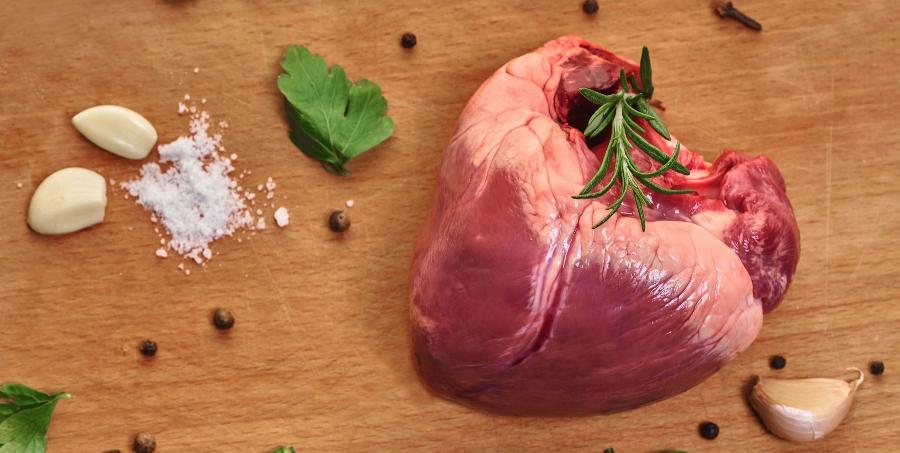
This was meant to be the instalment discussing the safety research on CoQ10 supplements, but one of my paid subscribers just asked a good question:
“If we have access to decent quality beef heart and beef liver, do you have any views on getting CoQ10 through food vs. via supplements?”
I sure do.
The content below was originally paywalled.
CoQ10 in the Diet
There’s not much published research on average daily CoQ10 intakes in non-supplemented folks, but a 1997 report estimated the average person in Denmark obtained 3–5 mg of CoQ10 per day.
That’s not a whole lot.
Eating certain organ meats can significantly boost one’s dietary intake of CoQ10.
The organ with the highest concentration of CoQ10 is the heart, followed by the kidneys.
Beef and pork liver, while high in other nutrients such as B12 and vitamin A, have a far lower CoQ10 content than heart or kidney. Chicken livers, however, are quite rich in CoQ10.
A 2010 paper by Pravst et al provides an extensive compilation of CoQ10 values in many commercially available meats and commonly eaten plant foods. Lamb, unfortunately, is not included in the list, nor is kidney from any source.
For those of you who’d like to see the full list of foods, you can download the full text of Pravst et al 2010 right here.
Pravst et al divide the listed foods into five categories based on their CoQ10 concentration. Food items in Class A have a CoQ10 content of over 50 mg/kg and are considered a “very rich CoQ10 source.”
The item listed as having the highest CoQ10 concentration is reindeer, with 157.9 mg of CoQ10 per kilogram. However, the cuts of reindeer are not specified, so we don’t know if this is from organs, muscle or a composite selection.
Along with unknown cuts of reindeer, other Class A animal foods are beef heart, pork heart, chicken heart and chicken liver.

Beef liver registered much lower values (39.2–50.5 mg/kg), as did pork liver (22.7–54.0 mg/kg).
Regular beef cuts like shoulder, sirloin and tenderloin produced average CoQ10 concentrations ranging between 26.5 and 40.1 mg/kg.
Chicken thigh evinced concentrations of 24.2-25 mg/kg, while breast contained 7.8–17.1 mg/kg.
The only plant-related foods that made the Class A category were soybean oil, corn oil, olive oil, rapeseed (canola) oil, and peanut oil with qualifying values ranging from 63.5 to 279 mg/kg.
Given that a standard tablespoon of vegetable oil equals 14 grams, attempting to meet your CoQ10 levels via plant oils is not a very bright idea. Consuming ungodly amounts of these oils is a great way to spend most of your day en la casa de mierda. With the exception of olive oil, it would also mean consuming dangerous amounts of polyunsaturated fats, especially linoleic acid. Elevated intakes of this omega-6 fatty acid have solid form for increasing cancer and cardiovascular disease risk, which kinda defeats the entire purpose of boosting your CoQ10 levels.
Reason #5,921 Not To Consume a Vegetarian Diet
Along with most plant foods, dairy and eggs are poor sources of CoQ10, falling into the D and E categories.
Given that meats and nauseating quantities of vegetable oils are the richest dietary sources of CoQ10, it should come as no surprise that vegetarians exhibit lower blood CoQ10 levels than meat-eaters.
A comparison of sixty Japanese omnivores and vegetarians/vegans aged 20-65 found lower blood CoQ10 concentrations in the latter group (1.03 versus 0.79 μg/ml, respectively). Given that average meat intake in Japan is still lower than many Western countries, we’d expect to see even greater disparities between omnivores and meat-avoiders in the West.
When twenty-two Japanese women aged 20–21 excluded meat and poultry for 2 weeks, their average serum CoQ10 concentration fell from 0.94 to 0.79 µmol/L.
Dietary versus Supplemental CoQ10
So has anyone actually performed a study comparing the CoQ10-boosting effects of dietary versus supplemental CoQ10?
They have indeed.
A group of Danish researchers published a single-dose comparison of dietary versus supplemental CoQ10 back in 1997.
Nine healthy male volunteers in their early 20s consumed, in randomized cross-over fashion:
30 mg CoQ10 naturally present in a meal consisting of cooked pork heart;
30 mg CoQ10 as capsules (the researchers don't specify the CoQ10 brand or formulation).
Because it was a crossover study, all the volunteers consumed both treatments during separate phases.
As a control procedure, a meal with less than 0.2 mg CoQ10 was given to three of the 9 subjects.
In all three experiments, serum CoQ10 was measured at 0 and 6 hours.
Ingestion of either capsules or pork heart corresponding to 30 mg CoQ10 resulted in similar and significant increases in serum CoQ10 concentrations:
Capsules: From 0.88 mcg/ml to 1.19 mcg/ml;
Pork heart meal: From 0.97 to 1.44 mcg/ml.
The meal with less than 0.2 mg CoQ10 did not change the serum CoQ10 levels, confirming that the ingestion of a meal per se had no influence on serum levels.
A few things to consider:
One, this was a single-dose study that did not measure long-term changes in blood CoQ10, but the levels seen 6 hours after ingestion. That said, formulations that show higher short-term elevations in single-dose studies (such as Kaneka ubiquinol and crystal-free supplements like Bio-Quinone) reliably produce higher elevations in chronic ingestion studies.
Secondly, with an average CoQ10 content of 203 mg/kg of pork heart, the test meal would have had to contain in the vicinity of 150 g of pork hearts.
That’s not a huge amount, so if you’re looking to fortify your diet with some extra CoQ10, there’s nothing wrong with adding some pork, chicken or beef heart.
But let’s say you get your blood CoQ10 level checked and it comes back low, or you require high dosages to treat a condition like heart failure, or you simply want to get your CoQ10 levels higher than normal as a preventive health measure. If that’s the case, then going the dietary route is going to require some serious organ meat consumption.
If you’re shooting for the equivalent of 100 mg CoQ10 daily, you'd need to eat around 500 grams of pork or beef hearts every day. If you’re aiming for 200 mg or 300 mg doses, you'd need to munch your way through approximately 1 and 1.5 kilograms of pork or beef hearts, respectively, on a daily basis.
If you’re a bombastic influencer (liar) who walks through busy precincts yelling “PR-I-I-I-MAL!!!”, takes $11,000 worth of performance-enhancing drugs every month, and literally eats bovine schlongs and testicles, a kilogram of beef hearts every day is probably no big deal.
For those of us who shower on a daily basis and make an honest living, eating ungodly amounts of organ meat every day is going to get real old, real quick.
More realistic intakes of more common meat cuts will result in lower CoQ10 levels. While the idea of eating 500 grams of meat daily would give your average university-inculcated dietitian an aneurysm, 2 x 250 g servings of beef or chicken daily is hardly out of the ordinary for an athlete or serious recreational exerciser. 500 grams of beef sirloin will supply around 40 mg of CoQ10, while 500 g of chicken thigh meat will supply around 25 mg of CoQ10.
You’ll certainly be on a better footing than a vegetarian or vegan, but as noted above, if you’re already deficient, have a condition that requires high CoQ10 intakes, or want to maximize your levels to fight off the ravages of time, then supplementing is the way to go.
Supplementation is also likely going to be the cheaper option. It’s also the no-brainer method, where consuming a 100 mg CoQ10 capsule assures you of ingesting an extra 100 mg of CoQ10 daily (assuming a quality product from a reputable manufacturer).
Leave a Reply