I recently detailed the research that shows ketogenic diets consistently produce worse endurance performance outcomes, when compared to high-carb diets (that two-part installment is available to paid subscribers here and here).
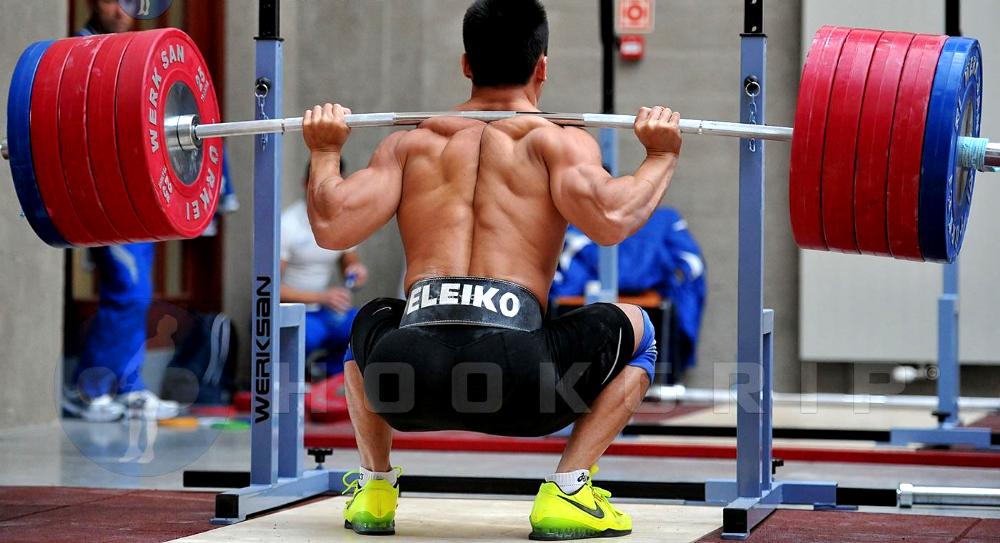
But how do ketogenic diets shape up when pursuing increases in muscle mass (hypertrophy) and strength?
The content below was originally paywalled.
Compared to endurance activities, resistance training workouts tend to take a lot less time. If you’re spending any more than an hour in the weight room, you’re either overtraining or socializing.
Unlike endurance training, which typically involves sustained activity over an extended session, resistance training workouts involve brief spurts of exertion interspersed with rest. A set of 10 reps takes around 30 seconds, with most people resting at least one minute and usually more between sets. So in stark contrast to a bout of running or cycling, a typical weight room session sees you spending more time resting than actively exercising.
Which theoretically means glycogen depletion and glucose availability shouldn’t be a deal-breaker when considering keto diets for strength and hypertrophy programs.
The first observation I’d like to make at this juncture is that a good fitness program should involve both resistance and endurance activities. Each offer unique and complimentary benefits. But alas, many people nowadays roll up to the gym and barely glance at the cardio equipment, nor do they get outdoors and work up a sweat through activities like cycling, running or hiking.
Putting Ketogenic Diets to the Test
Numerous studies have compared the strength and/or body composition effects of ketogenic diets with that of higher-carb diets among resistance training subjects. Unfortunately, none were metabolic ward endeavors - all were free-living studies.
A common finding is greater weight and fat loss on subjects following the ketogenic diets. This has often been accompanied by losses in lean mass and sometimes poorer strength outcomes, which is not a good thing if you’re trying to get bigger and stronger.
It is unclear from these studies whether it is calorie reduction or the lack of carbohydrates that is to blame for these inferior lean mass and strength outcomes.
We know that metabolic ward studies going back as far as 1935 show no greater fat-derived weight loss on isocaloric low-carb and ketogenic diets in sedentary subjects.
We also know that dietary misreporting is the norm in free-living studies, where researchers have to rely on dietary self-reports from the participants.
We also know that an increased fat intake combined with the elimination of the plethora of carbohydrate foods seems to result in temporary satiation and calorie reduction effects. In studies with free-living and sedentary volunteers, the impact these factors have seems to disappear by the 12-month mark, by which point both the low- and higher-carb diet groups are showing the same poor weight loss outcomes. However, none of the studies examining the effect of a ketogenic diet on strength and hypertrophy outcomes have lasted anywhere near that long.
So despite no instruction to reduce calories, many of the subjects on ketogenic diets in resistance training studies are unintentionally doing just that.
In a recent review, Ashtary-Karki et al noted:
“In summary, based on the current evidence, [ketogenic diets] are an efficient method to reduce [body mass] and body fat in both individuals with obesity and athletes. However, these positive impacts are mainly because of the appetite suppressive effects of KD, which can decrease daily energy intake. Therefore, KD do not have any superior benefits to non-KD in BM and body fat loss in individuals with obesity and athletic populations in an isoenergetic situation. In sedentary individuals with obesity, it seems that fat-free mass (FFM) changes appear to be as great, if not greater, than decreases following a low-fat diet. In terms of lean mass, it seems that following a KD can cause FFM loss in resistance-trained individuals.”
Gaining muscular body weight requires a calorie surplus, so any diet exerting even a temporary appetite-suppressing effect is hardly going to help the anabolic cause.
The glaring problem with many RCTs examining the effect of diet or training manipulations on hypertrophy outcomes is the lack of instruction to participants to consume a calorie surplus. Again, a caloric surplus is crucial for muscle gain in the non-obese.
Heavily overweight folks engaged in resistance training can gain muscle while losing body fat, thanks to the ‘repartitioning’ effect. This is where the ample calorie surplus they wear in the form of adipose tissue is used to fuel muscle growth. As one becomes leaner, the repartitioning effect gradually diminishes and becomes negligible to non-existent.
If you’re an athlete or committed recreational exerciser who needs to gain weight rather than lose it, the satiating effects and limited food choices of a ketogenic diet may work against you achieving that critical calorie surplus.
As Vargas-Molina et al noted in a 2022 systematic review and meta-analysis:
“Ketogenic diets, taking into account the possible side effects, can be an alternative for increasing muscle mass as long as energy surplus is generated; however, their application for eight weeks or more without interruption does not seem to be the best option due to the satiety and lack of adherence generated.”
Ketogenic Diet and Unintentional Weight Loss
A typical example of what happens when weight-trained athletes are told to follow a ketogenic diet can be found Vargas-Molina et al 2018. I’m citing this study in particular because the subjects were not told to consume a calorie deficit or told to eat ad libitum (i.e. to eat according to appetite or desire). Instead, they were prescribed a specific calorie target range designed to deliver sufficient calories.
Twenty-one women (mean age 27.6 years, body mass = 62.3 kg) with at least 2 years of continuous resistance training experience participated in the 8-week study.
In the ketogenic diet group, participants were instructed to consume 30–40 grams of carbohydrate daily, and a protein intake of 1.7 g/kg/day. The remaining calories were to be obtained from dietary fats. Participants were advised to eat 3-6 meals a day. To assess dietary compliance, urinary ketones concentrations were measured weekly. One subject was excluded from the keto group at Week 2 two for not showing positive ketosis strips.
The high-carb group was instructed to consume ≥1.7 g/kg/day of protein and 1 g/kg/day of fat, with the remaining calories to be obtained from carbohydrates
For both groups, the researchers prescribed a caloric intake of 40-45 calories per kilogram of lean mass daily. Despite the women’s previously trained status, they averaged around 30% body fat, which meant an intake of 31 calories per kg of overall body weight.
To monitor dietary intake, participants recorded their daily food intake via popular smartphone app MyFitnessPal. According to their self-collected data, the women in the keto group averaged 1,710 cal/day, while the high-carb subjects averaged 1,980 calories daily.
Which means the keto group ended up consuming around 40 calories/kg/lean mass daily, compared to 45 cals/kg/day in the high-carb group.
So despite instruction to consume a similar amount of calories per kg of lean mass, the keto subjects ended up consuming less.
The keto group maintained a higher self-reported protein intake compared to the higher-carb group during the study (2.7 versus 2.2 g.kg/day, respectively). Self-reported carbohydrate intake averaged 39 and 282 grams daily in the keto and non-keto groups, respectively.
During the study, the women completed four training sessions per week, using an upper/lower body split routine. The women were instructed to avoid performing any structured exercise during the study period other than the prescribed weight training protocol.
After eight weeks, the keto group experienced a mean −2.2 kg drop in weight, confirming that, in most subjects, the diet led to an unintentional calorie deficit.
The high-carb group, meanwhile, experienced a mean 0.8 kg increase in weight.
The keto subjects lost a mean 1.1 kg of body fat, while the high-carb subjects gained 0.3 kg of fat mass.
The keto subjects lost 0.7 kg and the high-carb subjects gained 0.7 kg of lean mass.
The high-carb group fared better on strength outcomes. 1RM bench press increased 1.5 kg in the keto group and 4.8 kg in the high-carb group, the difference attaining statistical significance.
1RM squat increased by 5.6 kg in the keto group and 15.6 kg in the high-carb group, the difference again attaining statistical significance.
Countermovement jump increased 1.7 cm in the keto group and 2.2 cm in the non-keto group. This difference was not statistically significant.
The researchers noted:
“[R]reported energy consumption for participants in [the keto diet group] was below prescribed amounts, revealing the difficulty of eating in a caloric surplus when carbohydrate intake is severely restricted; notwithstanding, it is important to note that both groups met the daily energy intake of 40–45 kcal∙kg-FFM− 1. Given that the [keto] group showed a mean reduction in both FM and FFM, it therefore can be concluded that these participants were in an energy deficit despite claiming adherence to the nutritional prescription. It has been previously established that [ketogenic diets] generate a decrease in appetite, which can be conducive to reducing [fat mass]. However, if a [keto diet]-induced state of satiety prevents individuals from consuming the prescribed caloric intake, it could be suboptimal for increasing [fat-free mass]. Furthermore, it should be noted the possibility that [keto diet] induces gluconeogenesis, which might reduce FFM by breaking down the endogenous proteins in a higher rate.”
What is the Effect of a Keto Diet Combined With a Calorie Surplus?
Okay, so you know that eating a keto diet often leads to unintentional and probably temporary reductions in caloric intake. But let’s assume you adopt a keto diet with the intention of consuming a calorie surplus.
What happens when research subjects randomized to ketogenic and control diets are instructed to do just that - i.e. consume a hypercaloric intake (i.e. a calorie surplus) in order to achieve hypertrophy and strength increases?
Before we take a look at the relevant studies, I would strongly recommend that anyone interested in gaining muscular body weight read my two-part series titled “How Many Extra Calories Do You Need to Gain Muscular Body Weight?”
How Many Extra Calories Do You Need to Gain Muscular Body Weight? Part 1.
How Many Extra Calories Do You Need to Gain Muscular Body Weight? Part 2.
As Table 1 in Part 1 shows, body weight and lean mass gains have been reported in resistance training subjects consuming 39 to 67.5 calories per kilogram of body weight daily, with the higher calorie intakes resulting in greater overall and lean mass gains.
Unfortunately, there are barely any studies comparing keto and higher-carb diets among resistance-training subjects instructed to consume a calorie surplus. Below are the only two such studies I’ve been able to find thus far.
Vargas et al 2018
A 2018 paper by Spanish researchers in Málaga reported on the effects of hypercaloric ketogenic and non-ketogenic diets in 26 men (average age 30 years) who had been weight training for at least 2 years.
“To guarantee a hyperenergetic condition,” the authors wrote, both groups were instructed to consume ≈39 calories per kilogram of body weight daily.
Macronutrient distribution for the non-ketogenic diet group was ~20% protein, 25% fat, 55% carbohydrate.
Subjects in both groups were instructed to consume 2 grams of protein per kilogram of body weight daily. The ketogenic group was instructed to ingest ~42 grams of carbohydrate daily.
During the eight-week study, both groups completed 4 sessions weekly of a hypertrophy-oriented training protocol, consisting of 2 upper body and 2 lower body workouts. Each session was comprised of eight exercises, performed for 3 sets of 6-8 reps to failure.
Two keto participants did not enter into ketosis and were excluded from the study, leaving 24 subjects for the statistical analyses.
After eight weeks, the keto group had lost a mean 1.4 kg of body weight, compared to a 900 gram gain in the high-carb group.
Fat mass decreased by 1.1 kilograms in the keto group and 400 grams in the high-carb group. Visceral adipose tissue decreased by 96.5 and 33.8 grams in the keto and high-carb groups, respectively.
Lean body mass decreased by 300 grams in the ketogenic group, but increased by 1.4 kg in the non-keto group.
The researchers surmised “an adequate carbohydrate intake (non-ketogenic or conventional dietary approach), in conjunction with a caloric surplus and a higher protein intake, might be the most viable option for inducing muscle hypertrophy after [resistance training].”
This Italian study involved nineteen male bodybuilders (mean age 27.4 years), who competed in natural bodybuilding categories and had at least 5 years’ training experience.
The men were randomly assigned to a ketogenic diet or a higher-carb “western” diet. The diets were formulated to provide 45 calories/kg of muscle mass (which equated to around 39 calories/kg of their overall body weight), and a protein intake of 2.5 g/kg/body weight.
This translated to a mean target intake of 3,500 calories and 220 grams of protein daily. The keto subjects were prescribed a mean 44 grams of carbohydrate daily, while the high-carb diet aimed for 488 grams of carbohydrate per day.
The study occurred in the subjects’ competitive off-season. The training program was not standardized; all the volunteers performed from three to four sessions per week, but the volume and intensity of the workouts were decided by each individual.
After eight weeks, the keto group decreased body weight by approximately 1%, while the high-carb "western" diet group increased body weight by 2%. The differences were non-significant and indicate the keto group may have ingested a slightly lower caloric intake.
Fat mass decreased in the keto group by 1.44 kg, and 0.9 kg in the high-carb group.
Lean mass increased by 0.53 kg in the keto group, compared to 2.23 kg in the high-carb group.
1RM bench press increased by 4.66 kg and 5.0 kg in the keto and high-carb groups. 1RM squat increased by 6.55 kg and 10.9 kg in the keto and high-carb groups. The difference in 1RM outcomes between groups was not statistically significant.
As previous studies have repeatedly documented, the nonsensical “metabolic advantage” touted by low-carb authors was nowhere to be seen. In fact, only the high-carb group experienced a statistically significant increase in resting energy expenditure.
The researchers also measured levels of the anabolic hormones testosterone and IGF-1 before and after the intervention. Testosterone levels remained unchanged in the high-carb group, while the keto group experienced a statistically significant decline from 21.76 to 19.32 nmol/L.
IGF-1 levels also dropped in the keto group (from 213.3 to 181.5 ng/mL), while again remaining unchanged in the high-carb group.
The researchers noted, “the anabolic hormonal response seems to be blunted during the KD regimen, and this may explain the attenuated hypertrophic response that was observed.”
Summary
The studies above indicate that ketogenic diets are not the best choice for those looking to gain muscular body weight. The most obvious stumbling block seems to be a difficulty in attaining a caloric excess on such diets.
These diets may also inherently limit lean mass gains by increasing gluconeogenesis (the breakdown of non-carbohydrate substances like protein to form glucose) and lowering endogenous levels of anabolic hormones such as insulin, testosterone and IGF-1.
Unless you have some other compelling reason to follow such a diet (epilepsy or glycemic control), I do not recommend such diets.
Leave a Reply