Anyone who claims otherwise is either terribly dishonest or disturbingly dumb.
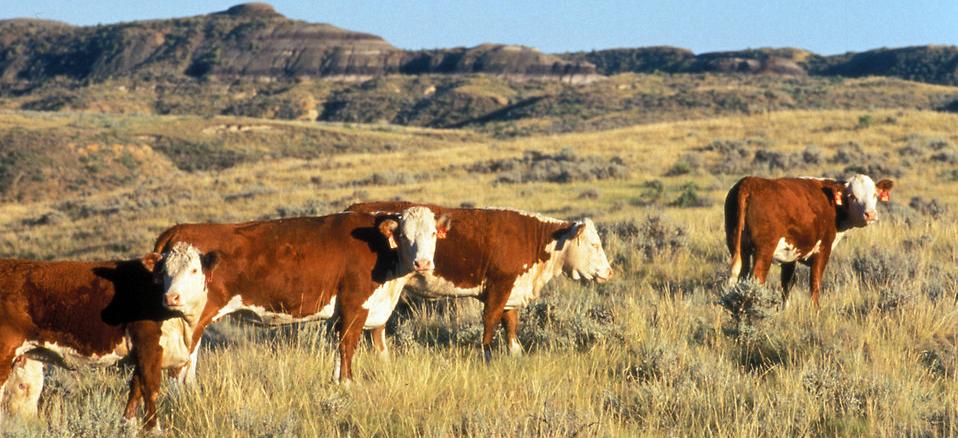
Despite being a complete lie, the claim that it takes a gargantuan 100,000-200,000 litres of water to produce a single kilogram of beef has gotten a lot of airtime over the years.
This absurd claim has been repeated ad nauseum in vegan propaganda and mockumentaries, where truth and accuracy are readily abandoned in favor of advancing the “plant-based diet” cause.
But it’s not just B-grade propaganda platforms that repeat this claim. A 2017 BMJ anti-meat article (which I’ve dissected here) was accompanied by an editorial that claimed “producing 1 kg of meat protein requires more than 110 000 L of water.”
BMJ, aka the British Medical Journal, is one of the oldest and most widely read medical journals in the world. You would expect better from such an established journal, but the sad reality is most major medical publications nowadays are now little more than globalist-controlled, pharma-funded tabloids.
The editorial making the ridiculous water consumption claim was authored by one John D Potter, professor of epidemiology at the Centre for Public Health Research, Massey University, Wellington, New Zealand.
Potter’s ridiculous claim is especially unforgivable considering he lives in New Zealand, where cattle and sheep are almost entirely grass fed. Like Australia, NZ punches above its weight when it comes to beef and lamb production, with 80% of its beef being exported around the world. All Potter needs to do is drive past one of the North Island’s countless pastures - naturally irrigated with rainwater - to see with his own eyes that the “110,000 L of water” claim is pure hogwash.
In cool climates, grass grows by itself, without the need for human watering. In fact, so many humans around the world experienced grass that stubbornly grew no matter what, they invented these things called lawnmowers. I’m sure Potter has heard of them. In open pastures, cattle and sheep act as lawnmowers.
Potter, by the way, is a member of the International Agency for Research on Cancer (IARC), which on October 26, 2015 abandoned all pretense of credibility by declaring red meat as “probably carcinogenic.” In the same outburst of unabashed stupidity, the IARC declared processed meat a “Grade 1” carcinogen, meaning prosciutto and Serrano ham were now in the same category as cigarette smoking and asbestos.
“Contemporary meat consumption harms human health and is equally bad for the planet,” claims Potter in his nonsensical, non-peer reviewed BMJ editorial.
You can always trust a guy who thinks ham belongs in the same category as asbestos, right?
This is What Happens When You are Unburdened by the Thinking Process
The claim that every kilogram of meat consumes 110,000 litres of water by the time it hits your plate fails even the most basic of commonsense tests.
According to the USDA, the annual average global beef production during the years 2014 to 2023 was 57.82 million tonnes.
That’s 57,820,000,000 kilograms of beef produced annually.
If each kilogram of that beef requires 110,000 litres of water to produce, then this necessitates an annual water consumption of 6,360,200,000,000,000 litres.
This is where the claims of Potter and his ilk not only fall apart, but take up permanent residency in La La Land.
Our World in Data, using data from the Global International Geosphere-Biosphere Programme (IGB), cites a 2014 global freshwater use figure of 3.99 trillion cubic metres (m³).
Using UN data, worldometer cites an identical annual global water consumption figure of 3.99 trillion m³.
Given that every 1 cubic meter = 1,000 litres, this equates to an estimated annual total global water consumption of 3.99 quadrillion litres.
Potter is effectively claiming global beef production soaks up over 6.36 quadrillion litres of water every year - or more than 1.59 times the world’s total water consumption.
Obviously, that’s impossible.
That right there shows just how ridiculous Potter’s claim is.
I could end this article right here, making it one of the shortest I’ve written in some time. However, I think it will be instructive to examine how such an idiotic claim ever gained traction.
How Garbage Figures Get Legs
Potter references his 110,000 L claim to a 2010 document by Mesfin Mekonnen and Arjen Hoekstra. You can tell Potter is hiding something, because he fails to provide a page number when referencing the document, as is the standard practice. When you’ve got a document that’s 122 pages long, and the referencing author fails to tell you on which of all those pages you can find the data he is citing, you should smell a big, stinky rat.
In all likelihood, the data doesn’t exist, and he doesn’t want you to know this.
Sure enough, I searched the Mekonnen and Hoekstra document for the 110,000 L figure - and it’s not in there.
On page 13 of the document, however, the authors provide weighted averages for the daily drinking and service water costs per beef cattle, which are a combined 34.1 litres daily.
Even allowing a 2-year life span for commercial beef cattle (generally 18-22 months), that’s just under 25,000 litres of water - for an animal that weighs around 630 kg at slaughter.
Suffice to say that Potter’s figure is a total fabrication.
But where did all these absurd water consumption figures for beef consumption come from in the first instance?
Tales From the Vault (Or Pulling Figures From Your Butt)
The culprit looks to be the late and oft-cited professor David Pimentel, who hailed from the College of Agriculture and Life Sciences, Cornell University, Ithaca, New York. According to Wikipedia, Pimentel “published over 700 scientific items, of which 37 are books, and served on many national and government committees, including the National Academy of Sciences, the President's Science Advisory Council, the Office of Technology Assessment of the U.S. Congress, the U.S. State Department, and the Departments of Agriculture, Energy, and Health, Education and Welfare.”
This no doubt sounds impressive to the unsuspecting observer, but those of us who’ve been around the block a few times know that mainstream accolades often exist in inverse proportion to one’s scientific aptitude and veracity.
In 1997, Pimentel and nine Cornell graduate students published a paper in the journal Bioscience which admitted “livestock directly use only 1.3% of the total water used in agriculture.”
So what’s the problem?
Well, Pimentel et al claim “water required for forage and grain production greatly increases the water requirements for livestock production.”
How great is this increase?
“Producing 1 kg of beef requires approximately 100 kg of hay-forage and 4 kg of grain (Pimentel et al. 1980). Producing this much forage and grain requires approximately 100,000 liters of water to produce approximately 100 kg of plant biomass plus 5400 liters to produce 4 kg of grain (Falkenmark 1994). On rangeland, more than 200,000 liters of water are needed to produce 1 kg of beef (Thomas 1987).”
So Pimentel et al initially claim that 1 kg of beef requires 105,400 litres of water to produce. They then push the absurdity envelope further by claiming that free-range beef requires twice that amount.
You’ll note that Pimentel and co cite three sources in support of their fanciful claims. The first, Pimentel et al 1980, doesn’t explicitly list the quantities of forage and grain required to produce a kilogram of beef, but does claim beef production “requires energy inputs of 87 Mcal/kg.”
Pimentel are claiming it takes 87 million calories to produce 1 kilogram of beef. Checking the data they used to arrive at this claim is impossible, because the citation they give is an unpublished 1978 document authored by themselves ("Energy and land resource use and 'grass-fed' animal protein production, unpublished tabulated data (1978).")
Okay, let’s play along and embrace their simplistic and unverified assumption that producing 1 kg of beef requires approximately 100 kg of hay-forage and 4 kg of grain (I say simplistic, because it ignores the fact that even grain-fed cattle spend most of their life grazing before being sent off to a feedlot).
The claim that “this much forage and grain requires approximately 100,000 liters of water to produce approximately 100 kg of plant biomass plus 5400 liters to produce 4 kg of grain” is referenced to Falkenmark 1994 (a book chapter). However, when you read through Malin Falkenmark’s chapter, there is no mention of the water amounts required to produce a given amount of grain.
On pages 176-177 of his chapter, Falkenmark does write:
“The amount of water consumed in the phytomass production process varies considerably between vegetation systems, depending on general growing conditions and on the amount of unproductive evaporation that takes place, in addition to the productive water flow through the plant … there is a difference in the amount of water consumed between ecological zones; 200 m3 /ton biomass or even less in the equatorial forests, as compared to over 1,000 in the semiarid tropics (Falkenmark, 1986).” (Bold emphasis added)
Falkenmark is saying Mama Nature requires 200,000 litres of water to produce 1,000 kg of biomass in equatorial regions, and 1,000,000 litres per 1,000 kg in the semiarid tropics. Falkenmark focuses on these regions because his chapter is concerned with water scarcity and food production in Africa.
A couple of key points:
This equates to 20,000 - 100,000 litres of water required per 100 kg of biomass - in equatorial and semiarid tropics. Pimentel et al disingenuously takes the highest of these two figures, cited for atypical regions, and cites it as if it applies to the entire world. That’s a great propaganda tactic, but it’s terrible science.
The figures given are for the water requirements of biomass, i.e. all plant matter in a given region. Irrigated fields notwithstanding, most plant matter on Planet Earth is naturally hydrated by rainfall and groundwater.
I can’t overemphasize the importance of that second point, because it entirely destroys the absurd claims made for the water burden of beef production. When cattle (or sheep, or goats, or deer) eat grass, they are consuming biomass that has already used naturally occurring water to grow. That water would have been consumed by the grass irrespective of whether the grass was eventually consumed by grazing animals or left to keep growing.
If grazing cattle are present, the anti-meat crowd cite this naturally-occurring water cycle as the water burden of beef production, even though there is no added burden. The animals are simply playing their role in a preexisting ecosystem.
Obviously, in an industrial feedlot scenario, an additional water burden is created. The animals must be manually supplied with drinking water, and the feedlots must be washed down to maintain hygienic standards.
Which begs the obvious question: Where did Pimentel et al derive their truly ridiculous claim that, instead of reducing water burden, range-fed animals double the water burden?
How can anyone claim with a straight face that more than 200,000 litres of water are needed to produce 1 kg of grass-fed beef?
Reaching Even Deeper Into the Culo Vault
Pimentel et al offer no explanation as to how this bizarre figure was arrived at. As we can see, they simply reference the statement to Thomas 1987. This is an article by Gerald W Thomas, of New Mexico State University, that appeared in a 1987 conference summary book titled Water and Water Policy in World Food Supplies.
Thomas’ article is on page 83 of the book. On page 85, you can find the following quote:
“…on some of our southwestern range-lands more than 100 tons of water are used to produce a pound of beef.”
So now we have a previous author citing a figure of over 220,000 litres of water per kilogram of beef. But Thomas’s article also offers no explanation whatsoever on how that fantasmagorical figure was reached. Instead, he references it to another of his articles, this time a 1977 paper appearing in yet another conference summary (Thomas GW. Environmental sensitivity and production potential on semi-arid rangelands. In: Conselman FB (Ed). Frontiers of the Semi-Arid World: An International Symposium. Lubbock, Texas, Dec 1, 1977.)
This is where we hit a dead end. Frontiers of the Semi-Arid World: An International Symposium appears next to impossible to purchase or track down at a library.
With a bit of online hunting, I did manage to find a compilation of abstracts of papers presented at the 1974 symposium. The abstract of Thomas’ presentation is found on pages 59-60, but it mentions nothing about the water consumption of cattle.
Not only have I not been able to read the full content of Thomas’ presentation, it’s obvious that Pimentel et al didn’t read it either. If they did, and it supported their outlandish water consumption claims, they would have cited it directly.
The bottom line is that the water consumption claims for beef production made by David Pimentel and his colleagues are a fabrication.
They are blatant falsehoods.
When you follow the citation trail behind these lies, it repeatedly fails to produce anything even resembling credible data for the outrageous claim that a gargantuan 100,000 to 200,000+ litres of water is required to produce a single kilogram of beef.
So what about the more ‘modest’ claims, such as every pound of beef requires 2,500 gallons of water (25,000 litres water/kg beef)?
They’re complete rubbish too.
Stay tuned.
Leave a Reply