
As the media begins hyping the new election BA.2.86 and Eris variants, and as mask mandates begin rearing their ugly heads again, it's worth reiterating that masks are not only useless but harmful.
Much has been written about the ability of masks to cause symptoms like headaches, dizziness and fatigue due to rebreathing stale, exhaled CO2-rich air.
But an accumulating body of research also shows that wearing face masks forces you to inhale and absorb numerous toxic synthetic compounds - some of which have been linked to cancer.
Snorting Plastic Fibers
In 2020, German researchers reported on 46 patients suffering rhinitis-like symptoms strongly associated with the use of face masks. Some of them were obliged to use masks in their work environment.
The patients reported new-onset symptoms of rhinitis, such as sneezing, itching, nasal blockage, and/or watery nasal discharge after wearing their face masks for a minimum of 2 hours. Longer periods of mask use were regularly associated with more severe symptoms.
Nasal endoscopy showed signs of irritation and edema with mucosal swelling and watery secretions.
All positive skin prick and patch test results were unrelated to either seasonal or occupational allergen exposure of the patients, further pointing to masks as the culprit.
After wearing FFP2 (N95) respirators for a minimum of 3 hours, a mean number of 3.8 polypropylene fibers were found in nasal lavage fluid per nasal side with a maximum length of 42 mm in one patient.
After 3 mask-free days, endoscopic signs of secretion and edema were significantly lower. However, fibers were still present, with a mean fiber length of 3.1 mm and a maximum length of 37 mm.
Lung Full of Endocrine-Disrupting Chemicals, Anyone?
Phthalates are substances added to plastics to increase their flexibility, transparency, durability, and longevity. Their annual usage amounts to several million tons. Because phthalates are usually applied as additives and not chemically bonded to the materials, they can be easily released into the environment, enter the human body, and exert a series of adverse effects.
Various pthalates have been reported to exert reproductive toxicity, affect fetal growth, and negatively affect testosterone and semen.
Chinese researchers analyzed 56 mask samples for 12 phthalates. The phthalate contents in the masks among different countries and different production standards were investigated (there were 44 Chinese brands, 6 European brands, 3 American brands, 2 Japanese brands and 1 South Korean brand.
All the masks contained detectable amounts of various phthalates, with little difference between country of manufacture.
There was no significant difference between phthalate levels in masks for adults and toddlers. However, because of their far lower body weight, the median estimated daily intakes of phthalates in masks for a toddler were approximately 4–5 times higher than those for an adult.
The cumulative carcinogenic risk (CR) values 50 (89.3%) of the mask samples were higher than the acceptable limit, indicating potential adverse effects to human health.
"Thus," wrote the researchers, "the potential carcinogenic effects of phthalates from the mask should not be ignored."
Do the Right Thing: Inhale a Lung Full of Volatile Organic Solvents
A new study by Korean researchers indicates masks pose significant risks to wearers due to toxic chemicals emitted by face masks.
The researchers noted "mask materials are directly or indirectly exposed to the human body through inhalation, the mouth, and skin. If hazardous compounds are released from these masks, the human body is at risk."
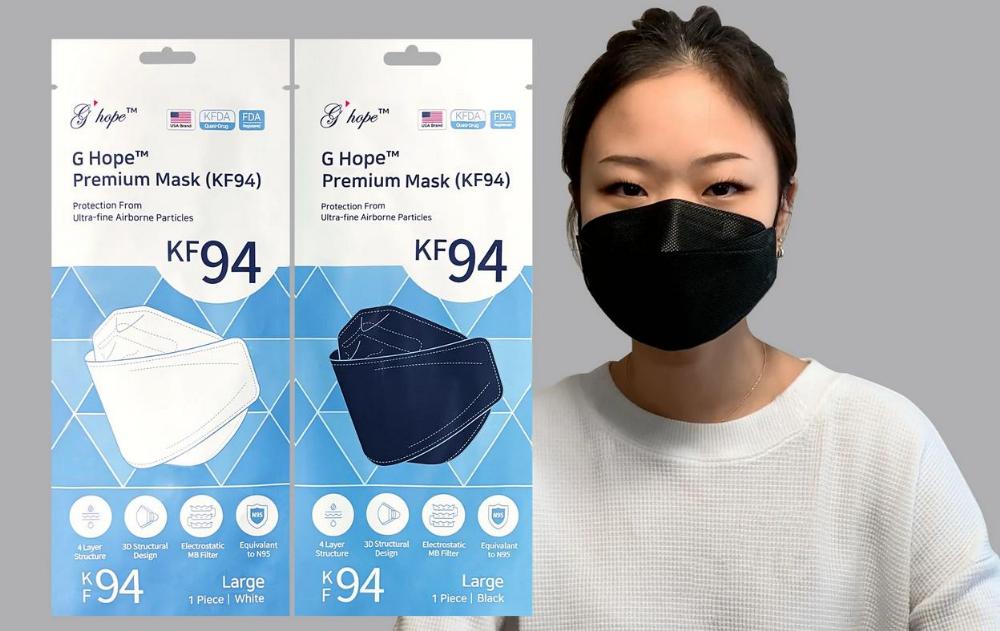
So the researchers measured the number and concentration of volatile organic compounds (VOCs) emitted from several different masks, including cotton masks and KF94 masks — a popular disposable mask in Korea similar to the N95 mask.
VOCs used in the production of masks, and which remain in masks, have been shown to cause reproductive toxicity, liver toxicity, and cancer in humans.
VOCs can also cause inflammation to the skin and eyes, neurological disorders, headaches and pulmonary edema when inhaled.
The researchers found the total VOC (TVOC) amount released by KF94 masks was about 14 times higher than from cotton masks.
In some KF94 masks, TVOC concentration reached over 4000 μg m–3, posing a risk to human health (based on indoor air quality guidelines established by the German Environment Agency).
When the temperature of the KF94 masks was raised to 40C, TVOC concentrations increased by 119–299%.
Notably, 30 minutes after KF94 masks were removed from their packaging, TVOC concentrations decreased by about 80% from their initial levels; 6 hours after removal, TVOC concentrations were found to be less than 200 μg m–3.
“It is clear that particular attention must be paid to the VOCs associated with the use of KF94 masks [and their] effects on human health,” the researchers wrote.
“Based on our findings, we suggest that prior to wearing a KF94 mask, each product should be opened and not worn for at least 30 min, thereby reducing total VOC concentrations to levels that will not impair human health”.
All this, even after the flu-prevention claims for masks have been repeatedly shown to have no scientific foundation whatsoever.
Leave a Reply