More isn't always better.
Few, if any, activities allow you to change your body the way weight training can. While fat loss from aerobic activities such as running and cycling can certainly bring about remarkable physical transformations, no activity builds muscle like hitting the weights. This isn't just a boon for those aspiring to get jacked; the ability to build certain muscles with specific exercises is also a blessing to those who weren't exactly blessed in the genetics department.
Born with wide hips and narrow shoulders? Don't fret: While you can't change your bone structure, you can indeed hit the gym and build up the muscles of your shoulder, upper back and pectoral areas. Combined with fat loss in the abdominal area, the resultant physical transformation will draw attention away from your hips and have you looking more like a v-shaped Grecian athlete than a lumpy pear.
But to get these results, you have to know what you are doing in the gym. Or at least be under the guidance of a coach or trainer who knows what they are doing.
And there lies the problem: When it comes to weight training, most people don't have a clue.
One of the things that never ceases to amaze me about the resistance (weight) training arena is how little progress it has made in terms of outlining a scientifically valid, unified consensus on effective training principles.
The first international weightlifting competition was reportedly held in London in 1891, and the revived Olympic Games of 1896 included weightlifting events.
The first bodybuilding competition, meanwhile, reportedly took place in New York City in 1903.
You would reasonably assume that after 120 years or more of competition, humankind would have long since determined the best methods for gaining strength and muscle mass.
If only.
Sadly, the world of resistance training bears much in common with the diet arena, where advocates of starkly contrasting approaches splinter off into highly polarized groups, raucously attacking each other for their alleged stupidity, dishonesty and financial charlatanism.
You have to hand it to humans: They'll find pretty much any reason to hate and attack each other.

A History of Confusion and Disagreement
Instead of having a clear cut set of principles that can be followed to achieve weight training success, confusion and argument still abounds. With no clear direction on how they should be training, it is exceedingly common to see people in the gym whose physiques change little after months and even years of training. The trainee who makes impressive progress is actually a relatively rare sight. If you were to take anabolic steroid use - the great equalizer - out of the picture, the picture would be even more dismal.
There is still no universal consensus on how many times a week one should train, how long a weight training session should last, and how many sets of an exercise one should perform in a session.
Some folks insist the best gains come from training like an Eastern Bloc strength athlete (six days a week, multiple times a day), while others swear their best progress came from training in one brief session, once per week.
Some maintain you should perform "whole body" workouts, others promote "split routines" in which specific bodyparts are trained on different days.
Some advise lifting weights in an explosive manner, others claim the best way to lift a weight is s-l-o-w-l-y, 10 seconds up and 10 seconds down.
People even argue about how to do specific exercises. Believe it or not, there is a perennial and often heated debate about whether you should squat down to a point where your thighs are parallel to the ground, or to below parallel. After more than 130 years of competitive lifting, the world of weight training can’t even agree on how to do a freakin’ squat!
If the world ever achieves peace and unity, it won't be any thanks to the resistance training community. They're too busy lambasting each other for holding different training theories.
And so it is with some trepidation I write this article, because I'm about to address what may just be the most polarizing topic of all in the world of weight training.
Namely, the issue of single set versus multiple set training.
Oh no, quick ... grab the defibrillator! Someone's already blown a gasket, and all I did was mention this issue!
Sets, Reps, and Stuff
Before we look at the research, it behooves me to explain some basics for those who have never ventured into a weight room (experienced trainers, bear with me, this will only take a moment).
Each time you a lift a weight up and down, you perform a "repetition." Or a "rep," as it is known in common parlance.
A group of repetitions, performed one after the other until you either wuss out, hit a prescribed target number of reps, or hit the point of temporary "muscular failure" (where muscular contraction "fails" and you can't complete another rep in good form no matter how hard you strain, grunt and swear), is known as a "set."
Perhaps no greater controversy exists in the world of weight training than the question of just how many sets you should do per exercise. Unfortunately, the history of the single versus multiple set debate is more a story about polarizing dogmas and personalities than it is about science. Today, I’ll touch upon some of that history in order to lay the groundwork for subsequent articles discussing the actual science.
One Set versus Multiple Sets
The traditional weight training approach is to do multiple sets, or "volume training." On an exercise like the bench press, for example, the average trainee performs his first set with a light weight, often an empty Olympic bar. Then he'll throw a weight plate on each side and do ten or so reps. Then he puts some more weight on the bar and does another warm up set. Then, after taking a sip of Massive Mike's Mega Muscle Juice, he dons his game face and gets down to business.
Having performed his warm-up sets, he will now put some more weight on the bar and perform a number of "work sets" with this heavier weight. This will often be in the vicinity of 3 to 5 sets, although there are routines like the overrated "German Volume Training" system that calls for 10 sets of 10 reps. If you're the type that believes a muscle "should be worked from all angles" with four or 5 different exercises, multiple set training can quickly render the gym your second home.
Regardless of the exact number of sets, the underlying premise of multiple set routines is that a single work set of an exercise, or even two sets, is not sufficient to induce optimal muscle growth and/or strength increases.
At the other end of the spectrum are those who maintain that a single work set of an exercise, carried to momentary muscular failure (and sometimes beyond), is all one needs to trigger maximum muscle and strength gains. Some single set proponents, in fact, insist it produces superior muscle and strength gains.
The one-set-to-failure principle was popularized by Arthur Jones, the irascible inventor of Nautilus exercise machines, in the 1970s. The single set philosophy gained a further boost when Philadelphia native Mike Mentzer used Jones' principles to rapidly ascend the professional bodybuilding ladder in the late 1970s. Sadly, after losing what looked and stank like a rigged Mr Olympia to a far less impressive Arnold Schwarzenegger in 1980, Mike vowed never to compete in bodybuilding again, a sport controlled by the widely-disliked Weider brothers. For a few years after, Mike carved out a living writing articles and books, but then slipped into a morass of depression and addiction. As Mike's personal wellbeing took a tumble, so did the popularity of "Heavy Duty" lifting, the moniker Mentzer awarded to his brand of brief, intense training.
Unlike the slopey-shouldered, wide-waisted, slim-legged Schwarzenegger, Mike had a flawless physique, at least by bodybuilding standards. His considerable muscle mass, combined with near perfect symmetry and a rare lack of weak points, made for some especially impressive aesthetics. Little wonder that, in 1978, Mentzer won the Mr Universe contest in Acapulco, Mexico with the first ever perfect score of 300.
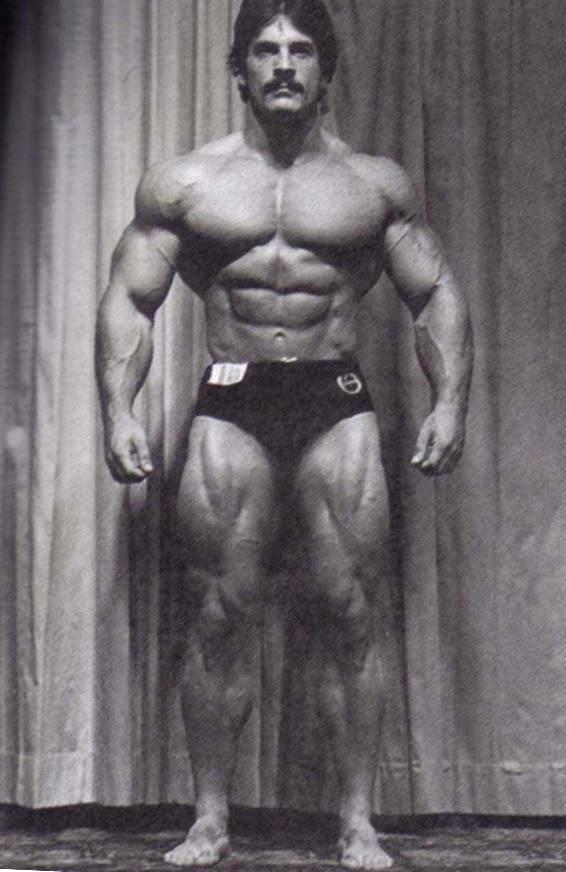
Other notable bodybuilders who built their muscle mass using "High Intensity Training", as single set training is now often dubbed, include Mike's powerhouse brother Ray, the freakishly-strong Casey Viator (of Colorado Experiment fame), Clarence Bass (masters bodybuilder, athlete and author of Ripped), and 6-time Mr Olympia winner Dorian Yates.
It was the rise of Yates, and his subsequent domination of pro bodybuilding during the 1990s, that eventually pushed HIT training back into the spotlight. A quiet, amiable Brit, Yates no-BS personality and "Blood and Guts" training approach quickly found favour with bodybuilding fans. After attributing his training approach to the writings of Jones and Mentzer, the stage was set for a rehabilitated Mike to make a comeback.
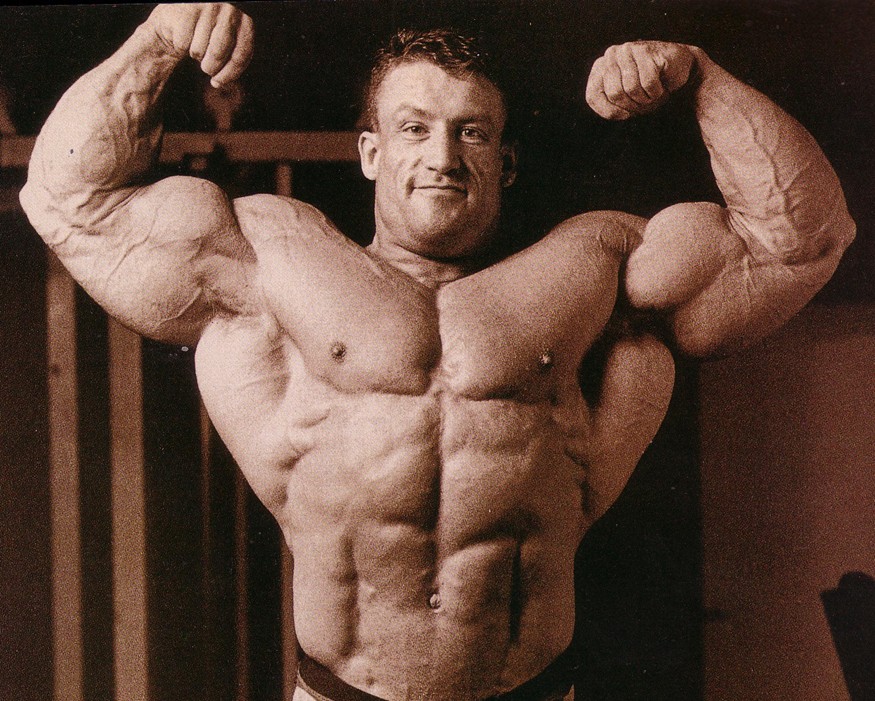
Mentzer wrote a new book titled Heavy Duty II, released an audio cassette series, and his articles began featuring prominently in popular bodybuilding magazines like Muscular Development and Muscle Media.
Mentzer's comeback would prove to be a double-edged sword. One one hand, it triggered a much-needed reexamination of the issue of training volume.
On the other hand, the re-invigorated Mentzer evinced newly developed personality traits that alienated many who otherwise might have given his theories an open ear. During his spotlight era of the 1970s and 1980s, Mike was an intelligent, thoughtful man with a keen interest in psychology and philosophy. He was the thinking man's bodybuilder, a stark contrast to the sports most infamous icon, Schwarzenegger, the hedonistic himbo whose exploits included smoking marijuana, groping and lewdly propositioning women, and gang-banging floozies at Gold's Gym, Venice.
The newly emerged Mentzer of the 1990s, sadly, evinced shades of evangelism and zealotry. He ranted, sometimes in firebrand style, that his system was the one and only logical, rational approach to weight training. He went from promoting 3-day-a-week training, where each bodypart was trained every 7 days, to insisting in Heavy Duty II that training once every 4-7 days was optimal. This, on a four-way split, which meant bodyparts like chest, upper back and delts would be worked once every 17 days at most. Legs, strangely, were trained twice during that period, despite their greater strength and mass and hence need for recuperation when compared to smaller bodyparts.
He made the audacious, and unlikely, claim that using his system, a beginning weight trainer "could reach the upper limits of his physical potential in one year."
Instead of citing scientific studies to support his radical new theories, he incessantly quoted the late philosopher Ayn Rand. I've personally read every book Rand wrote, excepting The Romantic Manifesto, and not one of them had anything to say about resistance training. Even if they had, I would have regarded the information with caution, because Rand was a sedentary chain-smoker who I suspect knew nothing of value about physical health or training (when her doctor told her to stop smoking because it increased her risk of lung cancer, she countered that the link between smoking and cancer had no scientific basis. When she subsequently developed lung cancer, she finally relented and stopped smoking, but it was too late: the cancer proved fatal).
Mentzer seemed to idolize Rand. There’s no question some of her writings made highly valuable contributions to the critically important topics of reason, logic and rational thought. Her real life actions, sadly, were a whole other kettle of fish. She was highly intolerant of differing viewpoints, had a hair-trigger temper, and using a highly irrational brand of ‘reason and logic,’ convinced her husband and Barbara Branden to allow her and married, star-struck protégé Nathaniel Branden to have an affair. That, as you might imagine, did not end well. When the handsome Branden got tired of shagging the unattractive Rand, she flew into a rage and sent out a scathing, defamatory letter to her followers denouncing the Brandens, without stating the real reason why.
Hell hath no fury...
The subsequent poopstorm saw Rand's fledgling "Objectivist" movement split into opposing camps and ultimately fade away.
I submit that if you believe the reigning workout dogma is faulty, and want to convince people your approach is superior, you'll need a lot more than quotes from your favourite philosopher. If I asked a doctor why he was prescribing me a certain medication, and instead of citing clinical research he began quoting Plato, I'd leave his office not only without the script, but also questioning his sanity.
Perhaps not surprising given Mike's newfound evangelistic tone, many of his new followers quickly garnered a reputation as caustic zealots. While HIT proponents like Drew Baye, Ellington Darden and Kevin Dye (a good friend of mine) were able to get their viewpoints across in a non-hysterical fashion, others couldn't resist the urge to become the weight training arena's equivalent of militant vegans. If you didn't train HIT, you were stupid and gullible. If you promoted volume training, you were an evil charlatan. HITers were the enlightened ones, volume trainers were a bunch of grossly over-trained infidels who needed to come over from the dark side, or suffer eternal damnation in the form of sore joints and training plateaus. To many observers, the HIT movement started to look and sound like a cult.
To be fair, some HIT critics weren’t much better. The late Canadian trainer, author and volume advocate Charles Poliquin was quite vocal in his ridicule of Mentzer, but the former would have been wise to remember the old adage about not throwing stones in glasshouses.
Poliquin, quite frankly, was master of the absurd.
He once famously claimed he gained 14.5 lbs. of solid muscle whilst simultaneously losing 3.5 lbs. of fat, in only five days. That's extremely unlikely even on steroids, but Poliquin claimed he achieved this record-breaking muscle gain simply by visiting the Dominican Republic and eating the local food there!
"Eating avocados (in the US) is like eating fiberglass once you've had a DR avocado. It's like having sex with Pamela Anderson then having to have sex with Rosie O'Donnell."
Right.
In 2009, Poliquin ridiculously claimed: “I was once training a first-round pick for the NFL. He put on 29 lbs of lean body mass in one month once I jacked his fish oil intake to 45 grams a day. If you want to put muscle on and lose fat, take at least 30 grams of fish oil a day.”
If you want problems with nosebleeds and aren’t embarrassed by golden-brown liquid streaming down your hamstrings while busting out the last few reps of a squat, then 30-45 grams of fish oil a day might just be the ticket. If, however, you are hoping for steroid-like muscle gains, forget fish oil mega-doses and any alleged ‘Strength Sensai’ who recommends them.
As if all this wasn’t enough, at some point in the 2000s Poliquin became an avid member of the low-carb cult. In 2007, he filmed a since-removed YouTube video in which he appeared drunk. According to the slurring Poliquin, if you believed in calorie-counting you were "a certified moron"! I’m not aware of any organization certifying morons, although after that video I’d certainly be wary of anyone proudly brandishing a Poliquin Group Personal Training Certification. With his inebriated outburst, Poliquin cemented his place among the hordes of anti-carb charlatans who stubbornly ignored decades of tightly controlled research confirming the inescapable reality of calories in, calories out.
“When people ask about diet tips,” said Poliquin, “I tell them to try the meat & nuts breakfast. Nothing is better for maximizing energy and mental focus.”
I sure hope he didn’t train any competitive cyclists.
The outspoken advocate of low-carb diets died of a heart attack in 2018 at the age of 57.
My point? Outrageous and untenable muscle growth claims can be found on both sides of the volume debate.
A Legend Passes
Sadly, on June 10, 2001, Mike Mentzer died in his sleep of a heart attack at only 49 years of age. In a cruel twist of fate, Mike’s younger brother, Ray, died in his sleep a mere two days later. Ray, who suffered kidney failure, had been deeply shaken by his brother's death. Their father, Harry Mentzer, had also died prematurely from cardiac problems.
Once again, HIT's most famous advocate was silenced, this time for good.
Never Mind Ayn, What Does the Science Say?
So you now you know something of the history of the single versus multiple set debate. But what about the research?
Thankfully, scientific examination of the single versus multiple set debate has not suffered the same sad fate as Mike Mentzer. Quite the opposite; the volume of research comparing single versus multiple set training continues to grow. There is now a considerable amount of clinical research examining the issue, and while some questions remain unanswered, some pretty clear-cut findings have emerged.
Those findings are great news for those of us who want the benefits of weight training, without having to spend hours in the gym.
I'll discuss those findings in coming installments. These installments will be reserved for paid subscribers, so if you haven't already done so, now might be a good time to become a contributor to the Keep Ramone Fed and Happy fund.

Ciao,
Anthony.
Leave a Reply