Don't get mad at me, that's what the research shows. Hey, I never said blindly following other people's trends was a good idea...
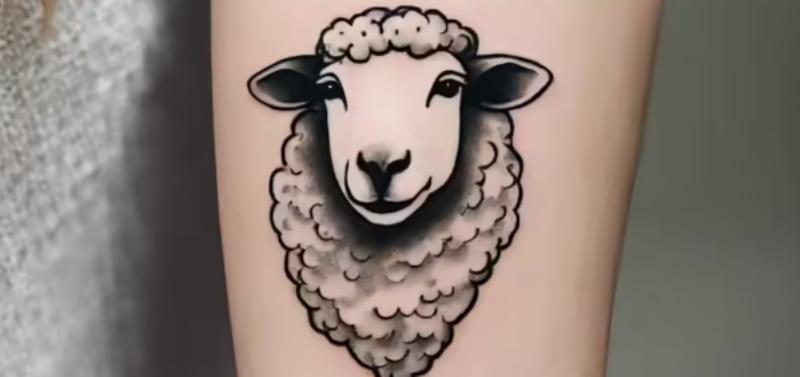
Time to upset people and get quoted out of context. Yep, it’s time to talk about tattoos. Before I commence, I should point out I have friends with tattoos, just like I have friends and relatives who got the COVID vaxxxines. I still love my friends and relatives, but it doesn’t mean I have to like ‘body art’ or toxic drugs.
That said, you can wax lyrical about evolving attitudes, the folly of judging a book by its cover, and insist you don’t care what others think (let’s face it, you do), but it doesn’t change the following facts about tattoos:
Tattoos will still cause you to be judged negatively by many others - including those with tattoos!
If you get a tattoo and you’re a decent girl, a lot of men - and women - will assume you’re not.
People with tattoos are consistently rated either no more or less attractive than people free of tattoos.
Despite increased acceptance/indifference, there still remain sectors where visible tattoos will ruin your employment prospects quicker than pasta sauce and red wine will ruin a white shirt.
Tattoo inks contain a number of known toxins and carcinogens, and emerging research is linking tattoos to increased risk of certain cancers.
So how did we get to the current situation, where every third person now has a tattoo?
Are negative stereotypes of tattooed people outdated, or does research suggest they actually have some basis in fact?
Tattoos: Once Frowned Upon, Now Mainstream
Tattoos were once associated with criminals, bikers and other “undesirables”, and generally viewed as a marker of low socioeconomic status. It may seem strange to those of you born after the rise of thug culture, but there was once a time when very few people wanted to look like they just completed a stint in San Quentin.
How things have changed. Nowadays, tattoos are a mainstream trend that has mushroomed during the last few decades.
A 2019 poll of 1,000 Americans by market research firm Ipsos found 30% of Americans had at least one tattoo, an increase from 21% in 2012.
Similarly, in a 2023 Pew research survey of 8,500 US adults, 32% reported at least one tattoo - up from 23% in 2010.
Females were more amenable to the tattoo trend, with 38% of women having at least one tattoo, compared with 27% of men. In the under 50 demographic, more women are inked than not. Pew found 56% of women ages 18 to 29, and 53% of women ages 30 to 49, were tattooed.
An international online survey published in 2019 examined tattoo prevalence among 11,000 respondents in five major countries: Brazil, China, France, Russia, and the US. Tattoo prevalence ranged from 11.7% in Russia to 31.5% in the US. In all countries except Russia, more women were tattooed than men.
So why are so many people now getting tattoos, once considered the hallmark of miscreants?
Self-Declared Reasons for Getting Inked
Not so long ago, one of the most commonly cited reasons for getting a tattoo was to express one’s “individuality”, a most ironic motivation given that tattoos have a long history as markers of tribal/group/gang affiliation.
After interviewing 27 tattoo artists and 65 clients, Michael Atkinson, a social scientist from McMaster University, concluded the ‘individuality/rebellion’ arguments for tattooing were untenable.
Tattooing “is a learned cultural habit … Modifying the body as a normative act is learned through and reinforced by one’s interdependencies with others”, he notes. As one tattoo enthusiast he spoke to admitted, “I never thought about getting tattooed until I started hanging around with a lot of people who had them, you know.”
The tattoo “renaissance” is being fueled, not by mavericks with a staunch independent streak, but by people emulating others. It’s a snowball effect: The more people who get tattoos, the more other people see them and want to be part of the trend.
“Tattooing’s turned into a fashion accessory, which I’m all against, because tattooing is not a fashion accessory, it’s a way of life,” says tattooist George Bone, who once held the the Guinness Book of World Records title for most tattooed man. “I used to be different, outrageous, but now I’m normal. I’ll have to think of something else!”
A study of 151 tattooed French people got closer than most to the truth regarding tattoo motivations. Every person in the study was recruited after seeking tattoo laser removal, so by that point many had probably tired of kidding themselves (and others). In this survey, the most commonly cited reason for getting tattooed was “Imitation or influence of entourage” (i.e. copying others and succumbing to peer pressure).
A recent study of 302 dermatology patients with tattoos in Turkey found many were still citing the rather fanciful individuality motivation, with the most common reasons being “to feel independent”, “to feel better about himself/herself” and “to look good”.
Women had higher scores than men regarding tattoo motivations of “to be an individual” and “to have a beauty mark”.
Reality check: If you’re getting a tattoo to “feel better” about yourself, it’s fair to say your issues run far more than skin deep.
If you think emulating every other Tom, Dick and Katy Perry is going to help you “be an individual”, your reasoning is, to put it mildly, misguided. If looking different to the majority is a marker of individuality, then the Pew results indicate tattoo-free women under 50 now have a stronger claim to ‘uniqueness’ than their inked-up sisters.
As for getting a tattoo to make yourself more attractive, people should think long and hard whether this will be achieved by markings that, from a distance, often look like scars or blemishes. In fact, those big patches of blue-green ink that are commonplace nowadays often look gangrenous from across the room.
As you’re about to learn, when people are asked to view photographs of the same subjects with and without tattoos, respondents almost always rate the tattooed image as either no more attractive or less attractive.
Hold the incredulity, I come bearing receipts.
In North America, where everyone from Justin Bieber to Justin Trudeau now has a tattoo, the individuality argument is a non-starter. Nowadays, having a tattoo is about as unique as eating McDonalds.
Of course, that didn’t stop 17% of the US respondents in the aforementioned five-countries study citing “individuality” as their motivation for getting tattooed. In fact, this reason was cited by 15% of the overall sample, beaten only by celebrating a milestone event (26%) and embellishment of the body (25%).
In the 2023 US Pew survey, the most commonly cited reason for getting inked was “to honor or remember someone or something”: 69% of tattooed adults said this was either a major or minor reason they got any of their tattoos.
Just under half (47%) said they got a tattoo to “make a statement” about what they believe, and 32% say they got at least one to improve their personal appearance.
Welcome to Planet Shallow, where ‘making a statement’ means getting a tattoo, then dutifully lining up to get your depop shot.
Before I get inundated with people telling me they have a tattoo but never got the vaxxxine, I never said one automatically leads to the other. I have a tattooed friend who is staunchly anti-vaxxx, but he’s always had a skeptical streak. His ability to think for himself is evinced by his ability to think for himself, not by markings on his upper arm.
At any rate, tattooed or not, if you Just Say No to Drugs mandated by malevolent globalist assholes, then stand tall and proud … and a big virtual high five from yours truly!

If You Want to See Art, Go to a Gallery
I’ll never get why someone with smooth, clear skin would want to cover it up with bodily graffiti ‘art’. I cringe every time I see an attractive girl at the gym, whose efforts are clearly paying off, only for her to turn around and reveal an arm or back that looks like a billboard for the local tattoo parlour.
Ugh.
“Eve”, a 30 year old woman interviewed by Atkinson, said: “I see tattooing as crafting your body into a piece of moving art. Look at my arms . . . what is naturally attractive about a blank arm? Place a beautiful piece of art on your arm and it becomes something unique, something coloured, something fluid and moving. . . . Tattooing might be our generation’s call to be aware of artistic bodies.”
I’m going to let Eve, and tattooed readers, in on a little secret. Sit down for this, folks, it will blow your mind!
To those of us who haven’t watched too much Underbelly, those tattoos you think look “unique” and “artistic” simply look like … tattoos. That’s it. After you’ve seen more than a handful, it becomes a case of “seen one, seen them all”. We don’t stop to actually examine your tattoos, because … no offence … we really don’t care. We’re just not stopping in the supermarket aisle and thinking, “Wow, this person’s got a tattoo of a tiger … they’re so different to the person I saw yesterday who had a tattoo of a lion!” Truth be told, we’re far more interested in getting over to the meat section to see if the topside is still on sale.
At first glance, Eve sounds like just another misguided trend follower, one who earnestly thinks joining the multitude of women her age with “something coloured” on their arms somehow makes her “unique”. She thinks tattooing might be her generation’s “call to be aware of artistic bodies”, rather than just another example of herd behavior - albeit a more invasive and permanent one than most past trends. Dated hairstyles can be trimmed, tacky fashion items can be donated to a charity shop, but getting rid of tattoos is a far more laborious and expensive endeavor.
On a deeper level, psychologists would probably have a field day analyzing a woman who earnestly asks what is naturally attractive about “a blank arm”, despite clear skin free of carcinogen-containing ink being entirely natural.
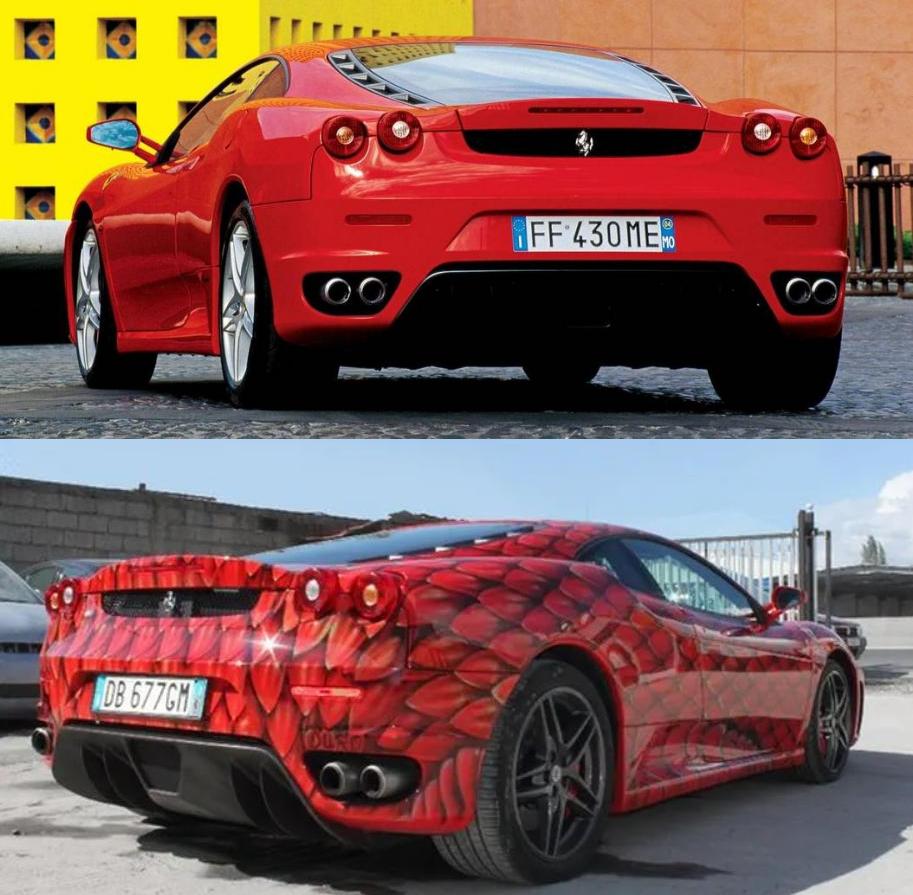
It’s like looking at the beautiful, flowing panels of an Italian supercar, and deciding it needs an airbrushed lion or dragon plastered down the side to make it “attractive”.
That’s not unique - it’s sacrilege.
“Tramp Stamp”? Negative Perceptions of Tattooed People Still Persist
Despite their popularity, negative perceptions of tattoos are still pervasive, and tattooed females seem to be judged more harshly.
Degelman and Price (2002) showed high school and university students two colored photographs of a young woman. Both photos were identical, except one showed a black 10 cm dragon tattoo on her left upper arm. When sporting the tattoo, the woman was rated significantly lower on 9 of 13 personality measures: Attractiveness, athleticism, motivation, honesty, generosity, religiosity, intelligence, and artistic ability.
Remember, it was a photo of the exact same woman, with the only difference being a sole, relatively small tattoo. Yet that single tattoo was enough to negatively alter the raters’ impressions of her.
Sixty-seven percent of the students were female and 14.3% had at least one tattoo. This didn’t effect the ratings: Females and tattooed students were just as likely to give poorer ratings when the tattoo was added.
Seiter and Hatch (2005) similarly reported that a female model with a tattoo was rated as less competent and sociable than without a tattoo.
More recently, Broussard and Harton (2018) found tattooed targets, especially women, were rated as stronger and more independent, but were rated more negatively overall when considering other character attributes.
Twenty-four percent of raters had at least one tattoo themselves but, again, people with tattoos were no less negative toward the tattooed targets.
What about the “tramp stamp” syndrome, in which women with tattoos are perceived as being, you know, easy like Sunday morning?
In 2007, Swami and Furnham reported on this very issue. They recruited 160 British undergraduate students, 14% of whom had tattoos and 71% of whom said they would consider getting a tattoo in the future. So the majority of the respondents in the study were by no means anti-tattoo.
These tattoo-amenable participants were shown a series of illustrations of blonde and brunette females wearing 1, 2 or 3 tattoos. The tattoo locations were arm, ankle and hips; the designs included a tribal band (arms, ankles) and a butterfly (hips).
The researchers asked the subjects to rate how physically attractive and sexually promiscuous they thought the illustrated women were.
The participants were also asked to estimate the number of alcohol units they believed the depicted women would consume on a typical night out.
The subjects rated tattooed women as less physically attractive, and this rating worsened as the number of tattoos increased.
The subjects also rated tattooed women as more sexually promiscuous and consuming more alcohol during a night out. Again, these negative perceptions became stronger as the number of tattoos increased.
In this study, brunettes were rated as more attractive than blondes, while blondes were rated as more sexually promiscuous. Blonde women were also perceived as consuming more alcohol during a night out. So if you’re tattooed and blonde, you may just have an extra set of negative stereotypes to overcome.
Once again, subjects with tattoos were just as likely to negatively rate female tattoo wearers and blondes. Gender, religion and ethnicity also had no effect on the ratings.
Perceptions of Tattooed Males
They may not admit it, but men often get tattoos to look ‘tough’ and more masculine, and to attract the opposite sex. Are they onto something? Or are they just as misguided as women who think getting tattooed will make them more attractive?
Polish researchers took photos of nine non-tattooed men aged between 19-35 years, and created two sets of images. One image showed each man in their non-tattooed state, the other was identical except for a tattoo of neutral abstract design photoshopped onto an upper arm.
The images were then shown to 2,369 exclusively heterosexual women (mean age= 24.6) and 215 exclusively heterosexual men (mean age= 25.5).
Women rated tattooed versions of the males as healthier, more masculine, dominant and aggressive. Despite this, they rated the tattooed men as no more or less attractive. Women further assessed tattooed men as worse potential partners and parents than non-tattooed men.
Inversely, male raters assessed tattooed versions of the pictures as more attractive, but not more or less healthy than the originals. Men also rated the tattooed versions as more masculine, dominant and aggressive. Their assessment of tattooed men as potential partners and parents was not influenced by tattoo status.
So tattoos did little to impress the women, but the men thought they were more attractive. Since the study participants were exclusively heterosexual, the researchers figured the male raters judged the photographed men as potential rivals. They further hypothesized that men believe tattoos are attractive to women, a belief that would appear to rest upon “on cultural stereotypes regarding women’s perception of [male] attractiveness.”
In a more recent Australian study, researchers conducted an online survey in which participants were presented with images of nine shirtless Caucasian males possessing a variety of body types. Each of the nine images was further presented with the model showing no tattoo, a medium tattoo, or a large tattoo. Below is an example from the study paper.
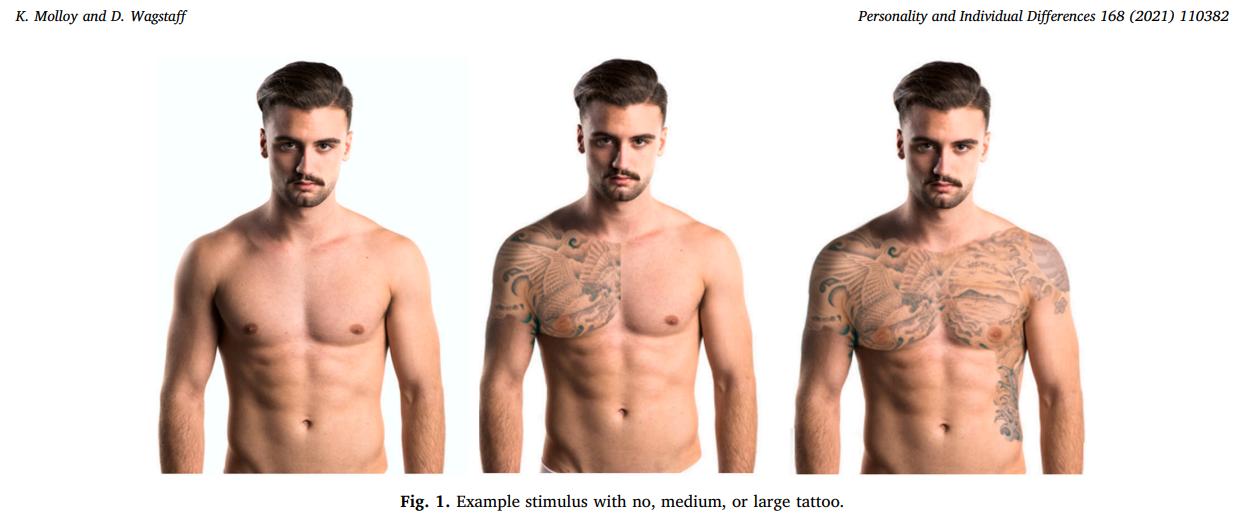
The survey respondents were 146 men and 299 women, ages ranging from 18 to 71. Of these, 23 men and 105 women possessed a tattoo.
As part of the survey, respondents had to rate their own physical attractiveness. Men and women without tattoos, and men with tattoos, all rated themselves similarly (just over 4 on a 7-point scale). Women with tattoos, however, rated themselves a point lower than their inked male counterparts.
When asked to rate the male models, ratings of attractiveness, trustworthiness, health, dominance, and aggressiveness were not significantly affected by tattoo status, nor the gender of the rater.
For both genders, increasing tattoo size decreased perceptions of the model’s ability to be a good partner and father.
Interestingly, male respondents rated non-tattooed males as more masculine.
Tattoo ownership had no effect on these ratings.
So males with tattoos are generally not viewed as more attractive by the opposite sex, and tattooed females are not viewed as more attractive by either gender. So if you’re spending hundreds or even thousands of dollars to get inked up in the hope of making yourself more attractive, well … the money would be better spent on a gym membership and wardrobe update - and some good books to exercise your brain.
To top it off, males with tattoos are perceived as worse partners and fathers, while women with tattoos are rated as being sexually looser and heavier drinkers. Which means tattoos don’t help matters if you’re part of the shrinking demographic that wants to attract a quality long-term partner, instead of sloppy hook-ups and losers on Only Fans.
Which brings us to the next obvious question: Do negative perceptions of tattooed folks have any basis in reality?
Buckle up folks, we’re about to head further into non-PC terrain.
Personality Traits of Tattooed vs Non-Tattooed People
Research consistently shows that premarital sex increases the risk of divorce. A recent analysis of the long-running National Longitudinal Study of Adolescent to Adult Health study detected three tiers of divorce risk, with the lowest risk for those with no premarital, non-spousal partners. A modest increase was seen for those with 1-8 partners, and a sharp increase for those with 9 or more partners.
So the more someone screws around before marriage, the more likely they are to keep screwing around during marriage.
Who would’ve thought.
With that in mind, let’s see how those with tattoos rate when we examine their body counts and other factors that can affect both relationship stability and general wellbeing.
Research published around the turn of the millennium found tattooed US and Australian college/university students were, in general, more likely to abuse alcohol, use illegal drugs, be arrested more often, have more sexual partners, and engage in unprotected sex with strangers than those without a tattoo (Burger & Finkel 2002; Drews et al 2000; Greif et al 1999).
A 2004-2005 survey of almost 9,000 Australians found tattooed men were more likely to smoke, had a higher number of lifetime sexual partners, and were more likely to have been diagnosed with depression. Tattooed women were more likely to be current smokers, to have used cannabis in the previous 12 months, and also had a higher number of lifetime sexual partners.
After adjustment for age and other demographic variables, tattooed men and women were 5 and 6.4 times more likely to report 11 or more lifetime sexual partners, respectively. They also had a higher overall risk of sexually transmitted infections, although this disappeared after adjustment.
In 2010, Koch et al reported on a survey examining legal and illegal “deviant behavior” in a sample of over 1,700 US college students. Tattooed students were significantly more likely to have ever used illegal drugs, to use marijuana, and to have engaged in binge drinking in the week prior to the survey.
The number of sexual partners reported in the previous 12 months rose step-wise with the number of tattoos; individuals with 4+ tattoos were almost 5 times more likely to report having 9 or more sexual partners in the previous 12 months.
Those with 4+ tattoos were also 8 times more likely to have been arrested for a non-traffic offence than students without tattoos.
The researchers also included body piercings in their analysis. Students with body piercings were more likely to use illegal drugs, to smoke marijuana, and to have been arrested. They were also more likely to have had more than 9 sex partners in the past year, although the difference was not statistically significant.
However, when students with intimate piercings (i.e. nipple and genital area) were compared to those with non-intimate piercings, the former were significantly more likely to engage in every surveyed form of deviant behavior except binge drinking. Those with intimate piercings were significantly more likely to use drugs, smoke weed, have been arrested, cheat on college work, and have had more than 9 sexual partners in the previous 12 months.

In a 2012 paper, Swami et al reported on 136 subjects recruited at an inner city tattoo parlour in north London. Upon visiting the parlour, 62 of the subjects made an appointment to get their first tattoo, while the remaining 74 left.
The subjects from both groups completed an array of psychometric tests. To measure sexual openness, the researchers used the Revised Sociosexual Orientation Inventory (SOI-R), a nine-item questionnaire that asks how many different sexual partners one has had in the last 12 months, along with their lifetime number of one night stands. Respondents are also asked how strongly they agree or disagree with statements such as “Sex without love is OK”, “I can imagine myself being comfortable and enjoying ‘casual’ sex with different partners”, and “I do not want to have sex with a person until I am sure that we will have a long-term, serious relationship.”
The results found tattooed participants had significantly higher SOI-R scores (indicating more ‘unrestricted’ sexual behavior) than those who didn’t get a tattoo.
Tattooed individuals also showed higher scores for extraversion, sensation-seeking and need for uniqueness. The latter suggests tattooed individuals have a greater need to be perceived by themselves and/or others as being “different”, and they believe a tattoo will assist in fulfilling this need.
The participants who got tattoos also rated lower for conscientiousness (the trait of being responsible, careful, and diligent) than individuals who did not get a tattoo. This makes sense, given that the tattoo removal market is thriving and is predicted to triple in revenue during this decade. It’s clear a lot of people are getting tattoos without carefully thinking through the consequences. People mature, their tastes change, and that sweetheart whose heart-encircled name you branded onto your arm sometimes turns out to be the psycho bitch/abusive jerk from hell.
In line with other surveys, a 2017 study by Mortenson et al of 3,000 US adults found 35% had one or more tattoos, and more females than males had tattoos (58% vs. 42%, respectively). Tattooed individuals were twice as likely to smoke and report having an alcohol or drug problem.
Individuals with tattoos had significantly higher rates of bipolar disorder, migraines, chronic pain, moderate to severe depression and moderate to severe anxiety.
The respondents were also asked about their perceptions of tattooed individuals. Ratings of the attractiveness of those with tattoos differed by tattoo status: 10% of those without tattoos perceived those with tattoos as being more attractive, while 35% perceived them as less attractive. For those with tattoos, 26% saw those with tattoos as more attractive and 5.5% as less attractive than those without tattoos.
Once again, we see that enhancing attractiveness or beauty is a misplaced motivation for getting a tattoo; in this study, even three-quarters of the tattooed respondents said they found their tattooed counterparts no more or even less attractive than non-tattooed folks.
To be sure, a minority of folks did report finding tattooed people more attractive. Before you decide to embrace a target-the-niche-market approach, you might want to first consider the type of person and relationship you want. Meaningless hook-ups? An audience of simps on OF? Women with terminal Daddy issues and malignant bad boy syndromes?
Go for it.
Otherwise, you may want to seriously reconsider the wisdom of getting a tattoo.
Additionally, those without tattoos were more likely to view tattooed individuals as less intelligent (25%) and less professional (42%) than those with tattoos (5% and 15%, respectively).
When asked the reason for getting a tattoo, the most reported responses were to express themselves (62%), “fun” (41%), or remembrance (34%). Of those with tattoos, 18.2% reported regretting one or more of their tattoos. Remembrance as the reason for the tattoo was not associated with regret, while getting tattooed while drunk/high, under peer pressure, on the head, neck, hands, wrist or fingers was strongly predictive of regret.
In a 2020 paper, Skoda et al reported on 814 Canadian females ranging in age from 16 to 66 years, 48% of whom were tattooed. Tattooed women were more likely to report being gay (4.6% vs 2.8%) or bisexual (30.5% vs 16.5%), than non-tattooed women.
The women completed an anonymous online survey comprised of five rating scales examining sexual openness, religiosity, sensation-seeking, extraversion/neuroticism, and gender role beliefs. Again, sexual openness was measured using the Revised Sociosexual Orientation Inventory.
After controlling for religiosity and age, a statistically significant difference between groups was observed, with tattooed women reporting a more unrestricted sexual orientation than non-tattooed respondents. Tattooed women also reported greater sensation-seeking needs and higher endorsement of egalitarian beliefs than women without tattoos.
However, sensation-seeking and egalitarianism only explained 2% and 3% of the variance in sexual openness, respectively. This suggests variables not measured in the present study would more strongly explain differences in sexual openness between tattooed and non-tattooed women.
A greater need for validation, perhaps?
Personally, I feel the need, the need for … another disclaimer, before I get angry comments like “so now you’re calling me a dishonest, cheating, criminal, hoochie ho whorebag because I’ve got a tattoo?!? How daaaaare you!!!”
I’m not saying that.
I’m saying that the research shows you’re somewhat more likely to be a dishonest, cheating, criminal, hoochie ho whorebag if you’ve got a tattoo.
Sheesh, stop putting words in my mouth.
Having a tattoo doesn’t preclude you from being a Florence Nightingale, and I never said otherwise. You can certainly be an awesome, wonderful, non-promiscuous human being while sporting tattoos.
Maybe Skoda et al can get me out of trouble here:
“Our results lend support to the popular stereotype of tattooed women as more sexually open and align with previous findings suggesting increased sexual permissiveness in tattooed individuals. The stereotype of tattooed women as open to casual sex may thus reflect a degree of reality, however, this does not permit the discrimination or stigmatization often reported by tattooed women, nor the making of assumptions about their sexual availability.”
This probably isn’t a good time to mention that porn stars are more likely to have tattoos than the general population. So I won’t mention it. I won’t mention that an analysis of 10,000 porn stars posted in 2013 reportedly found 45.5% had at least one piece of body art. This compares to the 2010 Pew Research poll that found the prevalence of tattoos in the general US population was 23%. To be fair, most porn performers were in their 20s and 30s, but even after limiting the general population comparison to similarly-aged and tattooed Gen Xers (32%) and Millennials (38%), porn stars still had a notably higher rate of ‘body art’.
Speaking of people who make their living by demeaning and dehumanizing themselves, a tattoo index of sorts was evident when I visited Thailand last year. If you’ve ever traveled through the Land of Smiles, you may have noticed in places like Bangkok and Chiang Mai, tattoos aren’t very common among the females - most of whom have honest jobs. However, in places like Pattaya, where a significant portion of the female population earns a living by ‘servicing’ creepy old Western sexpats, women with prominent tattoos are everywhere.
Aggression, Rebellion and Tattoos
Thanks to countless images of outlaw bikers, gang members, and punk rockers plastered with ink, there is a connotation that tattoos signify a rebellious streak. Indeed, the previously discussed 2017 study by Mortenson et al found 34% of non-tattooed and 23% of tattooed respondents perceived individuals with tattoos as more rebellious than those without.
It should be noted that outlaw motorcycle clubs and street gangs typically impose upon their members an extra set of rules and requirements, in addition to those imposed by society at large. The consequences for not meeting those extra obligations can be quite severe.
I’ll pass. The government’s drive to control every aspect of our lives is more than enough overbearing BS for me.
When you ask bikers and street gang members why they joined a gang, one of the most common responses is that they relished the camaraderie, the “brotherhood”.
In other words, they longed to belong.
As for musicians, tattoos are no guarantee they genuinely harbor the anti-authoritarian, non-conformist attitude that once exemplified the punk genre.
First case in point are the tattooed members of Blink-182, whose co-founder Mark Hoppus publicly expressed disappointment at Trump’s 2016 election win. That didn’t stop him and the rest of the band from eagerly embracing the highly toxic products of Trump’s Operation Warp Speed.
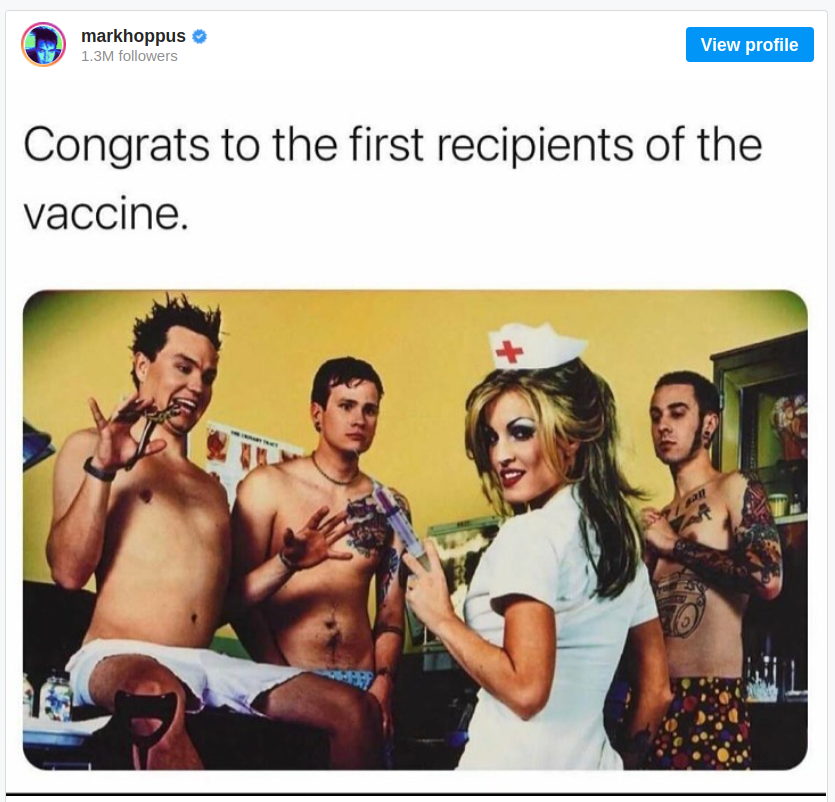
By March 2021, Hoppus had already received two shots of the vaxxxine. Shortly afterwards, at the start of May 2021, he was diagnosed with late-stage B-cell lymphoma. If you’ve pored through the case studies of sudden post-vaxxxine malignancies, you’ll know leukemia and lymphomas are a common theme. Luckily for Hoppus, he achieved remission after a “brutal” ordeal of chemotherapy and even suicidal ideation.
Think, people, think. When flu season rolls around and the government tells you it’s in fact a deadly new ‘virus’, and the only visual proof of this are ridiculously fake videos of people ‘collapsing’ in communist China, don’t be a gullible idiot. Stop sleepwalking through life and use your goddamn brain for a change.
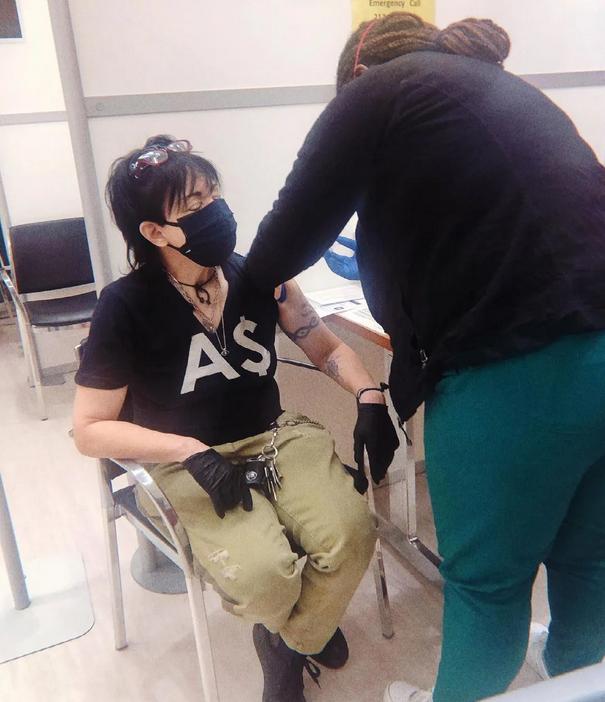
Fellow Gen Xers will remember Joan Jett, the leather-clad rocker whose Real Wild Child image was constructed around a rebellious, untameable, who-gives-a shit-what-you-think shtick.
It was all a facade. She flipped the bird to her fans and photographers, but not the authorities. Here she is, doing her bit to promote the Turbocancercarditis shots:
And who can forget Green Day, who made a highly profitable anthem out of declaring they didn’t want to be an “American Idiot”, just another dupe blindly swallowing what was fed to them by the corporate media?

Turns out being an idiot who blindly believes what the corporate media tells you is A-okay with Green Day after all. Here they are, in July 2021, putting on a show exclusively for American Idiots gullible enough to get injected with highly toxic drugs made by corporate criminals as part of a fake ‘pandemic’ scam that could not have succeeded without the help of the globalist-owned corporate media:

Tattoos form a key part of the ‘rebellious rocker’ image, but it’s all a carefully manicured and highly lucrative mode of contained rebellion. The overwhelming majority of rock stars are not genuine mavericks; many, quite frankly, are simply hedonistic, self-indulgent, overgrown brats making lots of money courtesy the same system they claim to detest.
Remember the 2012 paper by Swami et al reporting that tattoos were associated with higher levels of sensation-seeking, egalitarianism, and sexual openness? Tellingly, the researchers found no difference between tattooed and non-tattooed respondents in attitudes to authority. This indicates that, while they may feel a greater need to look “unique”, tattooed individuals are just as likely to go along with whatever draconian mandate or absurd psy-op GloboPsycho decides to implement.
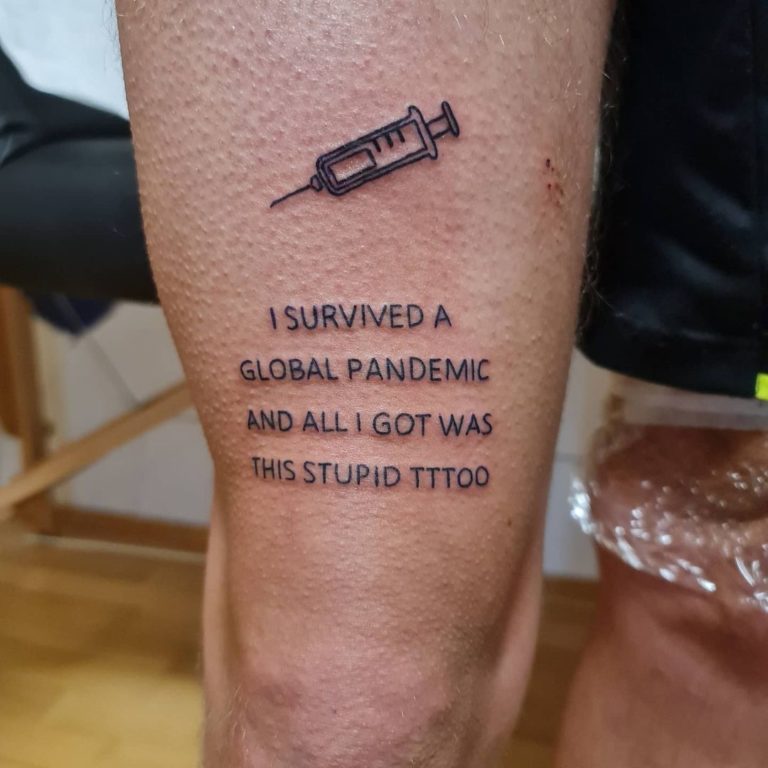
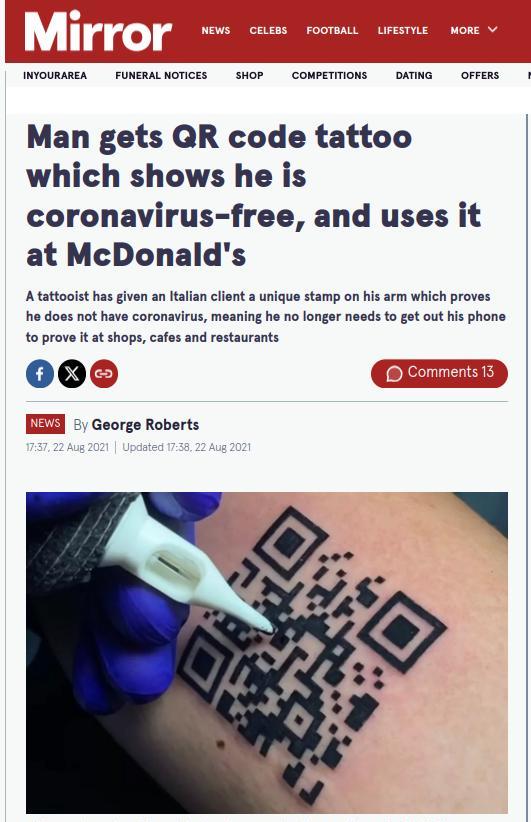
In a follow-up study, Swami et al conducted street interviews with a sample of 378 adults in London, 97 of whom had at least one tattoo. The researchers administered psychometric questionnaires to measure aggression and rebelliousness among the respondents.
The researchers found tattooed adults had higher reactive rebelliousness than non-tattooed folks, but no differences in terms of proactive rebelliousness. If you’re wondering what the difference is, proactive rebelliousness is when you reject accepted behaviors or requests simply for fun and excitement. An example question measuring this trait was: “If you are asked particularly not to do something, do you feel an urge to do it?”
Reactive rebelliousness, meanwhile, refers to committing unpremeditated acts in response to frustrating or disappointing events and situations. A sample question measuring this trait was: “If you get yelled at by someone in authority, would you (a) get angry and argue back; (b) try hard to avoid an argument; or (c) not sure?”
So, if we were to take their answers at face value, tattooed respondents were more likely to want to commit an anti-social act for kicks, but when actually confronted by authority they were no more likely to hold their ground than the non-tattooed.
Tattooed folks also rated higher on anger and verbal aggression than non-tattooed adults. There were no between-group differences in terms of physical aggression and hostility.
The caveat is that the magnitude of the differences between groups was small; while they were statistically significant, the effect sizes were minimal. We also need to keep in mind that what people tell an interviewer they’d do and what they actually do when placed in that scenario may not always be the same thing. For obvious reasons, the bravado factor is often stronger in hypothetical discussions than in real life situations.
Getting a tattoo is probably the most authority-friendly form of ‘rebellion’ I can think of. Unlike refusal to comply and/or standing up to authority, getting images needled onto one’s self does absolutely nothing to destabilize the current corrupt and degenerate world order.
In fact, authorities probably welcome the self-placating delusion that tattoos “make a statement,” safe in the knowledge that ‘art’ on your arms, chest or back does absolutely nothing to derail their malevolent and genocidal antics.
The popularity of tattoos among military personnel and police, the front line robots who perform the dirty work of the ruling parasite class, further underscores that tattoos are about as anti-authority as a flu shot.
Job-Stoppers: Visible Tattoos and Employment
In 2018, French et al found little evidence from their US sample that tattooed individuals were more likely to suffer adverse wage or employment outcomes. A more recent paper by Tews at al reported older hiring managers viewed hypothetical non-tattooed candidates, especially males, more positively than millennials.
While researchers debate whether tattoos negatively impact employment prospects, there are real life examples showing visible tattoos can indeed harm your job prospects, at least in certain sectors.
In 2016, a Gold Coast woman was turned down from a job as a flight attendant for Qantas and Emirates, because she had a 2.5 cm anchor tattoo on her right ankle. Both airlines confirmed they had a no-visible-tattoos policy.
In 2014, a 26 year old UK trainee teacher was sent home on her first day of work at a Catholic primary school when staff objected to her multiple tattoos, including one on her neck. Her prospects of finding another teaching job were pretty much crushed when nude “erotic … compromising and revealing” photos of her were subsequently discovered online.
In Australia, there is no law preventing employers from banning tattoos in the workplace - unless you can prove your tattoo is an expression of your race/color/nationality/ethnicity (a portrait of your cat or favorite dead rock star won’t cut it). No-visible-tattoo workplace policies are also legal and common in the US and UK.
Face, hand and neck tattoos are known as “job stoppers”, and for good reason. In white collar environments especially, one of the best ways to ensure you remain unemployed is to get a tattoo in one of these hard-to-cover locations. Some of the older, wiser and more ethical tattoo artists will often refuse to do hand, face and neck tattoos for this very reason.
Johnny C Taylor Jr, president and CEO at the US-based Society for Human Resource Management, which represents around 300,000 HR professionals globally, told BBC there’s a sliding scale of acceptability when it comes to tattoos.
“In terms of most acceptable to least acceptable, if you can hide it, it’s OK. Then there’s the employers who say you can have a tattoo, but it shouldn’t be a distraction; it covers half your face or is something that might offend other people, like a scantily-clad woman on the biceps of a man. Lastly, there’s the category of just not acceptable, and that typically means when tattoos show up on your face and it’s something that no one can avoid looking at, [or] when the nature is truly controversial, a swastika for example.”
“More conservative industries, for example financial services, banking and healthcare, are going to be more conservative when it comes to tattoos,” Taylor adds. “We find a lot more liberal policies in entertainment, even in corporate entertainment where people at the most senior levels might have a visible tattoo. Those individuals would never do that if they were senior executives at a bank.”
Tattoos and Regret
One aspect of the tattoo phenomenon is beyond dispute: The tattoo removal industry is growing like a baby whale. One NYC market research firm predicts the global tattoo removal market will grow from US $4.3 billion in 2021 to $12.2 billion in 2030.
In the aforementioned Turkish survey, where the mean age of participants was 28 years, 26% expressed regret for at least one of their tattoos. This is in line with the US Pew survey, which found 24% ever regretted getting one or more of their tattoos.
In a 2022 Harris Poll survey, 19% of the overall sample had or were in the process of having a tattoo removed, while 27% said they were likely to have a tattoo removed in the future.
Toughness Comes From Within
If men aren’t pulling more women because of their ink, then “[i]t seems that men are tattooing themselves to compete with other males rather than to be chosen by potential mates.” (Galbarczyk, Ziomkiewicz 2017)
There’s no doubt at least some males get tattoos to look “tough” and command respect from others, but many former prisoners and gang members can tell you this is not the brightest of motivations.
Huang et al reported on 826 patients receiving treatment at the Ya’stuvo Tattoo Removal in LA between January 2016-December 2018. The non-profit studio specializes in removing gang-related or visible tattoos located on the hands, neck, or face.
Reasons for receiving a tattoo included gangs (46%), a current or ex-relationship (28%), and decoration (20%). The most common reasons for tattoo removal were employment (66%), readiness to change life (47%), maturity (47%), family (43%), and negative attention due to tattoos (37%).
In another Californian study, researchers surveyed adults who’d been in trouble with the law and were receiving free laser tattoo removal between 2016 and 2021 via the UCSD Clean Slate Free Tattoo Removal Program.
Patients were predominantly male (74%) and most (81%) reported tattoo-related discrimination, including at work or in job interviews, by police, and in public locations.
Reasons for removal included desire to present a better image, to be treated better by potential employers or get a new job, to be a good role model for family/friends, be treated better in the community, and to feel better about one’s self. Eliminating stigma by association was also an important motivator, with 40% of participants no longer identifying with a group/gang and 23% wanting to prevent problems with law enforcement.
In follow-up surveys after tattoo removal, respondents reported the following benefits:
“Viewed favorably and treated better in the community” (48%)
“Improved relationships with friends and family” (17%)
“Increased confidence and self-esteem” (25%)
“New or improved career opportunities” (18%)
Contrary to what the “buy my course and I’ll teach you how to be an alpha male” crowd would have you believe, machismo is overrated. Being a real man means taking care of your responsibilities, looking out for your friends and loved ones, and standing up for what’s right. Trying to impress or intimidate others, whether by superficial means like tattoos or other more intrusive behaviors, is less a marker of manliness and more a red flag for immaturity and insecurity.


In Summary
The tattoo craze shows just what a superficial, plastic world we truly live in. It shows just how clueless so many people are as to what really constitutes uniqueness and individuality.
Put a hundred people in a room, some with brightly colored hair, others with varying degrees of tattoos and piercings, some with outrageous and flamboyant clothing, some plainly groomed and dressed, and guess who is the most unique and iconoclastic of the lot?
The small handful who think for themselves. The ones who don’t simply embrace what the mainstream media tells them or what the majority believe, nor embrace the seemingly contrarian view for no other reason than it is contrarian or bears SJW appeal. The ones with a healthy BS detector who first engage their rational faculties and critically assess a new piece of potentially life-altering information before giving it credence.
So very, very few people actually do that.
As Mark Twain wrote:
“We are discreet sheep; we wait to see how the drove is going, and then go with the drove.”
He further expounded:
“I know your race. It is made up of sheep. It is governed by minorities, seldom or never by majorities. It suppresses its feelings and its beliefs and follows the handful that makes the most noise. Sometimes the noisy handful is right, sometimes wrong; but no matter, the crowd follows it. The vast majority of the race, whether savage or civilized, are secretly kind-hearted and shrink from inflicting pain, but in the presence of the aggressive and pitiless minority they don't dare to assert themselves. Think of it! One kind-hearted creature spies upon another, and sees to it that he loyally helps in iniquities which revolt both of them.”
“Monarchies, aristocracies, and religions are all based upon that large defect in your race--the individual's distrust of his neighbor, and his desire, for safety's or comfort's sake, to stand well in his neighbor's eye. These institutions will always remain, and always flourish, and always oppress you, affront you, and degrade you, because you will always be and remain slaves of minorities. There was never a country where the majority of the people were in their secret hearts loyal to any of these institutions.”
The tattoo rebellion isn’t going to save us, folks. It is, quite frankly, a load of MTV-level bullshit.
Jumping aboard the tattoo trend to express your “individuality” is akin to trashing your house to prove how tidy you are.
Getting tattooed to prove you are tough, rebellious and anti-authority, then lining up to get Sudden Death injections mandated by a bunch of dishonest, corrupt, sexual deviants - all in order to avoid the sniffles - is so patently absurd I really shouldn’t have to comment any further.
Claiming you don’t care what others think while sporting a visible tattoo is laughable. Getting an ostentatious body marking to prove how little you care what others think is compelling evidence you deeply care what others think. You’re just going to greater lengths (and spending more money) to act otherwise.
The biggest irony is that tattoos seem to offer little reward for enduring the associated time investment, expense, potential regret and negative employment outcomes. Tattooed survey respondents commonly cite enhancement of their appearance as a motivation, but as we’ve seen, research consistently shows tattooed people are viewed as no more attractive, and often less attractive, than their ink-free counterparts.
To top it all off, a newly emerging body of research is linking tattoos to certain types of cancer; namely, those in in areas where ink is known to deposit, such as the skin and lymph nodes.
The most recent study is noteworthy because it featured twins born in Denmark from 1960 to 1996. The researchers recruited 158 pairs of twins, of which at least one twin had been diagnosed with one or more of the following cancers after reaching age 20 years: Hodgkin or non-Hodgkin lymphoma, skin cancer, and bladder/urinary tract cancer.
While no increased risk was evident for small tattoos, those larger than the palm of a hand were associated with a 2.4-fold increased risk of skin cancer, and a 2.7-fold increased risk of lymphoma.
Only a few studies have been performed so far on the topic, so the link is hardly concrete. Given the burgeoning popularity of tattoos, we’ll no doubt see more such studies in the future.
What we do currently know for sure is that tattoo ink contains a variety of potentially toxic and carcinogenic ingredients, including heavy metals, polycyclic aromatic hydrocarbons, and primary aromatic amines, which are either unintentionally introduced along with the ink or produced inside the skin via processes such as metabolism and photodecomposition.
When the federal Health, National Industrial Chemical’s Notification and Assessment Scheme investigated tattoo inks being used in Australia, and interviewed various tattoo professionals, it found only 4 of 49 inks complied with the European standards.
Some of the nasties detected in the inks included polycyclic aromatic hydrocarbons, arsenic, lead, mercury, strontium, barium, amines, mercury and several colorants.
So while the jury is still out on the cancer risk of tattooing, Judge Anthony tentatively rules that allowing yourself to be injected with inks containing an array of shady substances is mutum ut cacas (dumb as shit).
For all these reasons, I give tattoos a robust LOSE/LOSE rating, and also score them highly on the following measures:
Superficiality
Waste of time and money
Indicator of a need to be “unique” and “different”
I also rate tattoos a solid FAIL on the Marriage Material scale, given that negative perceptions of flooziness and crappy partner/fatherness are accompanied by an increased statistical likelihood of promiscuity, substance abuse issues, legal problems, and mental health issues.
Anyhow, have a churro.
Ciao,
Anthony.
—
A further note on tattoo prevalence surveys:
An October 2022 online survey of 1,044 US respondents by The Harris Poll found nearly 40% of respondents had at least one tattoo.
The larger and more recent Pew research survey of 8,480 US adults found 32% reported at least one tattoo.
An April 2018 Dalia Research online survey of 9,054 respondents from 18 countries (Argentina, Australia, Brazil, Canada, Germany, Denmark, Spain, France, the UK, Greece, Israel, Italy, Mexico, Russia, Sweden, Turkey, the USA, and South Africa) found, overall, 38% of people had tattoos. The survey found 46% of US respondents had at least one tattoo. It also declared Italy to be the most tattooed country, with 48% of respondents reporting at least one tattoo. A quick online search shows numerous websites have eagerly repeated this claim as fact, despite a 2015 survey by the Italian National Health Service finding only 12.8% of the general population in Italy were sporting tattoos.
Why the sometimes wildly disparate findings?
Methodology, my little grasshoppers, methodology.
The Dalia survey sample averages out to around 500 people per country, while the Italian NHS study surveyed 7,608 people over 12 years of age across Italy. This, along with the results of the US surveys, shows a pattern in which the prevalence of tattoos declines with increasing sample size. This demonstrates why making bold pronouncements from studies with small sample sizes isn’t always a good idea.
Leave a Reply