
In 2023, a survey of Gen Zers aged 13-26 found 57% wanted to be - not doctors or research scientists, or even star athletes - but influencers.
Before anyone starts up with the predictable “this generation is cooked!” carry on, a survey by the same polling firm found 41% of adults overall would choose an influencer career as well.
Motivations include “celebrity, fame and money” and a perception that becoming a paid creator is easy.
Except it isn’t.
Almost half (48%) of content creators make US $15,000 or less per year, according to a 2023 survey of more than 2,000 creators. Less than a third, 29%, make more than $50,000 per year doing it.
Needless to say, $15,000 doesn’t get you very far these days.
So we have a modern-day environment in which half the population wants to be an influencer, but where most of those who try will not make a comfortable living, because they simply will not attract sufficient views and attendant revenue (be it from ads, subscriptions, promotions, donations, etc).
What this effectively constitutes is a very large pool of candidates that, with the right incentives, might be swayed into doing things they really shouldn’t in order to achieve social media success.
Major Live-Streaming Platforms and Illegal Gambling, Money Laundering and Child Grooming
If social media is a cesspool, livestreaming is the scum at the bottom of that pool.
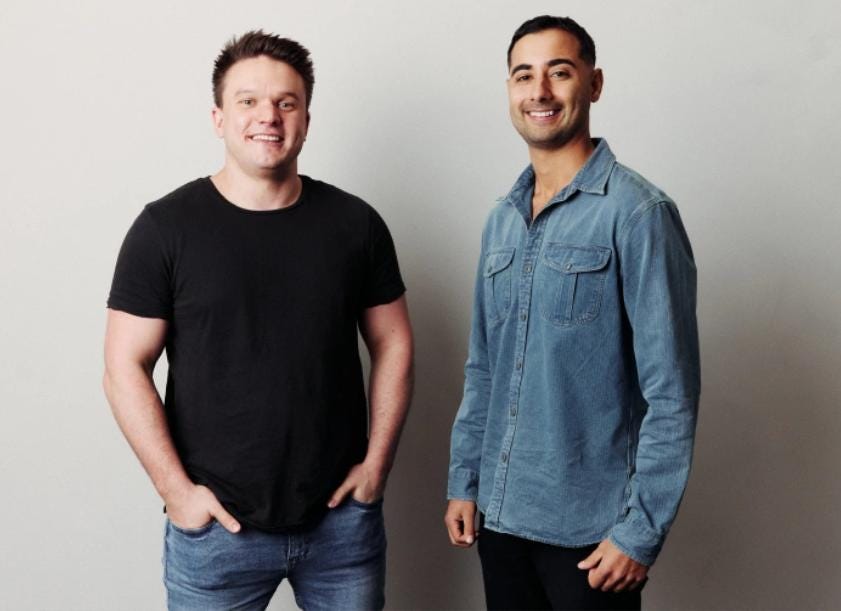
Kick is an Australian video livestreaming service based in Melbourne, owned by Ed Craven and and US-born Bijan Tehrani. “The pair’s instinct for marketing and willingness to operate in legal grey areas,” writes Forbes Australia, “have made them two of the youngest self-made billionaires in the world.”
Craven’s father, Jamie, was banned from working in financial services for five years and jailed for 6 months over the late 1980s collapse of Spedley Securities. Craven Snr is now listed as a director of Easygo, the parent company of Kick.
Kick has spent hundreds of millions of dollars signing up streamers, including Adin Ross, Trainwreck, Hikaru Nakamura, BruceDropEmOff, Amouranth, Tfue, xQc, Italian football journalist Fabrizio Romano, and political commentator Steven “Destiny” Bonnell.
Five years after its inception, Kick is still unprofitable and, as TheGamer notes, widely considered to be unsustainable. “There’s no logical way for it to keep the platform running on so little revenue from streams, especially considering its overall viewership is a fraction of Twitch’s. There’s also the fact that it apparently pays Amazon to use Twitch’s own video system.”
So how does it survive?
It relies on an infusion of money from the world’s largest crypto casino, Stake.com, also created by Craven and Tehrani. While many folks find online gaming distasteful, Premier League club Everton, the UFC, and Sauber Formula One team have had no qualms about accepting Stake as a major sponsor.
The City of Los Angeles, California, is not so enamored. It has filed suit against Craven and Tehrani, Stake.US, EasyGo, Kick, and other gaming suppliers. The young billionaires stand accused of running an illegal online gambling enterprise that violated several state and federal laws, including the Unfair Competition Law (UCL), False Advertising Law (FAL), and the Unlawful Internet Gambling Enforcement Act (UIGEA).
Stake.US is accused of designing an interface nearly identical to its international platform, but with the goal of circumventing California’s gambling regulations.
While online casinos have been banned in Australia for more than 20 years, a loophole in the law means it is perfectly legal to operate an online casino from the country, as long as it does not serve people in Australia or advertise here.
Stake.com’s business structure, being officially registered and licensed in Curacao, means it also sits outside Australia’s money-laundering laws.
As the Sydney Morning Herald wrote in a 2021 article about EasyGo, “Australia has emerged as a centre of global gambling industry - we sport the largest losses per person compared to any other country in the world. And now, aided by loopholes in online casino laws, Australia is now beginning to export its gambling obsession to the world.”
Sadly, thanks to Craven and Tehrani, Australia - long a bastion of drug abuse and sloppy hook-up culture - is also exporting other aspects of its penchant for social decay to the rest of the world.
Kick is infamous for its fast and loose approach to content moderation. Some streamers, in their pursuit of money and “clout”, have filmed themselves committing apparent crimes, like trespassing and sexual assault. Other prominent creators have had sex while streaming, brandished sex toys at children and made sexual comments toward girls as young as 13, reports the Sydney Morning Herald.
“It’s literally a playground for people to be degenerates,” says Kristin Gillespie, co-founder of Rights to Unmute, a New York-based not-for-profit tackling misogyny, bigotry, racism and harassment in gaming.
“I think people are realising the more controversial they are, the more shock factor involved in their content, the more viewers they get, and it can sometimes be a dangerous mix in that regard,” Craven told The New York Times in 2023.
Just how truly concerned Craven is by this dangerous mix can be garnered by his actions during a September 2023 Kick stream, when two streamers, Paul Denino and Mr. Pepper, paid a man in Australia to hire a prostitute for a sexual encounter.
When the woman realized the two livestreamers were hiding in another room and broadcasting the encounter, she walked out, though the man who had hired her tried to prevent her from leaving. Denino and Mr. Pepper were detained by the police, then released without charge. The cops said “no offenses had been committed.”
During the live encounter, Craven left several laughing emojis in the chat tool as the action was unfolding, and even donated $500 to Denino during the broadcast.
Raphaël Graven, 46, known online as Jean Pormanove or JP, was one of the biggest streamers in France. He died last year during a marathon 12-day Kick stream after apparently suffering abusive and humiliating treatment while viewers watched live. He had often appeared in extreme challenges where other streamers assaulted or humiliated him. In dozens of videos from past livestreams reviewed by CNN, Pormanove appeared to be the target of jokes, bullying, physical attacks and degrading stunts. These videos showed Pormanove’s fellow streamers competing to see how long they could throttle him, others showed him being shot with paintballs or doused with water.
Welcome to Planet Earth, where you are handsomely rewarded for actively making the world a worse place. While lots of folks struggle to pay their mortgage by busting ass laying pipes or manually loading pallets in a warehouse, the likes of Craven and Tehrani can become stupidly rich by promoting vice and degeneracy.
It must be some kind of cosmic joke, but I’m struggling to see the punchline.
An obvious question is why Craven and Tehrani remain committed to Kick when it is unprofitable and likely unsustainable without continual cash infusions from their crypto casino venture?
They cannot even begin to claim with a straight face their highly degenerate platform in any way leads to the betterment of society. So if money is not a motive, then just what is the true agenda behind Kick?
A possible clue to this riddle comes from TikTok, the wildly popular social media platform developed but not available in China (the local version of the app is called Douyin and, as you’re about to learn, differs markedly from the version plaguing the West).
TikTok Under Fire
TikTok was developed by Chinese company Bytedance and has become one of the world’s most popular social media apps. In September 2025, it was announced the US operations of TikTok would be sold to a consortium of investors including close Trump ally Larry Ellison of Oracle. The deal was completed in January, 2026, with ByteDance retaining 19.9% ownership.
In 2023, media outlets reported that while Western TikTok users gorge on a constant stream of brain rot, including hyper-sexualized dances and absurd viral trends, their Chinese counterparts are treated to a curated stream of videos promoting patriotism, social cohesion and personal aspirations.
“The algorithm is vastly different, promoting science, educational and historical content in China while making our citizens watch stupid dance videos with the main goal of making us imbeciles,” Nicolas Chaillan, former Air Force and Space Force Chief Software Officer told the New York Post.
In 2021, the company’s US subsidiary, TikTok Inc, conducted an internal investigation called Project Jupiter, focusing on how TikTok LIVE could be used by organized crime to launder money using the gifting feature. TikTok’s investigators found people were selling drugs and running fraud operations on the platform. The investigators also identified a “high” risk for money laundering on LIVE.
In 2022, Forbes published an article titled “How TikTok Live Became ‘A Strip Club Filled With 15-Year-Olds”. The sordid revelations prompted TikTok to launch another internal investigation, this one codenamed Project Meramec. It found a high number of underage users performed sexualized acts in exchange for digital currency – such as a gift emoji – that could be cashed out for real money.
So naturally TikTok immediately set about cleaning up the platform, right?
Wrong, according to over a dozen US attorney-generals, who sued TikTok, arguing the platform has violated consumer protection laws and contributed to a teen mental health crisis.
Among the numerous states suing TikTok is Utah. A June 2024 release from the Utah Department of Commerce says the company’s internal investigators reported “we have identified major money laundering criminal patterns on TikTok live platform.”
“Nevertheless,” alleges the Utah DOC, “TikTok refuses to establish accurate bookkeeping, real-time suspicious payment monitoring for fraud and money laundering, timely reporting processes to law enforcement of suspicious transaction reports, KYC verification for all users, or even processes to keep banned users off the platform.”
TikTok’s internal reporting admitted “the cruelty” of maintaining LIVE with its current risks for minors on the app. The reporting found, among other things, its LIVE feature had a higher proportion of minor users, and that “Minor users are more likely to access high severity risk LIVE content than adult users”.
In just the month of January 2022 alone, 112,000 TikTok users between 13 and 15 years old hosted LIVE sessions. These underage users also received a significant number of direct messages from adult users, raising red flags to TikTok that these minors were likely being groomed by adults.
Project Meramec revealed TikTok received not only “significant revenue” from “transactional gifting” - to the tune of one million Gifts in January 2022 alone - but that this revenue was in large part generated through transactions for sexual content.
Project Meramec also confirmed that LIVE was profitable in part because TikTok’s algorithm was working as intended by amplifying popular content to prioritize engagement on its app:
“[t]ransactional sexual content hits most of business’ metrics of success and is pushed to TopLives…”
[The] Live Recommendation algorithm prefers feeds with gifts, so [it] incentivizes sexual content.”
After the Forbes article, TikTok released a statement claiming it “has robust policies and measures to help protect the safety and well-being of teens . . . we immediately revoke access to features if we find accounts that do not meet our age requirements.”
This statement was false, asserts the Utah DOC.
The Utah lawsuit asserts that TikTok never made any attempt to block “L1” users (the company’s designation for 13-15 year olds). The suit alleges that because LIVE was so lucrative for TikTok, the company deliberately slow-rolled the implementation of safety measures, and once it did, they proved largely ineffective at keeping pace with the growing popularity of LIVE.
“LIVE was too profitable to be interfered with,” the suit alleges, “even to protect children.”
In February 2025, a Utah court denied TikTok’s motion to dismiss the state’s lawsuit.
A lawsuit by the state of Kentucky says TikTok measured the success of its safety interventions, not by whether they actually reduced the time teens spent on the platform, “but by three unrelated ‘success metrics,’ the first of which was ‘improving public trust in the TikTok platform via media coverage.”
According to the court filing, in an experiment on the screen time use prompts, the average time per day teens spent on the platform went from 108.5 minutes to about 107 minutes.
“Despite seeing this result, and the fact that the decrease in screen time was far less than the amount TikTok expected and had approved as acceptable, the company did not revisit the design of the tool to be more effective at preventing excessive use of TikTok,” the Kentucky court filing reads.
Organized Crime, Money Laundering, and Influencers
Criminal syndicates, eager to stay one step ahead of investigators and the taxman, are always on the lookout for new ways to launder their ill-gotten gains.
Social media influencers, it turns out, are an attractive target for money-launderers. According to Arzu Abbasova, from the Centre for Finance and Security, in 2023, the global influencer market was worth $21.1 billion, a figure that tripled since 2019. She notes:
“… as influencers showcase their money-making abilities, they also become attractive assets for criminal groups seeking to exploit the sector for their own benefit. Ostentatious displays of wealth can provide the perfect cover for illicit financial activity, while an influencerʼs public following can add a veneer of legitimacy.”
How It Works
Money can be laundered through social media celebrities via a number of avenues:
Virtual gifts and donations: Livestreaming platforms like TikTok, Twitch and Kickstream allow users to send, directly or via third party apps, virtual gifts during live streams which can be converted into real money by the content creators.
This allows criminals to create accounts and send large sums of money as virtual gifts which mask the origin of the illicit funds.
Paid promotions: Influencers on social media platforms often attract lucrative payments for promoting third party products or services. Launderers exploit this phenomenon to wash their illicit funds into the financial system under the guise of legitimate marketing expenses arising from “collaborations” or “partnerships” with popular influencers.
Fake accounts and bots: Multiple fake accounts and/or the use of bots is another method employed by money launderers on social media. The strategy is to funnel small amounts of money per transaction, using multiple transactions spread over time, to avoid detection. The funds accumulate and are withdrawn as seemingly legitimate earnings.
Fatal Attraction
If social media constitutes such a lucrative money-laundering opportunity, you would naturally expect Latin-American cartels to be all over it.
They are.
Mexican drug cartels “have historically relied on businesses like nightclubs, real estate, and cash-heavy enterprises to launder drug money,” notes La Verdad Noticias. “However, social media offers a new advantage: influencer earnings are difficult to audit.”
“Cartels invest in YouTubers, TikTok stars, and content creators by funding their channels, paying for expensive productions, and even inflating their online engagement with fake views and likes. In return, these influencers channel a percentage of their legally reported earnings back to the cartel, effectively laundering dirty money through digital advertising revenue, brand deals, and fan donations.”
In addition to rinsing dirty money, the cartels gain an additional benefit in the form of social conditioning. Narco-influencers, as they are known, don’t just launder money, but actively promote a glorified image of cartel life. “Social media allows them to showcase luxury cars, designer clothes, exotic vacations, and extravagant parties, painting a seductive picture of wealth and power.”
Narco-influencing is a dangerous game. Rival cartels don’t take it too kindly when they realize you’re washing money for a sworn enemy. In January 2025, a warring faction of the Sinaloa Cartel air-dropped hit lists with photos of targeted influencers and musicians, urging people to “denounce” (snitch on) them. At least six of the featured individuals have been murdered.
Among recently assassinated Mexican influencers are YouTuber El Jasper (found with 70 bullet wounds), 22 year-old El Pinky, and Gail Castro, the brother of famous Mexican influencer Markitos Toys.
Toys, who took the top spot on the hit-list pamphlets, also featured on a list of 64 Sinaloa influencers reportedly under investigation by Mexico’s Financial Intelligence Unit on suspicion of having their social media followings artificially inflated by organised crime groups.
Like others on the air-dropped hit lists, Toys - who has 4.36 million subscribers on YouTube alone - promptly made himself scarce. A video he posted a week ago shows him in Madrid, Spain.
Money-laundering via social media isn’t confined to Mexico - it’s a global problem.
In 2021, Turkish authorities detained some 40 suspects, including 31 famous Twitch influencers, for laundering over $10 million through Twitch. They alleged unidentified criminals were profiteering from stolen credit cards, using the proceeds to purchase Bits (Twitch virtual money) and “sending the Bits to Twitch influencers under the pretense of donation.” The Twitch influencers stood accused of “exchanging Bits to real currencies” and “sending it back to the criminals after taking their commissions.”
Lip Filler, Land Rovers and Money-Laundering
Brazilian Deolane Bezerra looks like she rolled off an influencer assembly line. Her toned, tanned appearance is accompanied by the usual ensemble of lip-filler, tattoos, silicone breasts and skimpy outfits, all of which she eagerly shows off in a never-ending stream of glam shots to her 22 million Instagram followers. The lawyer-turned-influencer (a double-whammy of sociopathy if ever there was one) has, however, managed to set herself apart in other ways.

She first became known through her marriage to funk paulista artist Kevin Nascimento Bueno, 23. Bueno, who went by the stage name MC Kevin, died in 2021 after he fell from a hotel balcony just two weeks after the pair were married.
In July 2022, Bezerra was subject to a search and seizure warrant following a decision by the Public Ministry on suspicion of criminal association and money laundering. During the search of her San Paolo home, Civil Police seized a Porsche, Land Rover, notebooks, accounting records, an iPhone, and four Rolex- and Bvulgari-branded watches (which were reportedly fakes).
According to Bezerra’s lawyers, the search and seizure was part of an investigation of several influencers who ran advertising for online games and sports betting company Betzord. Her legal team emphasized she was under investigation only and had not been arrested.
In 2024, Brazilian police arrested Bezerra in relation to alleged illegal betting and fraud, but she was later released.
She’s now back in the spotlight again, after police uncovered large sums of money being moved through her bank account. The funds are reportedly linked to a criminal gang accused of using a syndicate of influencers and musicians to move illegal cash. Investigators say the group has used the entertainment industry and online platforms to wash money earned from illegal gambling, fraudulent raffles and drug dealing.
Bezerra had more than £778,040 (BRL 5.3 million) pass through her bank account in just over a month, according to police.
The alleged activity – which took place last year – indicated she received £63,124 from a music production company, then sent £170,288 to a foundation linked to football star Neymar. Police also allege she paid more than £161,480 to a luxury car business over the same time period.
Police said the transactions had no clear business purpose, and believe her account was being used to quickly move money to conceal its origin.
Neymar himself is not being investigated, authorities have since clarified. The investigation remains ongoing.
Using Social Media to Advance the Digital ID Agenda
When companies like Kick and TikTok doggedly persist in offering objectively harmful content, regulators have the power to fine them into submission, and to force them to block the incriminating content.
As we saw during COVID, the world’s largest social media companies had no objections to suddenly pulling content that was critical of the official, and patently false, narrative.
Rather than focus on specific companies with a track record of posting incriminating content, an increasing number of jurisdictions - led by 5-Eyes dystopias UK and Australia - have implemented blanket laws requiring social media users to prove they are 16 or older by uploading photographic ID.
That this ban includes platforms like Substack, a controlled playpen not aimed at teens, devoid of pornographic content but replete with dissent against government and globalist agendas, should tell you everything you need to know about the true purpose of the age verification laws.