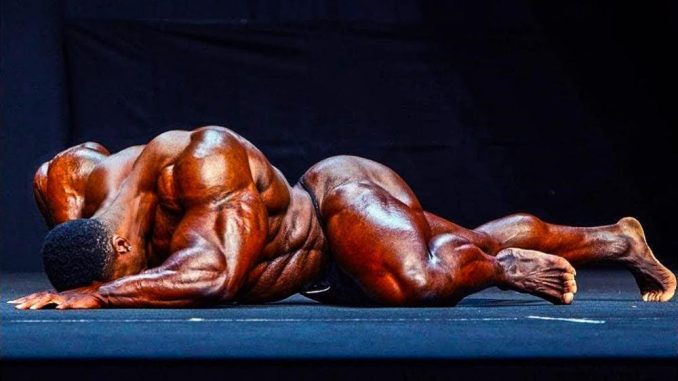
Live fast, die young, and leave an exhausted, dehydrated corpse.
If you asked a bunch of people what the world’s deadliest sports were, most would name sports that frequently involve violent impacts, like motor racing or combat sports. Few, if any, would name a non-contact endeavour like bodybuilding.
After all, what’s so dangerous about getting up on a stage and flexing your muscles?
Hold my protein shake.
56 Dead. That’s Just Last Year.
Julien Raby, from Boxlife magazine, documented 56 male and female bodybuilders who passed away in 2025 alone. Many were in their 20s and 30s.
More than half died from heart-related issues.
“I feel fine” and “he looks awesome” proved to be poor reassurances. Many had no prior warning signs.
“Clean eating” and ascetic living didn’t protect popular Chinese bodybuilder Wang Kun, who died suddenly from cardiac arrest at age 30. Days before passing, he appeared healthy and active. Wang was eight-time consecutive Chinese national champion and an IFBB pro.
The IFBB (International Fitness and Bodybuilding Federation) is the world’s most prominent bodybuilding league, with both amateur and professional divisions. As we’ll discuss shortly, it has a lot to answer for.
Wang lived what he described as a a “monk’s life”. He stayed away from alcohol, did not smoke, and did not stay up late. He ate a Spartan diet, mostly boiled chicken breast and hot pot broth with meat dipped in soy sauce.
There are conflicting reports as to whether or not he trained through the flu shortly before his death.
At just 165 cm tall but weighing 260 lbs, his physique was disproportionately huge for his height. Asking your cardiovascular system to service an oversized body doesn’t become a reasonable demand simply because most of that extra weight is muscle.

Premature mortality among bodybuilders is a truly global phenomenon, claiming champions from a diverse array of countries, including Australia, Brazil, China, Colombia, India, Iran, Korea, Russia, Spain, and USA.
As Raby points out, these deceased competitors leave behind devastated families.
Kevin Notário Nunes de Oliveira, 28, left behind twin daughters who will grow up without their father. Kevin was rushed to hospital after experiencing severe thigh pain. Doctors diagnosed necrotizing fasciitis, a rare but serious bacterial flesh-eating disease that spreads quickly.
Contaminated drugs, dirty needles, and poor hygiene at the injection site can cause opportunistic infections and lead to cellulitis, abscesses and sepsis.
Kevin’s father, Councilman Marcelino Nunes de Oliveira, said the case was a warning about the risks of using banned substances in the pursuit of muscle gain. “The search for the ideal body led to my son Kevin’s early life. Let this case serve as a warning to other young people and athletes who think about resorting to risky methods to enhance the results,” he wrote on Instagram.
Another Brazilian bodybuilder, Wander Santos da Silva Moreira, died while competing at the 2025 Pantanal Bodybuilding Championship - a pathway to bigger IFBB events like the Mr. Olympia Brasil and Arnold Classic South America. He had promised his wife and two children on social media that he would return home with a trophy. Instead, he started losing balance on stage, then collapsed while suffering a heart attack in front of the judges and live audience. The medical team immediately intervened but was unable to save him despite their extensive efforts. He was 30 years old.

When popular Korean YouTuber and bodybuilder Park Seung-hyun died suddenly aged 35, his family was so heartbroken they could not bear to receive visitors at the memorial hall. Park became a prominent figure in 2019 when he publicly confessed to his misuse of steroids and exposed the widespread drug abuse within the bodybuilding and fitness industry. He voluntarily reported his own violations of pharmaceutical laws to authorities, receiving a suspended indictment in November 2019.
Park recently confessed he struggled with depression, which he openly discussed with his followers. In a video posted three months before his passing, he said, “I have been battling depression and receiving psychiatric treatment. Financial difficulties have arisen because I haven’t been able to continue my YouTube activities.” He added, “I feel lonely even though I shouldn’t. I will find my way back to myself and return someday.”
Bodybuilding’s deadly streak remains strong in 2026.
On October 14, Chilean IFBB pro bodybuilder Marianne von Gierke passed away. The cause of death has not been publicly disclosed.
She was only 40 years of age, and leaves behind an 11 year old son.
Her death death came just two weeks after she finished in 13th place in the IFBB Mr. Olympia women’s physique category. It was her second time in the event, coming 16th in 2024.

On October 18, amateur bodybuilder Mateusz Chsmura collapsed on stage at the British finals of the Physical Culture Association. He received emergency treatment on stage, but later died in hospital - a day before his 34th birthday and only two months after getting married.

On September 4, bodybuilder and celebrity trainer Einar Méndez collapsed and died during a workout in a Mexico City gym. No official cause of death has been revealed. He leaves behind his wife of 30 years and 3 daughters.

Einar had competed in the National Physique Committee (NPC), “the premier amateur physique organization in the world” that acts as a feeder organization to the IFBB pro league.
In August, Trinidad and Tobago-born bodybuilder Dwayne Quamina passed away suddenly at 40, just days after placing sixth in the ≤212 lb class at the 2026 IFBB Lenda Murray Atlanta Pro. His best career finish came at the 2018 Mr Olympia, where he placed tenth.
Eerily, he wrote in a July 28 Instagram post, “Stop taking life for granted go all the way and have zero regrets when it’s all over!!”.
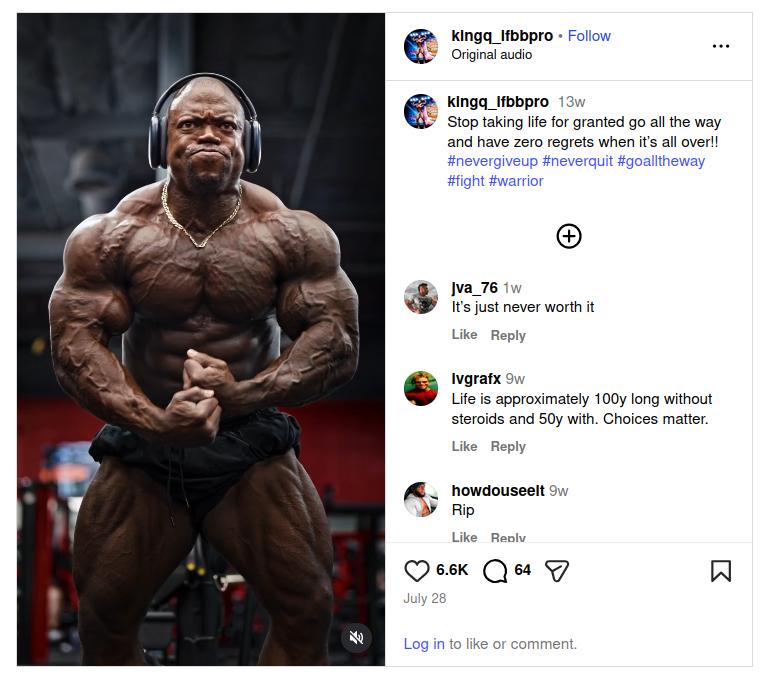
In another eery post, shortly before his passing, Dwayne told his followers he had been feeling sick.
“So I haven’t been super active on here, and it’s because I’ve been sick,” Quamina said on Friday, August 14. “I got back from the flight and it was chaos, just felt like death.”
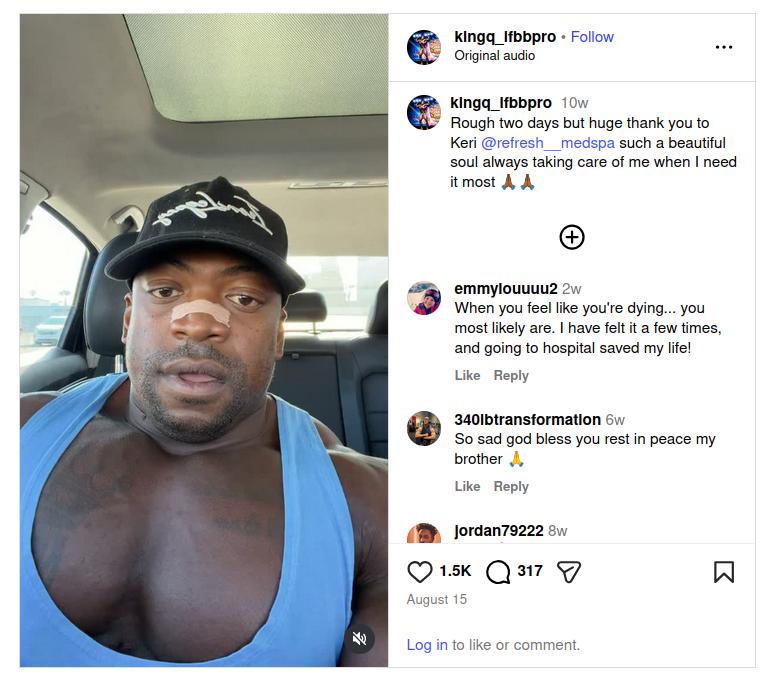
He had experienced “shortness of breath” and a cough, and was “prescribed some antibiotics” and received a steroid shot to open up his lungs at a “med spa.”
“And yeah, so we’re on our way to recovery, baby,” he said.
Two days later he was dead.
Dwayne’s cause of death has not been disclosed. He leaves behind his wife, Leah, and two children.
In May, bodybuilding influencer Gabriel Ganley, 22, was discovered face-down on the floor of his apartment in Sao Paulo. He collapsed in his kitchen just weeks before he was due to enter one of Brazil’s biggest competitions. Several medications, including “possible anabolic steroids”, were seized by investigators from the apartment.
They initially suspected he collapsed during a hypoglycemic episode - a possible indicator of insulin abuse - but the official cause of death was eventually cited as hypertrophic cardiomyopathy. This is a condition involving thickening of cardiac muscle, which can make it difficult for the heart to efficiently pump blood. Many people with hypertrophic cardiomyopathy don’t realize they have the condition, due to a lack of symptoms.
In February, Colombian bodybuilder Juan Sebastian Anzola Quintero collapsed and died from a heart attack while working out at a Bogotá gym. Staff and other gym-goers tried to save him, using a defibrillator and attempting CPR for around 25 minutes before realizing he could not be saved.
The 26 year old had won five bodybuilding titles, according to Colombian newspaper El Tiempo. He also had a background in industrial design and had earned a master’s degree in physical fitness, the outlet reported.
On January 22, IFBB pro Jason Lowe died at the age of 38. He reportedly suffered a heart attack while training a client in his garage gym.

I could go on, but I think you get the point. Bodybuilding is not a healthy sport. Quite frankly, it’s not even a sport. Yes, it involves competition, but in the same manner a bikini pageant involves competition. There is no clock to beat, no finish line to cross first. The winner does not need to run faster, jump higher or lift heavier than the runner-up. The winner is instead judged on subjective aesthetic parameters, which have evolved over time to render extreme dieting and drug abuse a necessity for anyone hoping to achieve bodybuilding success.
The sport involves significant, often steroid-fueled weight gains, followed by large reductions in weight as competitors cut for a contest. While many folks would be delighted with the low, single-digit body fat levels that make a physique look chiseled and athletic, this is not nearly enough to appease bodybuilding judges. Competitors are expected to have cling wrap-thin skin in order to highlight every possible muscle striation. Achieving this exalted “dry” look forces some competitors to adopt dangerous dehydration practices, including the non-medically-supervised use of diuretic drugs.
While anabolic steroids tend to dominate the discussion about bodybuilding harms, physique competition involves use of a vast array of other drugs: Growth hormone, IGF-1, anti-estrogens, diuretics, and stimulants such as amphetamines, ephedrine, clenbuterol and powdered/encapsulated caffeine (which, unlike your morning espresso, can be fatal if you get the dosage wrong).
There’s also the widespread use of insulin, which stimulates the uptake of amino acids and glucose into muscle cells, promoting muscle growth. The problem with insulin is that if you take too much and/or inject it at the wrong time, it can quickly seat you on a runaway train to Destination F**ked. Insulin-induced hypoglycemia can cause dizziness, confusion, sweating, loss of consciousness and, in severe cases, seizures, coma, and even death.
Perhaps the very height of ‘physique-enhancing’ drug insanity is 2,4-Dinitrophenol (DNP), an organic compound used in the manufacture of dyes, wood preservatives, and as a pesticide. An “uncoupling agent” that interferes with ATP production, thereby raising metabolism as the body is forced to work harder to produce energy, it has established solid form for uncoupling users from life.
From 1933 to 1938, it was sold over-the-counter to more than 100,000 people. However, in 1938, DNP was pulled from the US market as cases of poisoning, deaths, and other serious complications mounted.
After years of dragging its feet and after the deaths of at least 32 people - most in their early 20s and reportedly suffering mental health, eating disorder or body image issues - the UK Home Office finally declared DNP a poison in 2023.
DNP has a low therapeutic index, meaning the dosage at which toxicity occurs is not much larger than that required to produce a desired effect.
The Federal Food, Drug, and Cosmetic Act of 1938 labeled DNP as “extremely dangerous and not fit for human consumption.”
That, of course, has proved little deterrent to the hordes of terribly misguided individuals who consider no risk too great when chasing fat loss shortcuts.
As Bleasdale et al noted in a 2018 paper, “The attractiveness of 2,4-DNP arises from the fat-burning effects without the need of dietary control.”
Problem is, there’s no free lunch.
As Bleasdale et al further note:
“The issue surrounding DNP is that the adverse side effects may be triggered at various doses, whether considered therapeutic or not. This is because the tolerance to the drug is different for each individual; therefore, doses that may be considered “safe” for some may be lethal to others. There has also been evidence of a person’s tolerance altering over time, allowing previously tolerated doses to become lethal.”
Keep that in mind when you read some idiot’s pronunciations on a web forum that a certain dose range of DNP is “safe”.
Dying to Look Good
Even former Mr Olympia Lee Haney, whose multi-year reign during the 1980s heralded the “mass monster” era, has spoken out about bodybuilding’s increasingly Grim Reaper-like standards.
The former champion believes rewarding increasingly extreme conditioning encourages athletes to push their bodies to dangerous limits in pursuit of a trophy.
“As a result the Mr. Olympia open class is truly open to whoever, brings the best and most dangerous level of conditioning near death as possible.
That’s right….. near Death as possible.”
He concluded with a direct message to bodybuilding judges.
“Hear me well judges… consider what you’re asking: Tight and Drier can sometimes mean DEATH.”
The Bodybuilding Killing Fields
The problem is so bad it inspired two recent peer-reviewed analyses by a collaboration of researchers from Italy, Austria and the US: One examining mortality rates among male bodybuilders, another examining the death toll among their female counterparts.
In their male-specific analysis, they used the IFBB and MuscleMemory websites to identify 20,286 athletes competing in at least one of 730 IFBB events between 2005 and 2020.
During an average follow-up of 8.1 years, they identified 121 deaths. Most deceased athletes were from North America (40.5%; mostly USA), followed by Europe (38.8%), Asia (7.4%), Africa (6.6%), South America (5.0%), and Oceania (1.7%).
Of these, 73 were considered sudden deaths, of which 46 were classified as sudden cardiac deaths (SCD).
Professional and “bodybuilding” class athletes were at far higher risk than amateurs and “classic” physique contestants (the “classic” category emphasizes “a less muscular, yet athletic and aesthetically pleasing physique.”)
During follow-up, 41 out of 1,454 professional athletes died (2.8%), compared with 80 among 18,832 amateur athletes (0.4%), meaning pro bodybuilders had a more than five-fold higher risk of SCD than amateurs (HR 5.23).
Four deaths were reported among athletes in the “classic physique” division, evincing a risk of SCD five times lower than in the “men’s bodybuilding” division.
Restricting the analysis only to bodybuilders who participated in the Mr. Olympia “open” category - the world’s highest-ranked bodybuilding title - 7 out of 100 athletes died during the follow-up period, including five presumed or confirmed SCD.
That wouldn’t be so shocking if we were talking retired masters athletes, but the average age of these guys was 36.0 years.
Stop and think about that: During a mean follow-up of 8.1 years, 7% of open category Mr Olympia competitors - belonging to an organization that claims to be about fitness - died, at a mean age of only 36.
Twenty-seven athletes died within 1 year after the last participation in an official IFBB competition, registering 11 SCD (mean age 34.7 years). One athlete collapsed onstage during competition, two athletes had a SCD during training, and four athletes soon after an official event (one a few hours later while the remaining three within a week).
Currently competing professional athletes showed a six-fold higher rate of SCD than amateur athletes.
So as a longevity strategy, competitive bodybuilding is about as effective as playing Russian roulette.
The situation is just as dire for women.
In their female-specific analysis, Vecchiato et al identified a total of 9,447 female athletes who participated in 700 IFBB events, over a 16-year period.
Thirty-two deaths were recorded (mean age: 42.7 years). Again, most deceased athletes were from North America (44%).
A specific cause of death could be determined in 24 cases (75%). Of these, five were classified as non-sudden deaths, while 19 were categorized as sudden deaths (SD). Ten SCDs were identified (31% of total deaths) at an average age of 42.2 years.
Women’s Bodybuilding was the division with the highest incidence rate of SCD, which was also notably higher among professional athletes - who displayed a 22-fold higher incidence rate of SCD than amateurs.
Seven women died within 1 year after the last participation in a competition.
Deaths due to suicide and homicide accounted for nearly 13% of all cases in the female cohort, more than four times the proportion observed in male bodybuilders.
While the overall and SCD female mortality rates were lower than those for male competitors, the authors noted:
“When comparing these study results with similar analyses in other sports, the observed SCD incidence rate in female bodybuilders significantly exceeds that reported in other female athletic populations.”
To help place these results in perspective, let’s look at the death rates in other risky sports.
Motor racing
Screaming into corners after hitting speeds of 300 km/h isn’t an optimal longevity strategy, as evinced by the catastrophic 1994 San Marino Grand Prix event that sent Rubens Barrichello to hospital, and fellow Brazilian Ayrton Senna and Austrian driver Roland Ratzenberger to their graves. However, due to a series of rule and equipment changes, motor racing has greatly improved its safety record. The overall mortality rate for all types of motor racing is now well below 0.10 per 1,000 per annum, according to RGA Reinsurance Company’s most recent research.
Boxing
Finding fatality incidence rates for boxing isn’t easy. Many websites quote a fatality rate of 0.13 deaths per 1,000 participants per year, which they attribute to a 2009 Archives of Clinical Neuropsychology paper. That paper, however, obtained the 0.13 figure from another paper, which in turn attributes the 0.13 figure to a 16 August 1980 editorial in Sporting News which doesn’t even mention boxing.
Ugh. So the 0.13 figure is unverifiable, the result of a lazy-leading-the-lazy approach to ‘research’.
A far more recent and reliable analysis by Neidecker and Martin, sourcing data from the carefully maintained Manuel Velazquez Boxing Fatality Collection and limiting cause of death to brain-related injury, notes 185 fatalities from 2000-2019. Eighty-four (84) of these deceased boxers were male professionals; 1 was a female professional; 82 were amateurs; 8 were toughman boxing competitors; a further 8 died during training.
Focusing solely on male professionals gives an incidence of approximately one brain-related fatality per 5,000 bouts. The mean fatalities per year were 4.2 from 2000 to 2019. However, fatalities seem to have decreased from 5.2 to 3.2 when comparing the 2000 to 2009 time period to the 2010 to 2019 time period respectively.
So fatalities in professional boxing, thankfully, appear to be on a downward trend.
Rodeo
Among US rodeo riders, the fatality incidence rate from 1989 to 2009 was 4.05 per 100,000 (21/518,286); the fatality rate for the 2007-2009 study period was 7.29 per 100,000 (7/95,892). Thoracic compression (getting stomped on the chest by a 1,700+lb beast that doesn’t like you getting in its personal space) was the most common mechanism of fatal injury.
Based on the data available (Vecchiatio et al only considered IFBB competitors), competitive bodybuilding would seem safer than tangling with angry bulls but is more dangerous than a sport that involves getting repeatedly punched in the head.

Pumping Irony
Many moons ago, bodybuilding was involved in a tug of war between Bob Hoffman and Joe Weider, the most successful snake oil salesman in bodybuilding history.
Hoffman believed bodybuilding was about more than just looks, and maintained contests should feature a weightlifting component.
Weider, in contrast, wanted to promote bodybuilding as a purely ‘aesthetic’ endeavour. The Weider camp won out when Joe and his brother Ben created the International Federation of BodyBuilders in 1946. The IFBB would later change its name to the International Fitness and Bodybuilding Federation, despite having about as much to do with physical fitness as Dana White’s idiotic Power Slap events have to do with promoting mental acuity.
Along with forming the IFBB, another masterstroke by the Weider brothers was the creation of the Mr Olympia contest. In an endeavor featuring a multitude of different organizations and titles (Mr Universe, Mr World, Mr America, etc etc), Joe Weider used his magazine empire to effectively promote the Mr Olympia title as bodybuilding’s penultimate global accolade.

The Weiders’ subsequent domination sealed competitive bodybuilding’s fate as a purely aesthetic pursuit, devoid of any athletic component. In what was basically a homo-erotic male pageant, competitors simply strutted onto the stage, flexed and squeezed their oiled-up muscles in various poses, then awaited their scores from the judges.
Back in the 1970s, it was possible for someone like Frank Zane - who would probably struggle to place in the “Classic” category nowadays - to win the Mr Olympia. Zane typically competed at under 200lbs, yet scored higher than much larger men to secure the Olympia title from 1977 to 1979. Zane was known, not for awe-inspiring mass, but symmetry and proportion.
Bodybuilding’s symmetry era was short-lived. As an endeavor that invariably centers around huge muscles, competitive bodybuilding has an “ooh ah!” freak show aspect to it.
Competitive bodybuilding is not a male revue where thirsty females drop all pretense at being hard-to-get and scream at lean, athletic-looking blokes. Competitive bodybuilding has always had a majority male following, and males traditionally equate large muscles with power and dominance.
During the 1980s, with the arrival of Lee Haney, the inevitable mass monster era kicked off in earnest. Haney won the Mr Olympia title for an unprecedented eight consecutive years.
After Haney’s retirement, the UK’s Dorian Yates unleashed new levels of mass and hardness, dominating 90s bodybuilding with six Olympia wins.
When Yates retired, an even bigger Ronnie Coleman embarked on an eight-year Mr Olympia reign, matching Haney’s record.
Interestingly, both Haney and Yates are in seemingly good health today. Their Olympia dominance meant they only had to compete once a year during their respective reigns, which may have afforded them extended breaks between drug cycles - a luxury unavailable to their competitors, who had to compete in multiple events annually in the hopes of winning pro titles and Olympia qualification.
Ronnie Coleman, unfortunately, has suffered a very different fate. He has endured a never-ending string of serious health complications, including a near-fatal battle with sepsis last year. After multiple spinal surgeries, he walks with crutches or gets about in a wheelchair.
Irrespective of their eventual fates, the reigns of Haney, Yates and Coleman not only made it clear that huge cartoon-like musculature won contests, but future winners needed to step on stage with next-level mass.
The relentless quest for ever-greater mass necessitated an accelerating pharmaceutical arms race, with increasing dosages that caused hearts to enlarge at a ridiculous rate. Extreme contest preparation added insult to injury, expecting an already embattled cardiovascular system to deal with the added stresses of dehydration, electrolyte imbalances and hypoglycemia.
Increasingly, this unrealistic demand meets with a very decisive answer: Death.
While the sport of bodybuilding devolved into an increasingly dangerous chemical freakshow, the Weider brothers laughed all the way to the bank. The late Ben presided over the IFBB until 2006, while the late Joe ran a lucrative magazine empire, its most notable titles including Muscle & Fitness, Flex, Men’s Fitness, and Shape.
Lesser-known print ventures by Weider included Jem, a once successful but now defunct monthly soft-porn mag that came about after American News distributors asked him to start a rival publication to Hugh Hefner’s wildly successful Playboy.
Weider was a master huckster, convincing millions of hopeful young men they could be like the champions gracing the covers and pages of his best-selling bodybuilding mastheads Muscle & Fitness and Flex.
Those IFBB bodybuilders were promoted as the tanned, glowing epitome of healthy living, even though we now know many of them were not just drug abusers but all-round degenerates.
Weider claimed the unnatural muscularity of his featured male and female bodybuilders stemmed, not from drugs, but from his lucrative line of supplements.
In 1972, U.S. Postal inspectors forced the shameless spruiker to alter his marketing and claims for Weider Formula No. 7, a weight-gainer that featured a young Arnold Schwarzenegger on the label. The disputed claim centered on consumers being able to “gain a pound per day” in mass.
In 1976, Weider was ordered to offer a refund to 100,000 customers of a “five-minute body shaper” he claimed to offer significant weight loss after just minutes a day of use. The claims, along with misleading “before and after” photographs, were deemed false advertising by a Superior Court Judge.
In 1985 Weider reached a $400,000 settlement with the Federal Trade Commission, regarding misleading ads for Weider’s Anabolic Mega-Pak and Dynamic Life Essence products. Weider and co. agreed not to falsely claim the products could help build muscles or be effective substitutes for anabolic steroids.
In 2000, Weider Nutritional International reached another $400,000 settlement with the FTC, this time for false claims made for alleged weight loss products.
As well as making false claims for his supplements, the shameless Weider became famous for another annoying trait: Plagiarism.
Weider cataloged every training method he could find - methods that lifters had been using before he was even born - then rebranded each as his own.
Lifting more weight over time - the most fundamental and self-evident precept of strength and muscle development - became the “Weider Progressive Overload Principle”.
Performing multiple sets of an exercise became the “Weider Multi-Set System Principle”.
Dividing up your bodyparts into separate workouts became the “Weider Split Training Principle”.
There’s nothing wrong with amassing a mess of information and cataloging it in an orderly, systematic manner. Pretending that information was of your own invention, however, is a narcissistic dick move.
As this 2013 post notes, Weider “was an extravagant personality, a shameless self-promoter. His theories and ideas are suspect. His firm was targeted for making dubious product claims on several occasions. Much of his self touted history does not hold up to any scrutiny. He did not invent free weights. He did not invent body building. He did not invent the nutrition industry. He did not invent the concept of fitness. He didn’t even start the first muscle magazine. In all of those things, Weider was standing on some very broad shoulders. That said, he was a great salesman and a hell of a magazine publisher.”
While IFBB athletes died young and broke at an alarmingly high frequency, serial bullshitter Joe and his equally reviled brother both lived to ripe old ages (95 and 83, respectively) and died wealthy men.
It’s Not Just the Drugs; Bodybuilding Has Long Been a Cesspool
Within bodybuilding circles, it’s no secret that more than a few male and female bodybuilders have ventured into ‘unconventional’ activities.
Rather than repeat gossip, I’ll list but a few confirmed examples of bodybuilders, and bodybuilding promoters, living lives that no-one should be emulating.
None other than the sport’s most iconic figure, Arnold Schwarzenegger, was an arrogant, low-empathy sociopath who seemed to enjoy bullying and dominating others. Like a lot of bullies, Schwarzenegger quickly backed down when someone called his bluff. When Schwarzenegger visited the Nautilus headquarters to meet Arthur Jones, he wasted no time boasting about his accomplishments to anyone who would listen. Jones, an irascible character whose pet collection included alligators, crocodiles and snakes, told Schwarzenegger if he didn’t shut up he was going to get his ass kicked by a man half his size and twice his age. Schwarzenegger promptly quietened down.
In addition to being an annoying braggart, Schwarzenegger was a serial groper who once boasted to a magazine interviewer about participating in the gang-banging a black girl at the infamous Gold’s Gym in Venice.
Former marines and IFBB pro bodybuilders Ray and Sally McNeil were a volatile couple. Sally reportedly had several violent public outbursts, including the assault of a woman who allegedly flirted with Ray and a fight with five police officers. Ray, meanwhile, was a “totally Dr. Jekyll and Mr. Hyde” character who frequently laid hands on his wife - and daughter. On Valentine’s Day 1995, Sally blasted Ray into the afterlife with a shotgun. She claimed self-defence, but was convicted and served 25 years in prison.
Thanks to his All-American golden boy looks, Craig Titus appeared on countless bodybuilding mag covers, including Flex. He received constant magazine coverage despite being a violent hothead. He frequently got into physical altercations and threw an on-stage tantrum after losing to Phil Hernon at the 1995 USA Championships, launching his trophy and kicking chairs backstage.
That same year, he pleaded guilty to conspiracy to possess with intent to distribute ecstasy and was sentenced to 16 months’ house arrest. He won his pro card the following year, but continued on his errant ways. In July 1997, Titus was sentenced to 21 months in prison for violating his probation by using anabolic steroids.
In December 2005, the degenerate narcissist added cold-blooded murder to his CV. Titus and his wife, former ‘fitness’ competitor Kelly Ryan, drugged, tasered and choked their 28-year-old live-in assistant, Melissa James. They then placed her body in the boot of a car, drove it into the Nevada desert, and set it alight. Police had little trouble deducing the culprits - the scorched Jaguar was registered to Kelly.

The late Christian (Chris) Duffy won the NPC Nationals heavyweight division in 1992. During the early 1990s, he was a cover model and featured in numerous magazines, including Muscle & Fitness. He placed fifth in the 2002 Mr. Olympia in the Masters division.
By 1994, the same year he divorced his second wife, Duffy had also established two other income streams: Working as a male escort, and gay porn acting under the pseudonym “Bull Stanton”.
International Federation of Bawdy Buttinskys
While the IFBB is now headquartered in Spain, the NPC and IFBB Professional League are headed by American and long-time Weider associate Jim Manion. The Washington Post found many of those who worked alongside Manion “turned against him and accused him of fostering an atmosphere of intimidation and compromising the sport with conflicts of interest and self-dealing. Manion went from an elected president of a small nonprofit to the leader of a company that now dominates a multimillion-dollar industry. He has turned the organization into a family dynasty, appointing his grandson, Tyler Manion, as vice president. Tyler’s father, J.M. Manion, was paid nearly $900,000 over three years by the charity for photography services.”
In addition to managing female bodybuilders, J.M. Manion also serves as the official photographer for the NPC. He has also run numerous pornographic websites focused on nude female bodybuilders.
Manion junior was also accused in 2022 of exploiting women in return for career growth. Some of the women said Manion coerced them into doing nude photoshoots in return for favor at competitions and promises of career opportunities. Others quit the sport in disgust after refusing to acquiese to such demands.
The women alleged the tournaments were founded on sexual exploitation, with many competitors tacitly understanding they would not succeed unless they had sex with judges and tournament organizers.
Several former competition judges also said they observed the Manions changing competitors’ scores and placings based on their favor with them, and that one judge close to the Manions - John Tuman - suggested improving the placement of one competitor who was “one of J.M.’s girls.”
Tuman denied the allegations, insisting he was a “family man.”
In Closing
Many bodybuilding competitors are truly dedicated individuals engaged in what they believe, rightly or wrongly, to be a genuine quest for excellence.
But the reality is it’s a dangerous caper, run by corrupt degenerates for whom competitor well-being takes a distinct backseat to money and sexual gratification.
Allegedly.
Just like the world’s most famous MMA league.
Allegedly.
People are literally dying on stage, and the governing organizations are doing little of substance about it. That leaves us, the public, to turn our back on it until things change.
As Raby states in his January article:
No trophy justifies orphaning children.
No pro card validates leaving widows behind.
No Instagram following compensates for losing your life at 25.
It seems absurd that anyone should need to actually point this out, but here we are.
Taking all the above into account, I rate competitive bodybuilding three steaming piles of Weider Anabolic Mega-Pak-infused horseshit. For health and longevity, absolutely lift weights and do your cardio, but give a hearty “vaffanculo!” to the polypharmacy, dry look and caricature-like muscle that is sending misguided competitors and influencers to their early graves.
Addendum (November 1, 2026):
I’ve had a number of folks adamantly insist bodybuilding’s sky-high mortality rate is due to the COVID ‘vaccines’. To be sure, it is now a well-documented, peer-reviewed and published fact that these fraudulently-promoted injections are cardiotoxic, with a penchant for causing myocarditis and pericarditis. Anyone who tells you otherwise is spouting utter nonsense.
So too is anyone who insists what I’ve described in this article is purely a post-vaxxx phenomenon.
While I would fully expect the poison darts to have killed at least some bodybuilders, this has been going on for decades.
For those who think bodybuilders dying prematurely is a post-2020 phenomenon, look up Cedran McMillan, Andreas Munzer, Dallas McCarver, Rich Piana, Mohammed Benaziza, Nasser El Sonbaty, Justin Rys, Greg Kovacs, Mike Matarazzo, Art Atwood, and Victor Richards. This is by no means an exhaustive list, but shows high level bodybuilders were dying prematurely and with disturbing frequency long before the poison dart era.
Remember, the Vecchiato et al analyses I discussed in the article covered the period 2005–2020. The clot shots were not unleashed until December 2020.
If the vaxxx was the primary explanation for the current high mortality of competitive bodybuilders, then by all rights cyclists, marathon runners, etc should be dying at much higher rates, because they place high demands on their hearts for literally hours on end.
The vaxxx argument also completely fails to consider the role of drugs like diuretics, insulin and DNP - all of which can kill you very quickly no matter what size or shape your heart is in, and whether or not you took the clot shots.
The reality is modern bodybuilding is an inherently unhealthy sport that not only has little to do with physical fitness, but actively encourages dangerous practices.