Until recently. Get the full details here.
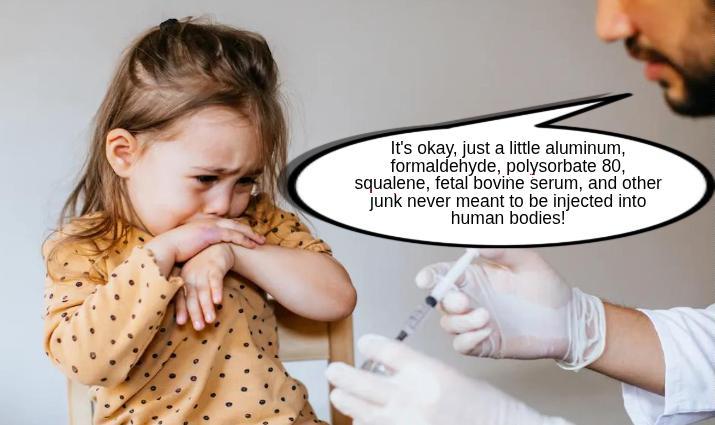
In early 2020, researchers from Henry Ford Health in Detroit completed a large study comparing chronic health outcomes in vaccinated versus unvaccinated children.
The researchers were clearly pro-vaccine, claiming vaccination “has reduced the incidence of certain targeted childhood infections and their associated morbidity and mortality.”
“Nonetheless,” they lamented, “vaccine hesitancy remains a significant barrier to maintaining and increasing vaccine uptake.”
Their goal was to collect data “addressing these vaccine safety concerns” which could “assist clinicians in discussions with their patients and serve to reassure parents of the overall safety of vaccination.”
As it turns out, the data did indeed address important vaccine safety concerns - just not the way the authors had planned.
The content below was originally paywalled.
The study found unvaccinated children were far less likely to develop chronic health conditions than their ‘immunized’ counterparts.
Lo and behold, instead of being submitted for publication, the study was quietly shelved.
The study was publicly revealed during a recent hearing of the Permanent Subcommittee on Investigations, chaired by Senator Ron Johnson.
In September, Aaron Siri, Esq., from New York law firm Siri & Glimstad LLP, testified that, in early 2017, the Informed Consent Action Network (ICAN) was searching for a scientist to conduct a vaccinated versus unvaccinated study. ICAN is an activist organization that Siri’s firm regularly represents, founded by alt media personality Del Bigtree.
Siri testified that ICAN’s CEO (presumably Bigtree) had previously met infectious disease ‘expert’ Dr. Marcus Zervos, and thought he would be open to conducting such a study.
Zervos is head of of the Infectious Disease division at Henry Ford Health. Headquartered in Detroit, Henry Ford Health is the second-largest health system in Michigan, operating 13 hospitals across the Detroit, Flint, and Jackson areas. The Henry Ford Health website claims the organization has 50,000 team members at more than 550 sites across Michigan.
Zervos is also Clinical Professor of Medicine in the Department of Medicine and Infectious Diseases at Wayne State University School of Medicine in Detroit.
Zervos has been the recipient of several million dollars in grant awards, and Principal Investigator on over 200 government and industry-funded studies examining “multidrug resistant pathogens”. From 1999 to 2004, Zervos was Director of Research at Beaumont Hospital, presiding over 350 investigators and employees and 30 million dollars in grant funds.
Zervos sits on several editorial boards, is an editor of major journals and a member of several professional societies, including the American College of Physicians, and the Infectious Diseases Society of America. His bio states he has contributed over 228 published abstracts at national and international scientific meetings and published over 160 articles in peer reviewed journals including Annals of Internal Medicine, New England Journal of Medicine, Journal of Infectious Diseases, and American Journal of Medicine. He has co authored several books and contributed numerous book chapters dealing with infectious diseases.
Siri stated: “We met with Dr. Zervos in his office in early 2017 to urge him to conduct a vaccinated versus unvaccinated study so that he could, from his perspective, prove wrong those claiming vaccines cause harm. He was receptive to the idea.”
So the study began.
Zervos’ co-authors were Lois Lamerato, PhD, Abigail Chatfield, MS, and Amy Tang, PhD.
Lamerato, notes Siri, is an epidemiologist with over 250 published works, a prominent figure at Henry Ford Health, and principal investigator for several significant studies, including annual CDC-funded influenza surveillance and vaccine effectiveness studies.
Tang is a Biostatistician at Henry Ford Health with over 100 published studies and “over twelve years of experience in clinical trials and real-world evidence research.”
Little information is available regarding Chatfield, and the unpublished Henry Ford paper appears to be her first research rodeo. Nonetheless, between Zervos, Lamerato and Tang, this group should have had zero difficulty compiling a solid paper and getting it published.
The full text of the unpublished paper can be accessed here.
Using records from the Henry Ford Health System (HFHS) and Health Alliance Plan (HAP; a subsidiary of HFHS), the researchers compiled a cohort of 18,468 subjects born between 2000 and 2016. Of these children, 16,511 were exposed to at least one vaccine, while the remaining 1,957 were unexposed.
Subjects were observed from birth until the earlier of disenrolment in HAP or December 31, 2017. Data sources for the study included medical, clinical and payer records from HFHS and HAP, supplemented with data from the State of Michigan immunization registry.
Data compiled included encounters (outpatient and emergency), hospitalizations, diagnoses, procedures and billing data on all services.
Vaccinations evaluated included all vaccines on the Centers for Disease Control & Prevention (CDC) Recommended Child and Adolescent Immunization Schedule (Vaccine Schedule).
Death data was obtained from HFHS electronic medical records and the State of Michigan’s Vital Records System and manual chart review was conducted to ascertain cause of death for subjects who died during plan enrollment.
Compilation of accurate, coherent data was assisted by the fact that all HFHS patients receive a lifetime medical record number that links across data-tables.
So what did the study find?
After multivariate adjustment, exposure to vaccination was independently associated with a 2.5-fold increased risk of developing a chronic health condition.
Vaccinated children evinced 3.03 times the risk of atopic disease (a group of allergic conditions) and 4.29 times the risk of asthma.
While the data showed no increased risk of autism (possibly due to the small number of cases), vaccinated children showed 5.53 times the risk of neurodevelopmental disorder, including 3.28 times the risk of developmental delay, 4.47 times the risk of speech disorder, and a 2.92-fold risk of motor disability.
Vaccinated children showed 5.96 times the risk of autoimmune disease.
All of these findings were statistically significant.
Vaccine exposure was also independently associated with increased risk for developing other conditions, including ear infection (hazard ratio 7.00), chronic ear infection (HR 7.89), anaphylaxis (HR 5.64), asthma attack or bronchospasm (HR 5.82) and eczema (HR 1.31).
That was the hardly the end of it.
Incident rate ratios and hazard ratios could not be calculated for brain dysfunction, diabetes, ADHD, tics, or behavioral, learning, intellectual, or other psychological disability since all cases occurred in the vaccinated group and none in the unvaccinated group.
There were six deaths in the cohort during enrollment, five of which occurred in the vaccinated group. After manual review of medical records, including death certificate where available, cause of death was determined to be due to complicated clinical course from birth (2 vaccinated, 1 unvaccinated), brain injury (1 vaccinated), and unknown cause (2 vaccinated).
The overall probability of being free of a chronic health condition at 10-years of follow up was 43% in the group exposed to vaccination and 83% in the unexposed group.
Far from providing reassurance as to vaccine safety and effectiveness, the study did the exact opposite.
The researchers grudgingly concluded:
“In this study, we found vaccine exposure in children was associated with an increased risk of developing a chronic health disorder. This association was primarily driven by increased risk for asthma, atopy, eczema, autoimmune disease and neurodevelopmental disorders. This suggests that in certain susceptible children, exposure to vaccination may increase the likelihood of developing a chronic health condition, particularly for one of these conditions. Our preliminary findings cannot prove causality and warrant further investigation.”
Clearly, the implications of this study were of extreme public health importance, and it should have been submitted for publication in a most expedient manner.
Of course, that’s not what happened.
Siri testified:
“Unfortunately, while Dr. Zervos and Dr. Lamerato affirmed the study was well designed, executed, and worthy of publication, they would not submit it for publication because, among other reasons, Dr. Lamerato said she did not want to make doctors uncomfortable, and Dr. Zervos said he did not want to lose his job at Henry Ford.”
“Had this study showed that vaccinated children were healthier, I have no doubt it would have quickly and easily been published. It was not submitted for publication precisely because it found the opposite result.”
Henry Ford Health Insults Our Intelligence
Several days ago, Henry Ford Health promptly released a “Fact-Check” attempting to rationalize away the paper’s previous secrecy. The propaganda statement was inspired by an ICAN/Del Bigtree documentary about the buried paper titled An Inconvenient Study.
Like most so-called fact-checks, it was an exercise in denying reality and instead passing off egregious nonsense as ‘fact’.
Henry Ford Health kicks off its fact-fudge by throwing out a red herring.
“MYTH #1” about the study, it claims, is “The study proves vaccinated children are 2.5x more likely to develop chronic health conditions than unvaccinated children.”
Sorry HFH, you’ll need to do a lot better than that.
No-one is saying this study proves anything. It’s an epidemiological study, so all it can do is detect statistical associations. The kind that warrant further research, like the ones in your paper clearly do. But which you flatly refuse to acknowledge.
“The very first internal review revealed serious flaws in the data and methodology, and the paper was abandoned.”
But HFH won’t tell us why.
The closest it comes is the limp assertion that “Anyone who conducts public health research would agree that comparing vastly different sample sizes over different time periods with inconsistent demographic foundations is problematic.”
Great. Let’s retract a substantial portion of public health research, because that’s exactly what it does - it often compares different sample sizes.
The anti-geniuses at HFH offer no consideration of the fact that the majority of the world’s population has succumbed to the patently stupid notion that injectable drugs are the key to keeping children disease-free. Therefore, any study comparing vaccinated versus unvaccinated is invariably going to have a far larger pool of the former to choose from.
The complaint that the study compared “vastly different sample sizes over different time periods with inconsistent demographic foundations” is another intelligence-insulting non-criticism.
Epidemiological research, by its very nature, is confounder-prone. That’s why, when we want to prove something, we conduct randomized and double-blinded clinical trials.
Curiously, the effect of confounders never seems to be a problem for the mainstream when it pertains to epidemiological research claiming such nonsense as meat causes cancer or that polyunsaturated fats and vegetarian diets lower cardiovascular disease risk.
In an attempt to minimize the effect of confounding variables, researchers subject the ‘crude’ data to further analyses factoring in the potential effect of confounding variables. In the HFH study, the final hazard ratios were adjusted for gender, race, birth weight, respiratory distress at birth, birth trauma and prematurity.
Since enrollment time was shorter overall in the unexposed group, sensitivity analyses were conducted by repeating the above analyses for subjects enrolled for at least 1-year, 3-years and 5-years. This is mentioned repeatedly in the paper, but the HFH fact-fudge pretends to be ignorant of all this.
In an attempt to deny the study wasn’t published due to political reasons or because of its results, the HFH fact-fudge again claims “[t]he draft wasn’t submitted for publication or shared with the public because the data and analyses were flawed, and it’s irresponsible to share scientifically flawed studies with the public.”
“The first internal reviewers determined the paper wasn’t scientifically sound—and it never made it past draft status.”
But again, HFH flatly refuses to tell us just what about the paper and its methods is so “flawed”.
This was the second attempt by HFH at ‘debunking’ its own study. On September 26, along with issuing a cease-and-desist letter to ICAN, it also claimed the unvaccinated patient sample was “vastly different” than the vaccinated sample, with more males, more white children, less prematurity and less respiratory distress at birth.
A quick glance at Table 1 in the paper shows these differences were nowhere near as “vast” as HFH would have us believe. Furthermore, all these factors were plugged into the multivariate analysis, which HFH still pretends never happened.
It again claimed the unvaccinated sample was “very small” in comparison to the vaccinated sample.
A non-criticism, for reasons discussed above.
It again protested the differences in follow-up, and again ignored the fact that the researchers had performed additional analyses to account for this.
Doing its best to convince us it is a comedy act, HFH complained “the draft compared multiple vaccines vs. no vaccines, instead of a specific vaccine vs. no vaccines.”
No shit, Sherlocks. That’s actually a strength of the study. It reflected real world conditions, in which children are treated like pin cushions and repeatedly injected with all manner of junk, under the patently idiotic assumption that the key to keeping young humans disease-free is to inject them with lab-made porqueria.
HFH also objected that “Vaccine guidance has changed over time, but that was not taken into consideration.”
Congratulations to the people who issue vaccine guidelines for keeping themselves employed, but this does not even begin to change the simple fact that the study compared vaccinated to unvaccinated children - and the latter fared better. If vaccines were safe and effective as we’ve been incessantly told all these years, the exact opposite should have been evident - irrespective of periodic changes to vaccine guidelines, which have progressively increased the number of shots.
HFH’s October 13 fact-fudge links to a Substack post by Dr. Jake Scott, “an infectious disease physician from Stanford who testified on Capitol Hill”. Scott also pretends he never read the paper, regurgitating the complaint about different follow-up periods and blissfully ignoring the sensitivity analyses for subjects enrolled for at least 1-year, 3-years and 5-years.
Scott complains about detection bias, “which occurs when one group gets examined more frequently than another, leading to more diagnoses regardless of actual disease rates.”
But Scott flatly refuses to discuss the most obvious possibility as to why the vaccinated children got examined more often than their unvaccinated peers: Namely, vaccinated children suffered more health problems.
Duh.
The researchers specifically mentioned this in the paper:
“Unvaccinated children have less healthcare utilization overall. Well visits coincide with the vaccination schedule and provide more opportunities for assessment and diagnosis in those receiving vaccines, compared to unvaccinated children, which could introduce an ascertainment bias. In this study, exposed children had an average of 7 annual encounters, irrespective of having a chronic health condition.
Unexposed children had an average of 2 annual encounters but an average of almost 5 annual encounters if diagnosed with a chronic health condition. This likely demonstrates that when a child had a medical condition, parents sought healthcare. In fact, many conditions evaluated in this study are serious and cannot be self-treated, such as asthma, diabetes, anaphylaxis or asthma attack, warranting urgent medical attention. We nonetheless conducted several sensitivity analyses to explore the influence of healthcare utilization in order to improve the internal validity of this study and minimize potential ascertainment bias.
To ensure the unexposed group’s shorter follow-up duration did not influence the results, we repeated the Cox proportional hazards analysis for the chronic health composite outcome for those in the plan for one, three and five years and for those who had at least one healthcare encounter, which demonstrated results consistent with the overall findings. The association between vaccination and developing a chronic health condition was independent of these factors. Therefore, our findings do not appear to be due to differential use of health resources.”
So yes, unvaccinated children are presented to medical practitioners less often, but the HFH data suggests it’s not because their parents are hippies who try to treat their children’s serious health conditions with patchouli and chakra crystals. The data from the study indicates a much simpler explanation:
The unvaccinated children are healthier.
Christine Cole Johnson, chair of public health science at Henry Ford Health told Detroit Free Press, “If this had been submitted to a journal of any credibility, they would have laughed it off.”
Ah, yes, where would we be without those ‘credible’ journals. The ones who refuse to publish worthy but dissenting research, while happily publishing hopelessly confounded epidemiological garbage claiming saturated fats cause heart disease, or that meat causes diabetes - based on pathetic relative risks derived from data relying on a couple of 24-hour dietary recalls for periods spanning several years and sometimes decades!
The New England Journal of Medicine is widely considered one of the world’s most credible and prestigious journals; that doesn’t stop it from publishing pure garbage, like the appalling paper announcing the alleged isolation of ‘Sars-Cov-2’. As I discussed in detail here, the paper was replete with discrepancies that should never have made it past peer review. NEJM might be credible to those who dutifully adhere to orthodox dogma, but to those of us who like our facts delivered without a supersized helping of hogwash, it is no more credible than a News Corp masthead.
Johnson claimed the HFH study was led by “someone who had no training at epidemiology”. The lead author on the paper was in fact Lois Lamerato, then a senior scientist and epidemiologist at HFH.
So are HFH, Scott and Johnson rushing to conduct, say, a case-control study featuring vaccinated and unvaccinated kids otherwise matched as closely as possible?
Of course not.
Long-time readers know I’ll never be crowned epidemiology’s biggest fan. It is an inherently flawed field of research that can only ever detect statistical associations, not establish causality. The HF study characteristics that HFH, Scott and Johnson eagerly cite as fatal flaws are in fact routine and often unavoidable features of epidemiological analyses.
That said, as epidemiological studies go, the HFH study was a worthy effort. It evaluated subjects only while enrolled, only relied upon medical records to determine diagnoses, encounters and vaccines administered (as opposed to relying upon parental recall or survey data), had a cohort completely unexposed to vaccines (unlike other studies looking at specific vaccines, with ‘control’ samples not having received those vaccines but nonetheless injected with other vaccines).
It utilized groupings of health conditions, instead of a single or small selection of specific conditions.
The data was adjusted for numerous confounders using textbook standard methodology (Cox Proportional Hazards Regression Analysis), and sensitivity analyses were performed to offset the disparity in follow-up periods.
HFH, Scott and Johnson can pretend all they want, but anyone familiar with epidemiological papers who reads the HFH draft will know their objections are rather lame and disingenuous. I’ve seen a heck of a lot worse than the HFH study not only make it to print, but discussed by the mainstream with the kind of reverence that should only ever be awarded to tightly controlled clinical research.
So no, the HFH study results do not establish causality; that is beyond the realm of epidemiology. But the study’s findings are a concern and do indeed warrant further research.
Of course, the medical-industrial complex will do whatever it can to make sure that doesn’t happen.
Henry Ford Health sent ICAN a cease-and-desist letter, setting a deadline of 5 pm September 25 to remove information HFH deems false from all sources of content and publish a retraction. That has not happened; An Inconvenient Study remains freely available for download, and on October 12 it debuted at the Malibu Film Festival.
Laughably, the September 26 statement announcing their subsequently ignored cease-and-desist letter claims “Henry Ford Health believes in research that’s driven by irrefutable data and methodology and will never compromise those standards.”
If Henry Ford Health believes in irrefutable data, then it needs to immediately cease and desist in any and all epidemiological research.
It should also stop taking money from AstraZeneca, because it is exceedingly difficult to trust anyone who partners up with a corporate felon that, since 2000, has racked up $2 billion in fines for dishonesty offences.
Links to Documents/Articles Mentioned Above:
The Henry Ford Health Vaccine Study
Leave a Reply