Actually, everyone should be lifting weights. Here's why.
We all know the risk of osteoporosis and bone fractures is increased among the elderly. But if you’re a young, physically active runner, swimmer or cyclist, you’re probably thinking low bone density and an increased risk of fractures are the least of your worries.
Osteoporosis Says: “Hold My Beer”
What if I told you that performing those activities, in the absence of resistance training, may in fact be increasing your risk of poor bone health?
Andrew Coggan is an internationally-recognized exercise physiologist, national-caliber masters cyclist, and former time trial record holder. His wife is a former national champion track cyclist. He’s written a book on training with power-meters and contributed material on power-based training for USA Cycling's expert coaches manual. So it’s fair to say he knows a thing or two about cycling.
In 1989, he learned something new after falling from his bike. He’d been cycling 1-2 hours daily for about 15 years when he crashed. He suffered a hip fracture during the fall, an injury common in senior citizens.
But Coggan was only 30 years old at the time.
After the accident, he recalled all the times "when I'd be chatting with a group of cyclists, I'd be taking note of the fact that everybody had scars from things like broken arms and broken collarbones."
Years later, Coggan received a further unwanted surprise when he was diagnosed with low bone density.
"Sometimes athletes in their late 20s and early 30s will come in for a femur or a hip fracture, and they'll be surprised because the fall was really not that bad," says Dr. Max Testa, a sports medicine physician at the Orthopedic Specialty Hospital in Salt Lake City who routinely treats elite cyclists. "But we'll look at the X-rays and see that there is some osteopenia [lower-than-normal bone density] there."
Most people wouldn’t associate elite endurance athletes with low bone density and increased fracture risk. Very few would look at a lean, tanned elite runner or cyclist and think, “oh yeah, that’s what osteoporosis looks like, right there!”
But research spanning at least three decades shows low bone density is definitely a thing among cyclists, runners and swimmers.
The content below was originally paywalled.
The primary culprit is a factor long considered a positive of cycling and swimming. They are low-impact sports that place little mechanical load on the bones, and have established a reputation as joint-friendly activities. That can indeed be an advantage in rehab situations, but over the longer term it’s a problem. That’s because it is weight-bearing exercise that stimulates bones to become denser.
Which is why weightlifters have far denser and stronger bones than normal folk, while low bone mineral densities are often observed in swimmers, cyclists and long distance runners.
In a 1996 paper, German researchers reported BMD measurements taken from elite athletes. The subjects included 28 weight lifters, 6 boxers and 6 endurance cyclists. All were internationally top-ranked athletes (among the weight lifters were two Olympic champions and five world champions, while the cycling group included Tour de France participants). Twenty-one males performing a mean 2.4 hours of physical activity per week were recruited as control subjects.
Weightlifters displayed the highest BMD by a significant margin, followed by the boxers. However, the BMD of the lumbar spine in all endurance cyclists was 8%-10% lower than that observed among the controls.
In 2007, Michigan State University researchers reported on 99 female varsity athletes (mean age 20.2 years) representing gymnastics, softball, cross-country, track, field hockey, soccer, crew, and swimming/diving. They found runners had the lowest total-body and site-specific BMD values for every site, except average leg score. Swimmers and divers had significantly lower average leg BMD than athletes in every other sport except runners and rowers.
While runners compare poorly in the BMD stakes, cyclists tend to fare even worse.
University of Missouri researchers compared bone health in 43 males, aged 20 to 59 years, who reported training at least 6 hours per week. Sixteen of the men were runners, 27 were cyclists. Despite similar mean ages, weekly training hours and height/body composition, the cyclists had significantly lower whole body and spine BMD than the runners. Sixty percent of the cyclists had osteopenia of the spine compared with 19% of runners. Cyclists were 7.4 times more likely to have osteopenia of the spine than runners when controlling for age, body weight, and bone-loading history.
The more you’ve been riding, the worse the BMD results are likely to be.
Researchers in Florida compared nineteen trained cyclists with 9 recreational cyclists. To avoid confounding, subjects who participated in resistance training were excluded from the study. Not surprisingly, the trained cyclists had higher handgrip strength, V̇O2max, power to weight ratio and weekly training volume (10.6 vs 6.3 hours/week) than the recreational cyclists.
Despite similar mean age, BMI and body weight, the trained cyclists evinced poorer markers of bone health, although the results for the recreational riders were nothing to celebrate, either. When lumbar scans were evaluated individually, 11 trained cyclists (58%) were identified as osteopenic, while 3 (16%) were classified as osteoporotic.
Four of the recreational cyclists (44%) were identified as osteopenic; none were osteoporotic.
More recently, Spanish researchers compared bone variables between professional and amateur road cyclists. As expected, the pros exhibited a higher mean VO2max and the ability to generate a higher power output at the anaerobic threshold.
However, the pros had significantly lower BMD, bone mineral content, bone area and fat-free mass when compared to the amateur riders.
Every one of the 10 professionals and 7 of the 15 amateurs had a BMD value below 1,033 g/cm2 , the normal BMD cutoff value for men established by the North American Health Survey (NHANES III).
In yet another eye-opening study, researchers recruited 93 early career, advanced career, and post-career elite Dutch cyclists. All agreed to have their hip, femoral neck, lumbar spine, and total body BMD measured by DXA scanning.
There were a similar number of males and females in the study. Mean ages of the early career, advanced career and post-career subjects were 18-19, 24-26 and 39-41 years, respectively.
Low BMD at the lumbar spine/whole body was present in 27%/18%, 64%/73% and 50%/20% of early career, advanced career males, and post-career males, respectively.
Low BMD at the lumbar spine/whole body was present in 45%/35%, 45%/40% and 20%/20% of early career, advanced career males, and post-career males, respectively.
Osteoporotic values were also most common among the advanced career cyclists. In advanced career males with low BMD, 46% showed osteoporotic BMD values at the lumbar spine and hip, respectively.
Twenty percent of advanced career females showed osteoporotic BMD values at the lumbar spine.
The authors concluded, “low BMD is highly prevalent in elite road-race cyclists and indicates poor bone health in this population. Low BMD values may not recover after the professional cycling career, given the substantial prevalence of low BMD in retired elite cyclists. The association between BMD and traumatic fracture incidence emphasizes the importance of healthy bones in elite cyclists.”
Resistance Training to the Rescue?
A 2009 paper again reported lower spine BMD in male competitive road cyclists than recreationally active, age-matched controls. Twenty-five percent and 10% of cyclists and controls, respectively, were osteopenic; 9% and 3% were classified as osteoporotic, respectively.
Nineteen of the 32 cyclists reported weight lifting in the previous year, but it didn’t help their comparative results. The weight-lifting cyclists showed lower BMD at all three measured spine sites when compared to weight-lifting controls. They even showed lower total body BMD than non-weight-lifting cyclists.
These counter-intuitive results may be at least partially explained by the fact that the cyclists who reported training with weights only did so for 2–6 months in the previous year (mean 3.6 months).
This is a common finding - among cyclists who engage in resistance training, many only do so for part of the year, typically during the off-season. Furthermore, upper body work appears to be minimal to non-existent among these cyclists, with training focused on the lower body and core.
In an Australian study of 97 highly-trained competitive cyclists, 61 reported sustaining an acute injury from a crash, with 40 of the 61 reported having broken or fractured a bone as a result. The researchers then compared the percentage of fractures and breaks in those who said they engaged in weight training versus those who did not. Among those reporting acute injury from a crash, 59% of the weight training cyclists and 75% of the non-lifters sustained a broken bone or fracture. The difference was not statistically significant. A study like this also has no way of adjusting for the fact that the circumstances surrounding crashes tend to vary widely (speed, angle of fall, loss of control versus suddenly hitting immovable object, etc).
A US study measured lumbar spine, total hip, femoral neck, and femoral trochanter BMD via DXA in 40 amateur cyclists at the start of a cycling season. The cyclists ranged in age from 31–69 years and represented state, regional, and national competitors (including 1 former Olympian).
The number of minutes spent lifting weights weekly was associated with a significantly higher BMD at all measured sites. After multivariable analyses of age, calcium intake, weekly minutes of cycling training, and weekly minutes of weight training, the latter remained the only variable significantly and positively associated with higher BMD at all measured sites.
The problem with the above studies is that the variable of weight training was analyzed under totally uncontrolled conditions and relied on retrospective recall. This is about as far from a randomized, controlled clinical trial (RCT) as you can get.
RCT Evidence
Unfortunately, the RCT evidence examining the effect of resistance training in endurance athletes is very sparse.
Recently, researchers from the Department of Sport and Exercise Sciences at Durham University, UK, investigated the effects of advising cyclists on diet and load-bearing exercise.
In the early race season, fifty competitive male road cyclists were matched, in pairs, based on their lumbar spine BMD scores. One member of each pair was randomly allocated to receive educational interventions. The nutritional advice given to the intervention subjects aimed to maintain adequate energy intake, with recommendations for general nutrition and fueling around training sessions.
The skeletal loading routine included bodyweight and dumbbell exercises like squats, squat jumps, lunges, back extensions, planks, mountain climbers, and so on. Participants were advised the routine should take around 15-20 minutes and requested they perform it three times weekly.
After the season, 45 of the cyclists returned for follow-up DXA scans and blood tests.
As is par for the course in free-living studies, not all the cyclists in the intervention group followed the diet and training advice. The eleven cyclists who made positive changes in both behaviors reported improved well-being and feeling stronger on the bike.
Despite none of the cyclists being advised to reduce either nutrition intake or reduce off-bike exercise, nine riders did just that. The clinical interview revealed these behaviors were pursued in the belief that performance would improve. It was a misguided belief, as these cyclists reported fatigue, illness and injury.
Significant increases in BMD were found in 7 of the 11 cyclists implementing positive changes in both behaviors. Conversely, all nine in the group who implemented negative changes in both behaviors showed significant reductions in BMD.
Because there was a high correlation between embracing the recommendations on energy intake and load-bearing exercise, it was difficult to accurately determine the exact contribution of each to the results. However, the researchers estimated cyclists who reduced energy availability saw a significant average -2.3% reduction in lumbar BMD over the 6-month interval between scans, compared with a significant 2.2% increase for those who improved energy availability, and little change for those with consistent energy availability.
Meanwhile, cyclists who increased skeletal loading saw a significant average 1.4% increase in lumbar BMD, compared with a significant -2.5% decrease for those who reduced skeletal loading, and no change for those maintaining preexisting exercise regimens.
This was a study that looked at the effect of giving diet and training advice to competitive cyclists; they did not participate in supervised training sessions where their performance was monitored by experienced trainers.
For that kind of data, we need to look at weight-training studies conducted in non-athletes. Because time constraints are frequently cited by both endurance athletes and non-athletes as a barrier to adopting a gym routine, I’ll confine the discussion to studies involving single-set routines, often referred to in the common vernacular as “high-intensity training” (HIT, not to be confused with its cardio cousin, HIIT), “heavy duty”, or “one set to failure” training. This type of training involves the performance of whatever warm-up sets are necessary, followed by a single “work set” (usually to muscular failure) - as opposed to the traditional custom of doing 3 or more work sets.
Single-Set Weight Training and BMD
The FrOST study was an RCT examining the effect of low-volume, high-intensity, dynamic resistance training on BMD and skeletal muscle mass in elderly men with osteosarcopenia/osteoporosis and sarcopenia. Those randomized to the exercise group performed a machine-based, full-body, single-set-to-failure routine twice weekly.
After one year, the resistance training group improved their lumbar spine BMD by 2.9%, and their skeletal muscle mass index by 3.6%.
The control group, meanwhile, experienced −4.1% and -1.2% decreases in lumbar spine BMD and skeletal muscle mass index, respectively.
By way of comparison, University of Colorado researchers observed a mean 1.0% loss of lumbar spine BMD over the course of 1 year in 14 male road cyclists aged 27–44 years.
A much shorter 12-week study in elderly, obese and osteosarcopenic Brazilian women (mean age 68.0 years) found similar increases in strength and muscle mass between groups training 3 times per week to failure using either 1 or 3 sets, but no change from baseline in BMD. For some reason, the researchers did not mention at which site/s the BMD measurements were obtained. However, the study suggests three months of weight training may not be enough to reverse decades of previous bone loss.
Competitive Cyclists: Borderline Anorexics?
When you see pro road cyclists up close, the first thing that strikes you is how tiny their upper bodies are. As in, they look downright fragile. While many exhibit a decent degree of muscularity in the legs, their upper bodies look emaciated.
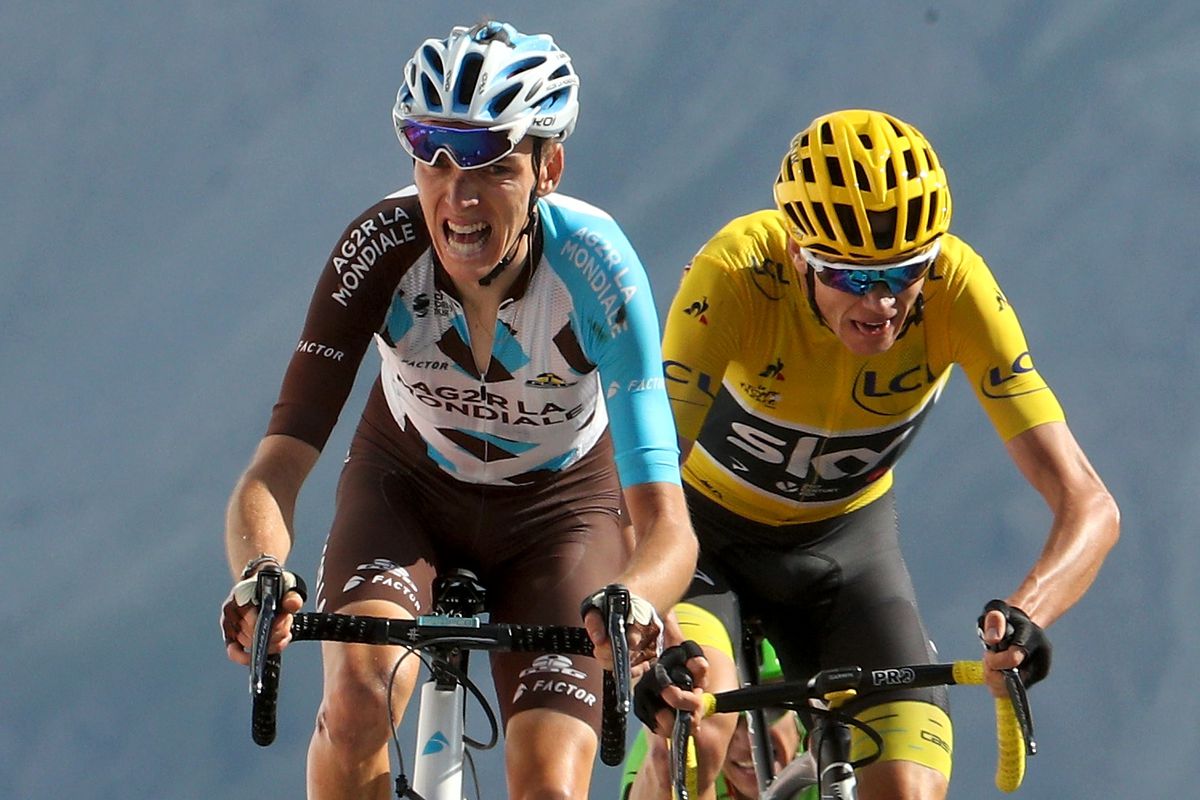
Despite this, a lot of high-level cyclists think they’re too big.
Between December 2016 to May 2017, Australian sports scientists administered an online survey to 97 well-trained male cyclists, ranging from local club level to international standard. The survey primarily sought to gather information on their perceptions and practices of achieving 'race weight'. A secondary focus was their attitude towards gym-based strength training which, as the researchers noted, is “a possible attenuator of the side effects associated with weight reduction.”
Around half (49%) of respondents indicated they were dissatisfied with their current body weight, with a similar percentage across club, national and international level riders.
Not surprisingly, riders identifying as climbers reported the lowest body weight (mean 66.1 kg), however all categories of riders expressed a desire to reduce their body weight. Even the track cyclists, who with a mean weight of 78.6 kg were a long way from achieving Robert Förstemann or Chris Hoy-like proportions, believed they were 2.7% above their ideal body weight.
Over three-quarters (77%) indicated they had recently tried or were currently trying to reduce body weight. The two most popular reported weight loss methods were reducing food intake, and/or increasing training frequency/duration.
The obsession with body weight reduction (and lightweight bikes) among competitive cyclists stems from the advantage of moving a lighter weight through space. This is especially critical for climbing specialists, who not only wish to excel at moving their bike and body mass through space, but doing so while travelling uphill, which adds a whole extra level of difficulty. It’s less of a concern for track cyclists, especially sprinters, because they compete over much shorter distances on indoor velodromes. These shorter, more explosive events require a higher compliment of fast-twitch muscle fibers. Road cyclists, in contrast, display a higher level of less powerful but more fatigue-resistant slow-twitch fibers.
That’s why track sprint cyclists tend to be bigger and far more muscular than their road-cycling counterparts (similar to the situation with long distance runners and track sprint runners).
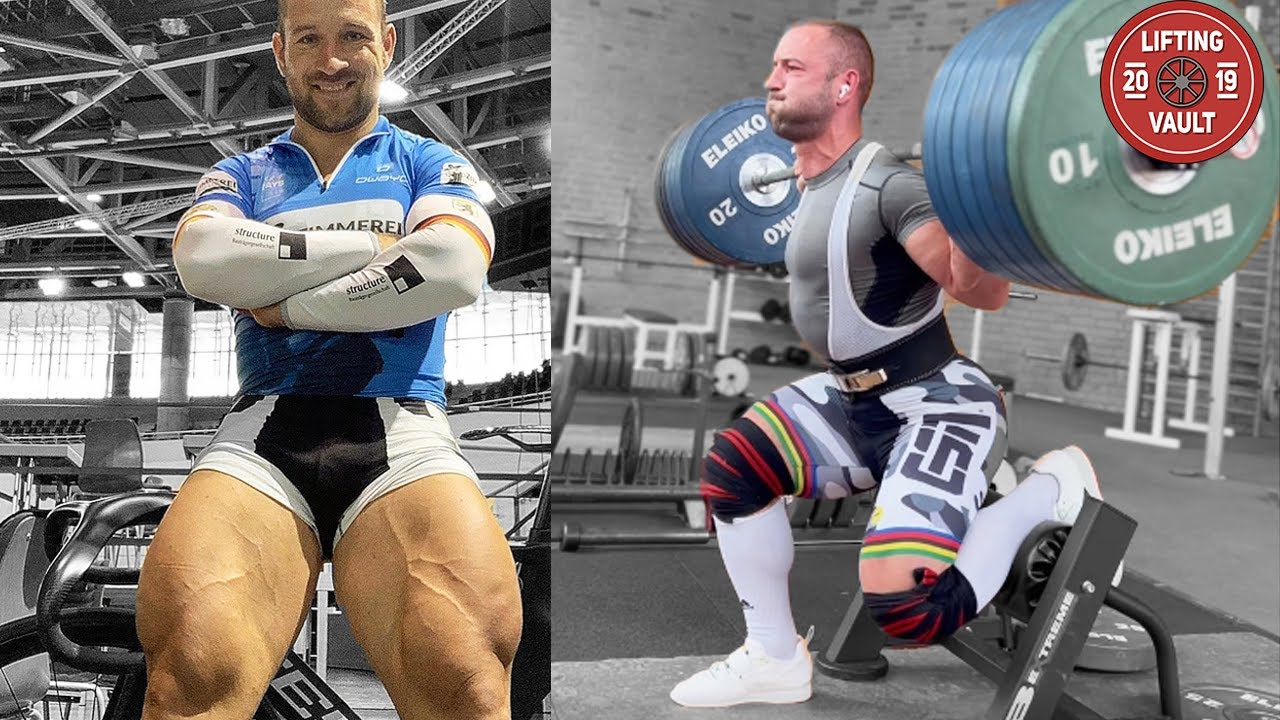
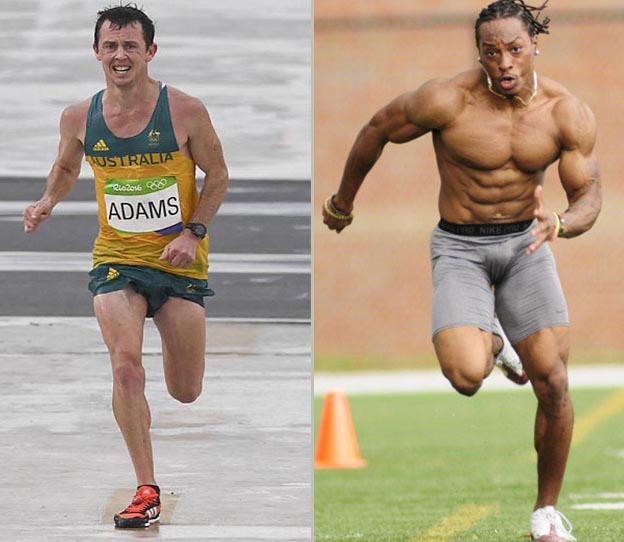
In a sport like road cycling, your power-to-weight ratio is critical. This means trying to find the ideal balance between being as light as possible and strong as possible, while maintaining a preponderance of slow-twitch fibers.
The quickest way to get stronger is to engage in resistance training.
The Australian survey found a higher proportion of international riders engaged in strength training (85%), compared to national (50%) and club (55%) riders. This is not surprising, because international-level athletes generally receive higher quality, science-based advice when compared to lower-ranked athletes, who tend to rely more heavily on folklore and internet advice of varying quality.
Overall, 62% incorporated some element of strength exercise into training. As previous research had found, few of the weight-training respondents completed any upper body work (31%).
Among those who performed strength training, the most common reason was to increase strength without size, while “aesthetic reasons” came a distant last.
The reasons for not strength training, in order of frequency, were “Time constraints”, “Time would be better spent riding”, “Don’t believe it will help”, and “Weight gain will decrease cycle performance”.
Ugh.
Weight Training for Cyclists
Unlike the situation with BMD, there is thankfully a growing body of research examining the effect of resistance training on strength, body weight and performance variables in cyclists.
Danish researchers took fourteen elite cyclists from the under-23 national team, and randomly assigned them to perform concurrent endurance and strength training or endurance training alone.
The intervention lasted sixteen weeks, with 2-3 resistance training sessions per week. Each session was comprised of four sets of 4 exercises (isolated knee extension, leg press, hamstring curls, calf raises), with the rep range varying between 5 and 12.
At sixteen weeks, overall body mass remained unchanged in both groups. However, the strength training group gained a mean 2.0 kg in lean mass, while no change was seen in the endurance-only group.
Average power production and the distance covered during a 45-minute time trial also increased to a greater degree in the strength training group.
Norwegian scientists observed performance improvements among elite cyclists with an even briefer resistance training regimen.
In a 2010 paper, sports scientists from Lillehammer University College, Norway, reported on twelve national-level cyclists who were randomly assigned to perform heavy strength training along with their usual endurance training, or to perform their usual endurance training only.
The study included two weight-training phases: 1) a 12-week preparatory period immediately preceding the competition season, and 2) 13 weeks into the competition period.
During the 12-week preparatory phase, the strength training group hit the gym twice per week, performing 3 sets of each of the following lower body exercises: half squat, unilateral (single-leg) leg press, standing one-legged hip flexion (where you raise your knee to waist height), and calf raises.
During the 13-week in-season phase, the strength training group performed a single weekly workout. The number of work sets per session was reduced to 2 on the squat and single-leg press, and 1 on the hip flexion and calf-raise exercises.
The target rep range varied between 4RM and 10RM on all work sets during the study.
After 25 weeks, there were no changes in overall body mass in either group. However, the strength-trained cyclists experienced a 4.4% increase in thigh muscle cross-sectional area during the preparatory period, and the increase was largely preserved at 25 weeks.
In contrast, the endurance-only group experienced no changes in thigh CSA during the 25 weeks.
1RM half squat strength increased by 23% in the strength-trained cyclists during the preparatory period, and was maintained at 25 weeks. In contrast, no increase occurred in the endurance-only group.
During an all-out 40-minute time trial, mean power output increased from pre-intervention to 25 weeks in the strength group by 14%, versus 4% in the group performing endurance-only training.
Peak power output in a 30-second (Wingate) sprint test increased among the strength-trained cyclists by 25 weeks, in both absolute terms and when calculated relative to body mass (6% and 8%, respectively). No changes occurred in the endurance-only group.
In summary, the strength-trained group experienced a number of changes that would be expected to improve cycling performance, and was able to maintain them at least 13 weeks into the competitive season with a single, brief weekly workout.
In a subsequent study by the same research group, fourteen elite cyclists competing at national or international level were again randomized to either add strength training to their regimen, or to perform only endurance training.
The resistance training program was similar to the one above, and again was comprised of an initial strength-building phase followed by a maintenance phase spanning a combined 25 weeks.
This was then followed by a further eight-week observation period in which the strength group discontinued resistance training.
During the 25-week preparatory period, the strength training group showed a larger increase in maximal isometric half squat force, squat jump, maximal aerobic power (Wmax), and mean power in the 30-second Wingate test compared to the control cyclists.
However, eight weeks after strength training cessation, the improvements in isometric force, squat jump, Wmax and mean power had either largely or completely dissipated.
Resistance training isn’t something you do for a few months then stop, in the belief that the gains will stick around for the long-term. It requires ongoing participation.
The good news is that you don’t need to be spending hours in the gym to see tangible benefits.
In Summary
Convincing people of the benefits of weight training can be a hard sell. Sedentary folks and endurance athletes alike often share an erroneous belief that resistance training is an activity largely irrelevant to their needs.
Nothing could be further from the truth. Weight training is the most efficient and time-effective modality for endurance athletes to further increase their power-to-weight ratio.
Weight training may also counter the bone-thinning effects of both endurance exercise and ageing.
Around fifteen years ago, I was dismantling a shed when a sheet of iron began to slide out from underneath my feet. If a photographer was on hand to capture my facial expression as I desperately and unsuccessfully tried to grab the shed’s middle and highest beam, the resultant shot probably would have won the Pullitzer Prize for Photography.
It was the most terrifying moment of my life, and I was fully expecting to get badly hurt.
From around 12 feet in the air, I fell sideways and landed on the concrete below.
Hard.
Four weeks prior to this incident, I’d changed things up in my gym training and started performing thrice-weekly full body workouts. The change resulted in an extra 2 kilograms of muscular body weight, and I’m convinced the extra ‘padding’ played a role in allowing me to literally get up and walk away, albeit in a temporary state of shock, with nothing but a few bruises to show for it.
Falls are a major cause of hip fractures in the elderly, and the subsequent loss of mobility often brings with it a markedly reduced life expectancy.
Long after you’ve given up caring how you look in a tank top, you’ll still care about being able to move about freely and safely. Maintaining a healthy musculoskeletal system is one way you can assist that goal, and the best exercise modality for building muscle and bone is resistance training.
Get to it.
Leave a Reply