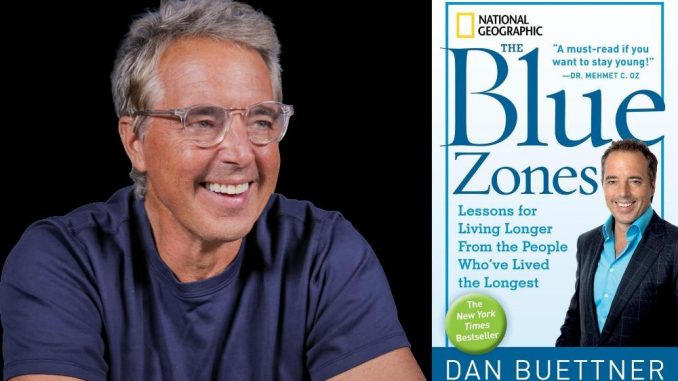
Meet the longevity hotspot that wasn't really - and the long-living group Dan Buettner suspiciously left out of his books.
In 2008, National Geographic published a book called The Blue Zones: Lessons For Living Longer From The People Who’ve Lived The Longest. Its author was Dan Buettner, a journalist and writer for his publisher’s namesake magazine. The Blue Zones achieved much acclaim, became a best seller, and featured the obligatory praise from Dr Mehmet Oz (“A must-read if you want to stay young!”)[1]
According to the blurb on the book’s inside flap, a Blue Zone is “a place in the world where higher percentages of the population live astoundingly long lives.” (Bold emphasis added).
The first edition of The Blue Zones decreed there were four places in the world deserving of this title:
- Loma Linda, California, the Ground Zero of Seventh-day Adventism
- Sardinia, Italy
- Okinawa, Japan
- Nicoya Peninsula, Costa Rica.
In 2012, Buettner released a second edition with an additional Blue Zone: The Greek island of Ikaria.
Buettner’s book has been around for a while, and I’d actually started a write-up in 2016. I was prompted to make this post after receiving the following response to one of my recent articles discussing the link between veganism/vegetarianism and increased risk of mental disorders.

Before I commence my dissection of Buettner’s Blue Zone claims, let’s look at what makes a real Blue Zone, and how the concept came about in the first place.
East-Central Sardinia: The Original Blue Zone
The term “Blue Zone” arose in 2004, when a group of researchers headed by Giovanni Pes and Michael Poulain published a report on Sardinian longevity in the journal Experimental Gerontology[2].
At first glance, the island of Sardinia would seem nothing to write home about in terms of longevity. Official Italian statistics show average life expectancy on the island is on par with most other Italian regions. In fact, as of 2005, both male and female average longevity in Sardinia was exceeded by averages in the Marche, Puglia, Toscana (Tuscany), Trentino-Alto Adige, Umbria and Veneto regions. Meanwhile, another three regions matched Sardinian longevity for one gender and exceeded it for another (Emilia-Romagna, Abruzzo, Molise)[3].
So why all the “Blue Zone” fuss about Sardinia?
In a 1999, paper, Pes and his team reported that, average Italian longevity notwithstanding, the prevalence of centenarians in Sardinia was higher than in other European countries (16.6 per 100,000 inhabitants compared with 10 per 100,000). What’s more, a surprisingly large percentage of these centenarians were male[4].
Women generally have a far higher likelihood of making it to 100; in Sweden, Denmark and Belgium, for example, the number of female centenarians for every male centenarian is 5.6, 6.3 and 7.1, respectively. In Italy, that ratio is reduced to 3.8, while on Sardinia it is only 2.7, and in the Sardinian province of Nuoro it is a highly atypical 1.4[5].
In their 2004 paper, Pes, Poulain and their colleagues identified the geographical distribution of centenarians in Sardinia. They produced a map, where the concentration of centenarians in an area was shaded in blue. As the shade of the blue intensified, so too did what the researchers dubbed the “extreme longevity index”. Hence the term “Blue Zone”.
The researchers determined Sardinia’s Blue Zone was the central-eastern part of the island (south-east of the Nuoro province), and covered all the mountainous areas of central Sardinia.
It is important to note the East-Central Sardinian Blue Zone is a bonafide one ascertained as a result of researchers carefully checking the region’s official birth and death records. The above-average longevity of Okinawans has also been determined via official and verifiable Japanese birth and death records[6].
The situation with Costa Rica is a little more complex. This small Latin-American country does not rank especially high on the longevity ladder. As of 2024, Costa Rica is #32 on the WHO life expectancy rankings; fourteen spots above the United States, but well below the top twelve countries of Japan, Singapore, South Korea, Switzerland, Australia, Norway, Luxemburg, Sweden, Spain, Iceland, New Zealand and Italy, all of which sport average life expectancy figures of 82.2 years or more[7].
If we use a mix of UN and World Bank data, which includes wealthy principalities like Monaco and Andorra, Costa Rica’s life expectancy ranking drops to #51 despite the other aforementioned countries still maintaining a spot near the top of the ladder[8].
So, initially, it’s hard to see what could possibly make Costa Rica a longevity hotspot. Upon further inspection, however, an interesting finding emerges. While average life-expectancy in Costa Rica is nothing spectacular, the prospects for those who do make it to their 80s and 90s are unusually good.
When Luis Rosero-Bixby, from the University of Costa Rica, compared the official 1995–2000 life tables for Costa Rica with those of thirteen high-income countries, they suggested exceptionally high old-age longevity in Costa Rica. As with Sardinia, the results were unusually favourable among males. Costa Rican males who made it to eighty years could expect, on average, another 8.2 years of life, compared to runners-up Japan with 7.6 years and Iceland with 7.4. Costa Rican females, with nine years of life expectancy at age 80, were in the middle of this elite pack; Japanese and Icelandic women who reached 80 could expect another 10 and 8.7 years, respectively[9].
The situation was similar among those who make it to ninety. Life expectancy for Costa Rican men and women who reached age 90 was 4.7 and 4.4 years, respectively. Costa Rican male nonagenarians could expect, on average, six months’ more longevity than their counterparts in the United States, Japan, Australia, and Iceland. Costa Rican nonagenarian women ranked a very close second behind their Japanese sisters and slightly ahead of US women[10].
And in yet another parallel with Sardinia, even more impressive longevity was observed in a select region of Costa Rica.
Welcome to Nicoya
The Nicoya Peninsula is located in the northeast of Costa Rica bordering the Pacific Ocean. Longevity in Nicoya has long been the subject of anecdotal exaltation, for at least as far back as 1904 when Swiss geographer and botanist Henri Pittier reportedly observed: “in no other place people are blessed with such long lives.”[11]
To see if there was any substance to the Nicoya legend, Rosero-Bixby, along with US researchers William Dow and David H. Rehkopf, examined the Costa Rican data and published their results in 2013. According to the 2011 census, population on the Nicoya peninsula was 161,000; 8% of this population was aged 65 years or more, and the number of centenarians counted was 32.
Rosero-Bixby et al estimated the probability of becoming a centenarian for a 60-year-old man residing in Nicoya was 4.8%, four times that of Costa Rican males, more than double that of Okinawa, and almost seven times that of Japan and Sardinia (in the interests of fairness, it must be noted that the Nicoya-Sardinian comparison was based on data for all of Sardinia, not just the especially longevous East-Central region). In terms of remaining life expectancy, sixty-year-old males in Nicoya had almost a 2-year advantage over Okinawans and around a three-year advantage over Japanese and other Costa Rican men.
The Nicoya longevity advantage was most pronounced in males. At age sixty, Nicoya women had a slightly lower probability of becoming centenarian (4.3%) than men, less than half the exceptionally high figure of 9.3% among Okinawan females. Female life expectancy at age 60 in Costa Rica was more than four years shorter than the impressive figure of 28.5 years for women in Okinawa[12].
As with the Sardinian and Okinawan data, the Costa Rican estimates were based on bonafide and reliable data. As Rosero-Bixby notes, the country has a carefully maintained population registry used for voting purposes, and since 1961 the United Nations has graded the Costa Rican vital statistics system as “complete”[13].
Costa Rica was also one of 11 developing countries whose vital registration statistics in 1995 were characterized by UNICEF researchers as both complete (recording at least 90% of births and deaths) and accurate (producing mortality estimates similar to those based on census and survey data)[14].
When assessing claims of “exceptional” longevity, having recourse to official and verifiable birth and death records is extremely important, because a number of once-legendary longevity hotspots have long since been exposed as shams. Notable examples include the Caucasus region of Soviet Russia, the Hunza Valley in Pakistan, and the Vilcabamba valley in Ecuador, all debunked by objective scientific investigation in the early 1980s[15]. The possible reasons for these false claims are numerous, but one common factor facilitating their propagation is the absence of reliable birth and death record-keeping. As a group of gerontologists remarked in a 2010 review of the subject, “in our experience, claims [of living] to age 130 exist only where records do not.”[16]
Thanks to the existence of reliable records, the labeling of Central-East Sardinia, Okinawa and Nicoya as Blue Zones does indeed have merit.
But, as you’re about to learn, when it comes to the alleged “American Blue Zone” in Loma Linda, the supporting evidence is about as robust as a wet noodle.
The Blue Zone that Never Was
Buettner and his book have been subjected to little, if any, critical scrutiny. Instead, the book was the subject of a multitude of gushing press articles, and many journalists and laypeople seem to hold it in the same regard as a scientific document. Indeed, Buettner’s travels as a National Geographic reporter to the various “Blue Zone” locations are repeatedly referred to in media articles as a “study”.
Buettner has also confirmed he was given a US $300,000 “research grant” for his international Blue Zones trek, courtesy of US taxpayers, after flying to Washington D.C. and making a pitch to the National Institute on Aging[17].
However, there is nothing scientific about Buettner;s book. His claims in The Blue Zones are not numerically referenced, and the bibliography for the book’s 262 pages consists merely of twelve popular format books and 45 “articles”. Of the latter, twenty-four are papers published in scientific journals, while the remainder are mostly stories and op-eds published in periodicals and newspapers such as Time, New York Times, Popular Science, and Prevention.
Based on what he’s written in his book and online, Buettner’s “study” consisted primarily of travelling to the alleged Blue Zones, meeting with a handful of nonagenarians and centenarians who lived there, writing about their spritely nature, and chatting with family members, doctors and researchers in those locations. Rather than carefully check the data and scrutinize any published papers these doctors and scientists had authored, Buettner appeared happy to accept their verbal statements at face value.
Buettner’s “study”, in other words, relied largely on anecdote. This is the approach, not of a science-minded researcher, but a journalist. And at the end of the day, that’s what Buettner is: A journalist.
To be fair to Buettner, his journalistic instincts were largely on target in the case of Sardinia, Okinawa and Nicoya. In the case of Loma Linda’s allegedly longevous Seventh-day Adventist population, however, his lack of critical and independent analysis becomes startlingly evident. Like so many others, Buettner seems to have fallen victim to the self-serving, pro-vegetarian propaganda streaming out of Loma Linda University. The end result is a Blue Zone designation that is highly dubious and, in all likelihood, wholly undeserved.
They’re At It Again
Early in The Blue Zones chapter on Loma Linda Seventh-day Adventists, we are told that “members of this community, whose faith endorses healthy living, have participated in a ground-breaking health and dietary study of Californians over the age of 25. The results of this study hold promising clues as to another remarkable fact about these Adventists: As a group they currently lead the nation in longest life expectancy.”[18]
That “ground-breaking” study which has allegedly established Loma Linda Seventh-day Adventists as the longest-living people in the US is the AHS-1 project, which just happens to be conducted and reported by Loma Linda Seventh-day Adventists.
Despite their often stark differences, one remarkably consistent trait among members of the world’s cults and religions is the belief they are “the chosen ones”. It is no doubt highly beneficial for a religion’s leaders, and highly conducive to group loyalty and cohesion, to curry the belief that members of that religion are special, looked upon more favorably by God, and superior to outsiders.
And so when you have a religious group claiming it is the longest-lived population in America, and the reason for this is its superior diet, lifestyle and beliefs, yet the only evidence it can cite in support of this alleged longevity just happens to be of its own making, then there is every reason to be very skeptical.
Before writing up these claims as fact, it behooves someone like Buettner to double-check them against reliable, independent data to ensure they are not merely another biased exercise in religious self-aggrandizement.
Buettner, regrettably, did no such thing. Instead, he swallowed the untenable claims of the SDA researchers he spoke with hook, line and sinker.
When Buettner visited Loma Linda University and SDA researcher Gary Fraser told him “we can say with certainty that Adventists live longer”, Buettner believed him.
The Blue Zones author also accepted Fraser’s assertion that “a 30-year old Adventist male lives 7.3 years longer than the average 30-year-old white male. A 30-year-old Adventist female lives 4.4 years longer than the average 30-year-old Californian white female.”[19]
Buettner also does not see fit to question Fraser’s claim “If you go to Adventists who are vegetarian, it becomes 9.5 years longer for men and 6.1 years longer for women.”[20] The claim that vegetarian Adventists enjoy better health and live longer than their non-vegetarian brethren is repeated throughout the chapter.
But we know it isn’t true. Fraser neglects to mention the 1975 study from Loma Linda University that found recent SDA converts enjoyed a lower risk of breast and colon cancers than life-time Adventists. If vegetarianism protected against such malignancies then the opposite should have been evident; risk should have declined with increasing length of time as a practicing member of the pro-vegetarian Adventist religion.
As for the claim that SDA members from Loma Linda live longer than other white males, that same study found little difference in cancer and all-cause death rates of Adventist and non-Adventist physicians, two groups with similar educational and socio-economic status. In fact, medical graduates from Loma Linda showed a trend towards higher rates of gastro-intestinal and colon cancers[21].
And then there’s the 1994 paper out of Loma Linda that found no difference in cancer incidence between SDA and non-SDA participants, except for endometrial cancer which was significantly higher among SDA women. While overall cancer mortality was lower in SDA men, prostate cancer mortality was significantly higher[22].
We now also have the raw, pre-manipulated data from the 2013 AHS-2 paper that showed non-vegetarian Adventists enjoyed lower mortality than SDA vegetarians and vegans, despite the fact they were far more likely to smoke cigarettes, to be physically inactive, drink alcohol daily, sleep four hours or less, and exhibit higher BMIs![23]
So how on Earth did Fraser come up with the assertion that Loma Linda SDAs live longer than their non-SDA counterparts, and that vegetarian SDAs live longer than their non-vegetarian counterparts?
His claims emanate from a 2001 paper he co-authored with fellow Loma Linda researcher David Shavlik[24]. The abstract for this paper states:
“California Adventists have higher life expectancies at the age of 30 years than other white Californians by 7.28 years in men and by 4.42 years in women, giving them perhaps the highest life expectancy of any formally described population.”
But when one delves into the actual text of this paper to find out how this assertion was arrived at, some rather bizarre research practices emerge. As discussed earlier, a critical requirement for ascertaining life expectancy in a given region is access to reliable birth and death records for that region. If such records are available, then the rest of the process is pretty straightforward. Unless, that is, you are seeking to ascertain the life expectancies for specific sub-groups, such as those who eat particular diets or belong to a particular religion. Needless to say, dietary information is not a component of official birth and death records, and religious denomination is often absent also. And this was exactly the case with California’s SDA population, and Fraser and Shavlik admitted as much in the paper’s methods section: “It was not possible to remove Adventists from the California data, as religion was not recorded.”[24]
So unlike the Sardinia, Okinawa and Costa Rica studies, where the researchers were simply seeking to ascertain male and female longevity in given regions, Fraser and Shavlik were attempting to ascertain longevity among highly specific subsections of the California population. But the official data did not contain the information they needed.
So how did they get around this obstacle?
Simple. They obtained mortality data from a 1989 Adventist Health Study paper, which involved only non-Hispanic SDA participants, covering the period 1976 to 1988[26]. This data was then compared to the official Californian non-Hispanic white population projections and mortality statistics for 1985 (and, in the oldest age category, 1989).
In effect, Fraser and Shavlik are comparing the Californian general population to a select group of people who volunteered for a health study, and therefore likely to be advantaged by the well-known “healthy participant effect”.
What is the “healthy participant effect”? It’s the phenomenon in which the participants of health studies often exhibit unusually low morbidity and mortality rates, significantly below the averages for the population they have been recruited from. While no doubt a good thing for the volunteers in question, it is a frequent source of headaches for clinical researchers, who have relied on an expected event rate in order for their RCTs to achieve statistically significant results. The most plausible explanation for the healthy participant effect is that people who respond positively to invitations to participate in health studies are those who have in interest in their health, and are therefore at lower risk of adverse health events. Subjects with poorer health behaviours, meanwhile, are less likely to participate[27].
And so we are faced with the ludicrous scenario in which Fraser and Shavlik are comparing a health-aware group of research volunteers to the Californian general population, with no attempt to account for the latter’s drug addicts, alcoholics, gang members and numerous other health-indifferent groups plagued by reduced life expectancy.
This kind of approach resembles good science as about as much as a unicycle resembles a Ferrari. Buettener, hailing from a journalistic background, may not be familiar with the healthy participant effect, but career researchers like Fraser and Shavlik sure as heck should. What they effectively did in their 2001 paper was to compare apples with oranges, then proclaim to the world from this extremely lopsided analysis that thirty-year-old members of the religious group they just happened to belonged to lived 4.4 -7.3 years longer than similarly-aged non-SDA Californians and that these SDAs had “perhaps the highest life expectancy of any formally described population.”
Lawdy, lawdy.
On the one occasion when the Loma Linda researchers did compare apples with apples, SDAs were shown to have no mortality advantage whatsoever. This was the study that compared over 6,000 medical practitioners who graduated between 1901 and 1971 from Loma Linda University (where over 75% of the graduates were Adventists) and the University of Southern California (where less than 5% of graduates were Adventists).
The results – which the clearly prepossessed SDA researchers termed “startling” - showed no health and mortality advantage to the SDA physicians. As expected, the death rate among these physicians was lower than the general population, but cancer and all-cause mortality rates were similar among the two groups. As noted earlier, it was the Loma Linda graduates who in fact showed a trend towards higher rates of gastro-intestinal and colon cancers[28].
Incredulous at the glaring bias inherent in the Fraser and Shavlik paper, on July 9, 2016 I emailed Buettner and asked what official, non-SDA-derived data he used to confirm that Seventh-day Adventists residing in Loma Linda did indeed “live astoundingly long lives” in comparison to the United States average. Three days later I received a reply from the program manager of Buettner’s public speaking business, informing me that the Blue Zones author was travelling overseas. Instead, included with the email was the Adventist portion of the bibliography from Buettner’s most recent book The Blue Zones Solution: Eating and Living like the World’s Healthiest People. I scanned through the bibliography, but was simply greeted with a list of 35 pro-vegetarian, pro-nut (the food variety), and anti-meat papers, almost all authored by the team at Loma Linda University. As with the Blue Zones bibliography, there was nothing even resembling a citation to official birth and death records or census data[29].
Why Are We Even Talking About Loma Linda?
The absurdities hardly end there. The Blue Zones specifically cites Loma Linda as a Seventh-day Adventist Blue Zone. But again, there exists no evidence to indicate Loma Linda residents, SDA or otherwise, are more likely to enjoy “astoundingly long lives”. Remember the 1989 AHS data that Fraser and Shavlik used in 2001 to support their claims of superior longevity for SDAs? That data, if you recall, was derived from the questionnaires of 34,198 non-Hispanic white Seventh-day Adventists. Yet when The Blue Zones was written, the entire population of Loma Linda was only 21,000, of whom some 9,000 were SDAs.
In other words, most of the participants in the AHS study did not even live in Loma Linda - they resided elsewhere in California! Yet Buettner enthusiastically proclaims Loma Linda specifically as a Blue Zone, his only ‘scientific’ evidence being the utterances of SDA researchers citing this AHS data. Again, there is nothing even resembling independent, non-biased data to prove that Loma Linda is a longevous Blue Zone.
Mormon Utah and California: The Real “American Blue Zones”?
Unlike Seventh-day Adventism, the Church of Jesus Christ of Latter-day Saints (a.k.a. Mormon Church) has no proscription against meat. Section 49 of the Mormon Doctrine and Covenants says that anyone who preaches abstinence from meat “is not ordained of God” and “the beasts of the field and the fowls of the air, and that which cometh of the earth, is ordained for the use of man for food and for raiment, and that he might have in abundance.”[30]
In plain English: “Enjoy your steak.”
Section 89 of the Church’s Doctrine and Covenants again notes the Lord has ordained the “flesh of beasts and of the fowls of the air” for human consumption, however “they are to be used sparingly”[31].
Research into the health and mortality prospects of Mormons began appearing in the literature in the mid-70s, and focused primarily on those living in California and Utah. The latter is the Church’s home state, where 62% of the population is Mormon[32]. Dietary intake data from this era indicates that, when it comes to meat consumption, Mormons have largely ignored Section 89’s admonition for sparsity and have instead realized Section 49’s ordinant wishes for abundance.
In 1978, Joseph Lyon and Ann Sorenson from the University of Utah reported Utah Beef Council data showing per capita beef consumption of 59 kg/year in Utah for 1972, as compared to 52 kg/year in the US. Subsequent unpublished figures from the Beef Council showed a continuation of this trend. Lyon and Sorenson also discussed a dietary survey among rural residents sixty years or older in southern Utah, which found consumption of total protein was 142% and 135% higher than the RDA for men and women, respectively. For dietary fat, men ate 93% and women 90% of the RDA, and the overwhelming majority of this was saturated fat. No data were available as to the religion of the individual participants, but the geographic area in which the survey was administered was 90% Mormon[33].
James Enstrom, from the School of Public Health, University of California at Los Angeles (UCLA) also reported on a 1975 mail questionnaire involving eighteen Mormon High Priests, Seventies and Elders from West LA who attended church every week. Almost all ate meat, fish, poultry, and eggs. Their diet “appeared to be well balanced and moderate” and 70% used vitamin pills. In line with Mormon Church teachings, there was essentially no use of tobacco, alcohol, coffee, tea, cola drinks or non-prescription drugs among this group[34].
So while Mormons have little issue with meat, their “Word of Wisdom” forbids the use of tobacco, alcohol, coffee, tea, and drugs, especially addictive drugs. When it comes to actual science, there is little evidence of harm from judicious tea and coffee consumption; to the contrary, evidence of potential health benefits from these beverages continues to mount.
While there is similarly sparse evidence of harm from truly moderate alcohol consumption, it is hardly a state secret that many people engage in immoderate drinking. As someone who enjoys a beer after a hard ride and loves Italian and Spanish liqueurs, it pains me to acknowledge that in real terms alcohol is the world’s most destructive and deadliest drug, causing more hospitalizations and deaths than heroin, cocaine and amphetamines could ever dream of. And the detrimental health effects of cigarette smoking – an activity that involves filling one’s lungs with noxious gases on a regular basis - need no elaboration.
The data reported by Lyon, Sorenson and Enstrom indicate that a large number of Mormons adhere to the proscriptions against alcohol and cigarettes. Not surprising then, that the meat-eating but largely alcohol- and tobacco-free Mormons display significantly lower rates of cancer and heart disease than the American average.
When Lyon and Sorenson examined colon cancer incidence and mortality, they found both were lower in Utah than in the US overall. During the 20-year period prior to their 1978 report, Utah’s age-adjusted total white cancer mortality and colon cancer mortality were 22% and 34% below the United States average, respectively. For the years 1966 to 1970, the colon cancer incidence of Utah Mormons was 37% below the US average, and that of Utah non-Mormons was 18% below the United States average[35].
It’s important to note that, unlike the data behind the SDA longevity claims, the Mormon data was obtained not from a Church-run epidemiological study, but official US state, federal and Mormon Church records. Utah’s Cancer Registry was established in 1966 to register and follow the progress of all cancer patients within the state. To enable comparisons between Mormons and non-Mormons, Lyon and Sorenson classified the 10,641 cases of cancer occurring in 1966 to 1970 according to membership in the Mormon Church. This classification was made possible by the existence of a carefully maintained central Church file in Salt Lake City. Church clerks throughout the world were instructed to file complete and accurate records in an annual ward report, which included membership and death data. Both the bishop and clerk of each ward (local church) had to certify their report was complete and accurate before mailing it to Salt Lake City, where the reports were stored in the Church Historical Department[36,37].
The US averages for cancer incidence were obtained from the Third National Cancer Survey covering the period 1969-1971, which involved a sample of over 200,000 drawn from 9 regions around the country[38].
In his 1975 paper, Enstrom found the 1970-72 cancer mortality rate among California Mormon adults was only one-half to three-fourths that of the general California population for most cancer sites. Similar to Lyon and Sorenson, he also observed that the cancer death rate in the predominately Mormon state of Utah was around two-thirds to three-fourths of the United States rate, and the lowest in the entire country. Mormons as a whole smoke and drank about half as much as the general population, while active Mormons abstained almost completely from tobacco and alcohol. However, they appeared to be fairly similar to the general white population in other respects, such as socioeconomic status and urbanization[39].
In a subsequent 1978 paper, Enstrom focused his analysis on “active Mormons”, defined as High Priests and Seventies, the members most likely to adhere to the Church-advocated lifestyle. Based on Church records for 15,500 California Mormons during 1968 to 1975 and for 55,000 Utah Mormons during 1970 and 1975, the age-adjusted death rate for religiously active Mormon males was exactly half that of US white males aged 35 and over. At thirty-five, active Californian Mormon men could expect, on average, to live another 44.6 years; the corresponding figure for non-Mormon Californian white males was 37.1. Among 35-year old Utah Mormons and non-Mormon white males, the figures were 44 and 37.9, respectively. All up, the remaining life expectancy for active Mormon men at age thirty-five was over 7 years greater than for US white males.
The standardized cancer mortality rates for the active Mormon men were 0.50 for all cancers, an especially low 0.23 for smoking-related cancer sites, and 0.68 for all other sites[40].
As with Lyon and Sorenson, Enstrom’s papers did not emanate from a Mormon-owned university using data from a Mormon-run epidemiological study involving self-selected Mormon research volunteers. Instead, individual Mormon death records during these periods, obtained from the Mormon Church Historical Department, were matched to official California and Utah state records in order to verify cause of death. The Mormon cancer and death rates were compared to the 1970 rates for white California, Utah and US males, the data of whom were obtained from the US Bureau of the Census and the National Center for Health Statistics.
More recently, in 2004, Germany’s Max Planck Institute published a paper in its journal Demographic Research comparing mortality between Mormons and non-Mormons in Utah. The paper’s author was Ray Merrill from Brigham Young University which, unlike the University of Utah, is Mormon-owned. But as with Lyon, Sorenson and Enstrom, Merrill did not rely on a nepotistic prospective cohort study for his data. Instead, mortality rates for Mormons and non-Mormon white males and females were determined from death records from the Utah Department of Health, deceased membership records from the Church, state population estimates from the US Bureau of the Census, and state Mormon population estimates from the Church. In order to classify individuals as Mormon or non-Mormon, state death records were linked with the Church’s deceased membership records.
Merrill found that the additional number of years of life experienced by Mormons compared with non-Mormons was 7.3 for males and 5.8 for females. Among those alive at age 80, Mormons averaged more remaining years of life than non-LDS: An extra 1.7 years for white males and 3.2 years for females[41].
Another Longer-Lived Group of Latter Day Saints
The Community of Christ, formerly known as the Reorganized Church of Jesus Christ of Latter Day Saints, regards itself as the true embodiment of the original church organized in 1830 by Mormon founder Joseph Smith, and it regards Joseph Smith III, the eldest surviving son of Smith, to have been his legitimate successor. Since Smith’s death in 1844, the LDS and RLDS churches have evolved separately in belief and practices. Both, however, use the Book of Mormon and the Doctrine and Covenants as scripture, along with the Bible. The Community of Christ is headquartered in Independence, Missouri, and reports a worldwide membership of around 250,000, compared to the Mormon Church’s 15,000,000.
Larry McEvoy and Garland Land, from the Missouri Center for Health Statistics, compiled all deaths among Missouri residents and all deaths recorded in Missouri from 1972 through 1978. Each of these 371,409 deaths was classified with respect to membership in the RLDS Church. The determination of RLDS membership was made from the World Church files in Independence, Missouri. When a person became a member through baptism (usually at age 8), a record was sent by the local church recorder to the World Church. Information supplied included name, date of birth, place of birth, parents’ name, parents’ place of birth, parents’ birth date, and other church specific information. The local recorder also updated these records whenever there was a change in status such as name or address change, marriage, divorce, or death.
Life expectancies and death rates for Missouri RLDS members were compared with those of three groups: 1) non-RLDS Missouri residents; 2) non-RLDS Independence residents; and 3) Utah residents. The analyses were restricted to residents 25 years of age and older.
The results, reported in 1981, showed the average Missouri RLDS member at age 25 could expect to live an additional 53.1 years. This average life expectancy exceeded that of a Missouri non-RLDS resident by 3.2 years. Irrespective of religion, residents of Independence generally had longer life expectancies than whites state-wide, but Missouri RLDS members still showed a 2.7-year advantage. RLDS life expectancy exceeded that in Utah by 1.9 years[42].
So Why Did Buettner Ignore the Mormons?
These and numerous other studies[43-49] have detected lower cancer and CVD rates and greater life expectancy among US Mormons. Furthermore, these studies used official state and federal data, along with carefully maintained Church membership records in order to ascertain accurate mortality and life expectancy figures.
Do SDAs, like the Mormons, have carefully maintained registers of their members worldwide? If so, why weren’t these used – and made available to independent researchers – in order to verify SDA life expectancies? If such records were and are available, why do Loma Linda SDA researchers insist on instead using “adjusted” data from their own confounder-prone epidemiological studies, studies that are likely biased from the outset due to the healthy participant effect?
And why did Buettner completely ignore US Mormons, even though the data indicating their above-average longevity was of a far more reliable and verifiable nature? Why did he ignore this meat-eating religious group and instead choose to aggrandize the suspect longevity claims of another religious group that preaches vegetarianism?
Is it because Buettner himself harbours a pro-vegetarian agenda? And that including a vegetarian group of alleged American Blue Zoners served this agenda, while discussing the verified above-average longevity of a meat-eating group would have undermined it?
I can’t get inside Buettner’s head to ascertain the true reasons for his curious omission of the Mormon data. But there’s no denying Buettner is anti-meat. One New York Times writer noted in 2015 that Buettner’s “findings over the last decade do put him at odds with a controversial range of culinary belief systems” such as Paleo, low-carb, raw food and gluten-free dieting, all of which the Blue Zones author is quick to deride and dismiss[50].
Despite his professed disdain for dietary faddism, Buettner has had no qualms in embracing and promoting one of the most absurd diet fads of all: Vegetarianism. This is the very same fad that absurdly claims avoidance of a nutrient-rich staple like meat will somehow lower disease and extend life, and Buettner is right on board with it. For an indication of Buettner’s dietary ideologies, and who he considers to be worthy sources of dietary information, a quick scan of his Facebook favourites was revealing. They included Forks Over Knives, Dean Ornish, T. Colin Campbell Center for Nutrition Studies, John McDougall MD, and Neal Barnard, M.D. (founder and head of the Physicians Committee for Responsible Medicine, the pro-vegan outfit whose membership is comprised overwhelmingly of non-physicians)[51].
In The Blue Zones, Buettner explicitly advises:
“Avoid meat and processed foods”[52]
For Buettner to advise the complete avoidance of meat when only one Blue Zone (of dubious veracity) featured any meaningful number of vegetarians makes absolutely no sense, except when considered in the context of his pro-vegetarian leanings.
In his subsequent book, The Blue Zones Solution: Eating and Living Like the World’s Healthiest People, Buettner seemed to have relaxed his anti-meat stance, but only slightly. His anti-animal food bias is still clearly evident when he advised:
“RETREAT FROM MEAT Consume meat no more than twice a week.” (p. 167)
“OCCASIONAL EGG Eat no more than three eggs per week.” (p. 172)
“PLANT SLANT See that 95 percent of your food comes from a plant or plant product.” (p. 165)
(Bold emphasis in original).
What valid, controlled science does Buettner base these recommendations on?
None. Nada. Stugatz.
Instead, we are supposed to eat like this simply because Buettner claims this is how people in the Blue Zones eat. Whether Buettner - who dated vegan author Kathy Freston and counts Dean Ornish among his friends - can be trusted to accurately relay the eating habits of Blue Zone inhabitants is something we will address in the next installment.
References
- Buettner D. The Blue Zones: Lessons For Living Longer From The People Who’ve Lived The Longest. National Geographic, Washington D.C., 2008.
- Poulain M, et al. Identification of a Geographic Area Characterized by Extreme Longevity in the Sardinia Island: the AKEA study. Experimental Gerontology, 2004; 39 (9): 1423–1429.
- ISTAT Speranza di vita alla nascita per sesso e regione 2002–2005. Available online: http://demo.istat.it/altridati/indicatori/2005/Tab_6.pdf (accessed Jul 10, 2016).
- Deiana L, et al. AKEntAnnos. The Sardinian study of extreme longevity. Aging Clinical and Experimental Research, 1999; 11: 142–149.
- Poulain M, et al. Identification of a Geographic Area Characterized by Extreme Longevity in the Sardinia Island: the AKEA study. Experimental Gerontology, 2004; 39 (9): 1423–1429.
- See: Okinawa Centenarian Study: The Study. Available online: http://www.okicent.org/study.html (accessed Jul 11, 206).
- World Health Organization Global Health Observatory. Life expectancy at birth (years). who.org, 2026. Available online: http://www.who.int/gho/publications/world_health_statistics/2016/Annex_B/en/ (accessed May 27, 2026).
- World Population Review. Life Expectancy by Country 2026. worldpopulationreview.com, 2026. Available online: https://worldpopulationreview.com/country-rankings/life-expectancy-by-country (accessed May 27, 2026).
- Rosero-Bixby L. Exceptionally High Life Expectancy of Costa Rican Nonagenarians. Demography, Aug, 2008; 45 (3): 673-691. Available online: http://www.ncbi.nlm.nih.gov/pmc/articles/PMC2831395/ (accessed Jul 11, 206).
- Ibid.
- Rosero-Bixby L, et al. The Nicoya region of Costa Rica: a high longevity island for elderly males. Vienna Yearbook of Population Research, 2013; 11: 109–136. Available online: http://www.ncbi.nlm.nih.gov/pmc/articles/PMC4241350/ (accessed Jul 11, 206).
- Ibid.
- INEC and CCP. Estimaciones y proyecciones de población por sexo y edad 1950–2050. San Jose, Costa Rica: Instituto Nacional de Estadística y Censos; 2013. [Estimates and projections of population by sex and age, 1950-2050. San José, Costa Rica: National Institute of Statistics and Censuses]
- Hill K, et al. Trends in Child Mortality in the Developing World: 1960–1996. New York: UNICEF; 1999.
- Young RD, et al. Typologies of Extreme Longevity Myths. Current Gerontology and Geriatrics Research, 2010; 2010: 423087. Available online: http://www.ncbi.nlm.nih.gov/pmc/articles/PMC3062986/ (accessed Jul 11, 2016).
- Ibid.
- Carlyle E. Dan Buettner’s Blue Zones teach nine secrets of a longer life. City Pages, Wed, Feb 3, 2010. Available online: http://www.citypages.com/news/dan-buettners-blue-zones-teach-nine-secrets-of-a-longer-life-6744222 (accessed Jul 19, 2016).
- Buettner D. The Blue Zones: Lessons For Living Longer From The People Who’ve Lived The Longest. National Geographic, Washington D.C., 2008: 124.
- Ibid: 128.
- Ibid: 129.
- Phillips RL. Role of lifestyle and dietary habits in risk of cancer among Seventh-Day Adventists. Cancer Research, Nov, 1975; 35: 3513-3522.
- Mills PK, et al. Cancer incidence among California Seventh-day Adventists, 1976-1982. American Journal of Clinical Nutrition, 1994: 59 (suppl): 1136S-1142S.
- Orlich MJ, et al. Vegetarian Dietary Patterns and Mortality in Adventist Health Study 2. JAMA Internal Medicine, 2013; 17 (13): 1230-1238.
- Fraser GE, Shavlik D. Ten Years of Life - Is It a Matter of Choice? Archives of Internal Medicine, Jul 9, 2001; 161 (13): 1645-1652. Available online: http://archinte.jamanetwork.com/article.aspx?articleid=648593 (accessed Jul 11, 2016).
- Ibid.
- Beeson WL, et al. Chronic disease among Seventh-day Adventists, a low-risk group. Rationale, methodology, and description of the population. Cancer, Aug 1, 1989; 64 (3): 570-581. Available online: http://onlinelibrary.wiley.com/doi/10.1002/1097-0142(19890801)64:3%3C570::AID-CNCR2820640303%3E3.0.CO;2-4/pdf (accessed Jul 11, 2016).
- Forum on Drug Discovery, Development, and Translation, Board on Health Sciences Policy, Institute of Medicine. Envisioning a Transformed Clinical Trials Enterprise in the United States: Establishing an Agenda for 2020: Workshop Summary. National Academies Press, Sep 27, 2012: 215.
- Phillips RL. Role of lifestyle and dietary habits in risk of cancer among Seventh-Day Adventists. Cancer Research, Nov, 1975; 35: 3513-3522.
- Email from Anthony Colpo addressed to Dan Buettner (speaking@bluezones.com), Jul 9, 2016. Reply received from Sam Skemp, Blue Zones, LLC Program Manager, Jul 12, 2016.
- See: The Doctrine and Covenants, Section 49. Church of Jesus Christ of Latter-day Saints. Available online: https://www.lds.org/scriptures/dc-testament/dc/49?lang=eng (accessed Jul 11, 2016).
- See: The Doctrine and Covenants, Section 89. Church of Jesus Christ of Latter-day Saints. Available online: https://www.lds.org/scriptures/dc-testament/dc/89?lang=eng (accessed Jul 11, 2016).
- Canham M. Census: Share of Utah’s Mormon residents holds steady. The Salt Lake Tribune, Apr 17, 2012. Available online: http://archive.sltrib.com/story.php?ref=/53909710-200/population-lds-county-utah.html (accessed Jul 11, 2016).
- Lyon JL, Sorenson AW. Colon cancer in a low-risk population. American Journal of Clinical Nutrition, Oct 1978; 31 (10 Suppl): S227-S230.
- Enstrom JE. Cancer and total mortality among active Mormons. Cancer, 1978; 42 (4): 1943-1951. Available online: http://onlinelibrary.wiley.com/doi/10.1002/1097-0142(197810)42:4%3C1943::AID-CNCR2820420437%3E3.0.CO;2-L/pdf (accessed Jul 11, 2016).
- Lyon JL, Sorenson AW. Colon cancer in a low-risk population. American Journal of Clinical Nutrition, Oct 1978; 31 (10 Suppl): S227-S230.
- Ibid.
- Enstrom JE. Cancer and total mortality among active Mormons. Cancer, 1978; 42 (4): 1943-1951. Available online: http://onlinelibrary.wiley.com/doi/10.1002/1097-0142(197810)42:4%3C1943::AID-CNCR2820420437%3E3.0.CO;2-L/pdf (accessed Jul 11, 2016).
- Biometry Branch, NCI, NIH. The Third National Cancer Survey, Advanced Three Year Report, 1969-1971 Incidence. DHEW Publication No. (NIH) 74-637. Washington DC. Government Printing Office, 1974.
- Enstrom JE. Cancer mortality among Mormons. Cancer, 1975; 36 (3): 825-841.
- Enstrom JE. Cancer and total mortality among active Mormons. Cancer, 1978; 42 (4): 1943-1951. Available online: http://onlinelibrary.wiley.com/doi/10.1002/1097-0142(197810)42:4%3C1943::AID-CNCR2820420437%3E3.0.CO;2-L/pdf (accessed Jul 11, 2016).
- Merrill RM. Life Expectancy among LDS and Non-LDS in Utah. Demographic Research, Mar 12, 2004; 10 (3): 61-82.
- McEvoy L, Land G. Life-Style and Death Patterns of the Missouri RLDS Church Members. American Journal of Public Health, 1981; 71: 1350-1357.
- Merrill RM, Folsom JA. Female breast cancer incidence and survival in Utah according to religious preference, 1985-1999. BMC Cancer, May 18, 2005; 5: 49.
- Daniels M, et al. Associations between breast cancer risk factors and religious practices in Utah. Preventive Medicine, Jan, 2004; 38 (1): 28-38.
- Lyon JL, et al. Cancer Incidence in Mormons and Non-Mormons in Utah, 1966–1970. New England Journal of Medicine, 1976; 294: 129-133.
- Lyon JL, et al. Cancer incidence in Mormons and non-Mormons in Utah during 1967--75. Journal of the National Cancer Institute, Nov, 1980; 65 (5): 1055-1061.
- Lyon JL, et al. Cancer incidence among Mormons and non-Mormons in Utah (United States) 1971-1985. Cancer Causes & Control, Mar, 1994; 5 (2): 149-156.
- Merrill RM, Lyon JL. Cancer incidence among Mormons and non-Mormons in Utah (United States) 1995-1999. Preventive Medicine, May, 2005; 40 (5): 535-541.
- Lyon JL, et al. Cardiovascular mortality in Mormons and non-Mormons in Utah, 1969--1971. American Journal of Epidemiology, Nov, 1978; 108 (5): 357-366.
- Gordinier J. My Dinner With Longevity Expert Dan Buettner (No Kale Required). One New York Times, Aug 1, 2015. Available online: http://www.nytimes.com/2015/08/02/fashion/dinner-with-blue-zones-solution-dan-buettner.html?_r=0
- About Dan Buettner. Facebook.com. Available online: https://www.facebook.com/dan.buettner1 (accessed Jul 20, 2016).
- Buettner D. The Blue Zones: Lessons For Living Longer From The People Who’ve Lived The Longest. National Geographic, Washington D.C., 2008: 239.