From the makers of Prozac, another way to wreck your body and possibly end your life.
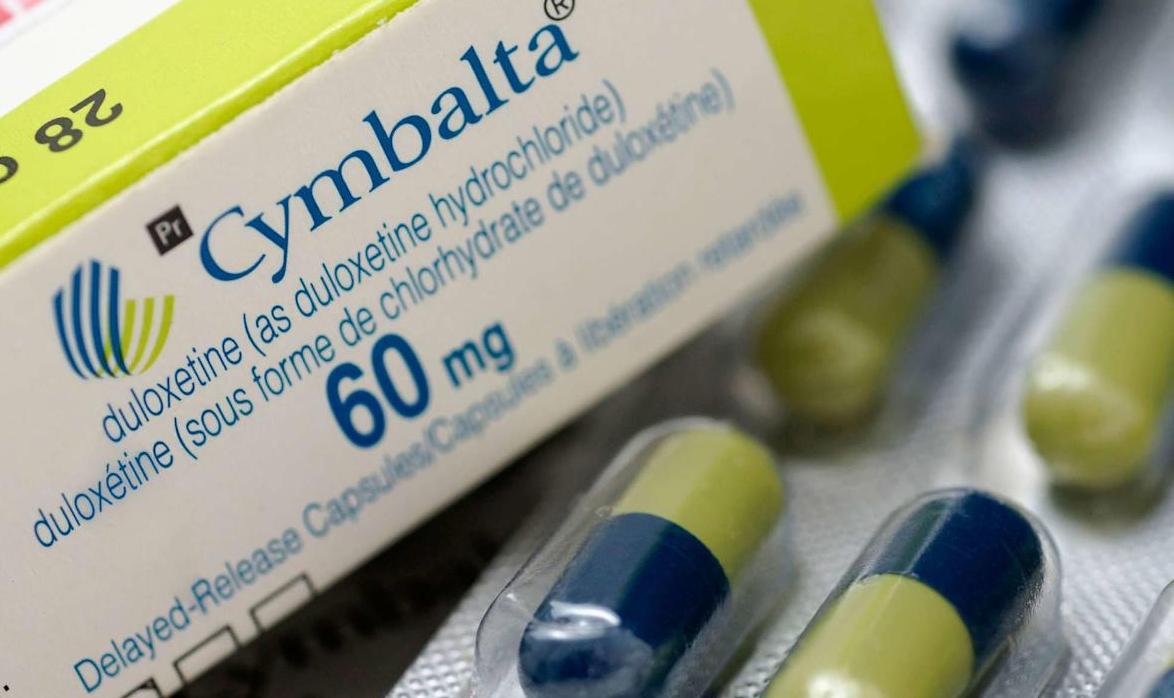
Duloxetine (Cymbalta) is an ‘antidepressant’ brought to you by Eli Lilly, the same pack of corporate criminals who unleashed the highly toxic fluoxetine (Prozac) back in 1986.
Thanks to clever marketing, duloxetine is the most popular selective serotonin–norepinephrine reuptake inhibitor (SSNRI), a class of drugs that supposedly constituted a new, improved version of those absurdly overhyped and ineffective toxins known as SSRIs.
Duloxetine was first approved in the US by the systemically corrupt and industry-funded FDA in 2004. One of the Lily researchers listed on the patent for this poison is David T. Wong, who was also involved in the development of Prozac.
Duloxetine was a problematic drug from the outset.
In 2001, Lilly filed a New Drug Application (NDA) for duloxetine with the FDA. In 2003, however, the FDA recommended the NDA as “NOT APPROVABLE from the manufacturing and control standpoint … based on significant cGMP (current Good Manufacturing Practice) violations at the finished product manufacturing facility Eli Lilly and Co., Indianapolis.” (Bold emphasis and all-caps in original).
Additionally, Lilly’s own data showed duloxetine was hepatotoxic, with the FDA writing: “Use of duloxetine in the presence of ethanol may potentiate the deleterious effect of ethanol on the liver.”
Given that self-medication with alcohol is not uncommon among depressed folks, this should have raised a major red flag.
But not to worry; the manufacturing issues were “resolved”, and a liver toxicity warning was included in the prescribing information, which very few people read.
The duloxetine story already stinks, but rest assured, I’m just getting started.
Duloxetine: Ending Depression via Suicide
In response to revelations about pharmaceutical companies routinely burying unfavourable studies, in 2004 industry lobbying giant PhRMA launched an online trial registry at clinicalstudyresults.org. The US member companies of PhRMA had reportedly committed to registration of all hypothesis-testing clinical trials at the website and also to the timely disclosure of summary results, regardless of outcome.
They were so committed to this noble goal that the website was abandoned in 2011. Before it was shut down, researchers Shannon Hughes, David Cohen and Rachel Jaggi visited the website and retrieved trial summaries in the antidepressant and antipsychotic categories. They wanted to compare the incidence of adverse events reported in these summaries with that seen in the far more widely-read published journal articles for the same trials. To facilitate this comparison, they included trial summaries with completion dates on or before 2008, which allowed around 2.5 years for these trials to appear in the peer-reviewed literature.
The researchers found trial summaries for six drugs in the relevant categories: Three anti-psychotic agents, an ADHD drug, a SSRI (sertraline) and a SSNRI (duloxetine). Hugh et al’s reanalysis of the studies involving those drugs found: “Most deaths (94/151, 62%) and suicides (8/15, 53%) reported in trial summaries were not reported in journal articles.”
When Hughes et al examined the data from Eli Lilly’s trials investigating duloxetine as a psychiatric intervention, they found thirty-five published studies reporting 33 suicidal events among those taking the drug.
However, the summaries for these same trials retrieved from the now defunct clinicalstudyresults.org listed 40 suicidal events among the duloxetine subjects. Hughes et al discovered another thirteen unpublished trials, for which the trial summaries reported a further 10 suicidal events among duloxetine subjects.
That means at least seventeen suicidal events were not reported. Evil Lilly instead chose a far less incriminating and far more Masonic number to report.
The mean age of the participants in these studies varied from 30.5 to 73 years. This further puts lie to the nonsensical claim by the FDA and all those industry-funded prostitutes masquerading as researchers who pretend the increased suicide risk imparted by antidepressants is confined to those under 24.
This magical disappearance of suicide data was also seen in Pfizer’s sertraline (Zoloft) studies. Of sixteen sertraline trials submitted to clinicalstudyresults.org by Pfizer from the early 2000s, only 7 were published – and only 2 of those 7 studies reported on adverse events.
The total number of “suicidal ideation, attempts, injury” reported in those two trials was zero (0).
However, the summaries for the seven published trials retrieved from clinicalstudyresults.org in fact showed 5 instances of suicidal behaviour, and the summaries for the 9 unpublished studies showed a further 10.
The mind boggles: Fifteen actual observed instances of suicidal behaviours, versus none reported in the published papers!
But hey, what can you expect from a serial corporate felon who for years held the record for biggest ever criminal fine in US history?
Eight of the Pfizer studies involved adult populations. In the summaries for those trials, the reported suicidal behavior included a fatal suicide by a male aged 53, two suicide attempts by females aged 37 and 22, and suicidal ideation in a 41 year old male.
The full text of the Hughes et al paper can be found here.
More Deadly Duloxetine Data
In 2016, researchers from the Nordic Cochrane Centre in Copenhagen, Denmark published an assessment of the suicide and violence risk posed by antidepressants when given to healthy adult volunteers with no signs of a mental disorder. As the Danish researchers noted, the suicide risks of antidepressants “have often been explained away as if they were disease symptoms or only a problem in children.” Their assessment included SSRI and SSNRI drugs.
After scouring the databases, they found 130 relevant RCTs. However, 97 trial reports did not describe the randomization method, 75 made no mention of discontinuations, 63 failed to report adverse events, and 2 crossover trials didn’t report data for each period separately.
Which meant only eleven of the 130 published trials contained the data required by the researchers for their meta-analysis. That pharmaceutical companies can succeed in getting drugs approved on the basis of such atrocious reporting is a further indictment on the state of both modern clinical research and health regulation.
Based on the data they had available, the researchers found treatment of healthy adult volunteers with antidepressants almost doubled their risk of suicide- and violence-related harm (odds ratio 1.85). Their analysis found that for every sixteen people treated with these drugs, one would suffer this type of harm.
Again, the increased risk was independent of age. In three of the 4 trials showing the greatest disparity in suicide rates, the mean age was above 25 years (i.e. 26, 38 and 43 years in the three antidepressant groups). The researchers concluded: “We consider it likely that antidepressants increase suicides at all ages.”
It is almost certain the true risk was underestimated. As the researchers noted, “There can be little doubt that we under-estimated the harms of antidepressants, as we only had access to the published articles for 11 of our 13 trials.”
In one of the two excluded crossover trials, a healthy volunteer committed suicide. She received duloxetine in increasing doses for sixteen days, tapered off the maximum dose of 400 mg daily in just 4 days, and killed herself 4 days later while on placebo. The authors, “several of whom were employees of Eli Lilly or owned stock in the company,” conveniently judged her suicide “to be unrelated to study drug treatment”, despite the well-known risks of stopping antidepressants abruptly. The Danish researchers asked Eli Lilly for access to anonymised data for the volunteer who committed suicide, as they wanted to know how the company could possibly state the suicide was unrelated to duloxetine. The company refused.
In another of Lilly’s studies, Traci Johnson, a healthy 19-year-old student who had taken duloxetine in order to help pay her college tuition, hanged herself. Her body was discovered on February 7, 2004, hanging by a scarf from a shower rod in an Indianapolis laboratory run by Eli Lilly. It turned out there was no record of Johnson and at least four other volunteers known to have committed suicide in FDA files, and Lilly admitted it never made public at least two of those deaths.
Duloxetine, like antidepressants in general, is a psychoactive toxin that raises the risk of suicide. The deadly effects of antidepressants have been known for decades, yet most people remain completely ignorant of the fact these drugs increase suicide risk.
As if all that wasn’t enough, duloxetine recently made the news for all the wrong reasons.
Thousands of Duloxetine Bottles Recalled Due to Carcinogen Contamination
A recent ‘voluntary’ recall involved 7,101 bottles of duloxetine delayed-release capsules distributed nationwide within the US.
The recalled capsules are manufactured by Towa Pharmaceutical Europe.
The recalled duloxetine capsules were found to contain a higher level of N-nitroso-duloxetine than permitted, according to the recall notice.
N-nitroso duloxetine is a chemical compound that can be toxic if swallowed in elevated concentrations and is suspected of potentially causing cancer. Given that patients are routinely prescribed antidepressants for years and often decades on end, the N-nitroso duloxetine concentration of duloxetine is a very real concern.
The FDA designated the voluntary recall of duloxetine bottles as a Class II recall. The agency defines that as “a situation in which use of, or exposure to, a violative product may cause temporary or medically reversible adverse health consequences or where the probability of serious adverse health consequences is remote.”
Anyone taking antidepressants who wishes to cease their use should not do so suddenly, but taper off them gradually. Statistically, the greatest risk of suicide is seen within the first four weeks of commencing antidepressants, the first four weeks after stopping them, and after changes in dosage.
My takeaway from your article is that doctors who prescribe this toxic shit are midwit assholes who will buy anything from a pharma company rep with big tits in a tight dress.
Even the name Eli Lilly contain masonic/occult references (Lilly being Lilith).
From what I have heard from people who take Cymbalta is that it is very difficult to stop taking because it is so highly addictive.
Wait a second, how is it possible that Eli Lilly is criminal when pure wholesome Caitlyn Clark makes public service ads on their behalf, answering questions from teens and children about their issues? She would never accept money to promote a harmful pharma company would she?
Anthony, do you have any articles about SSRIs in general. Or any good links to good info about them? Living with someone who is on them has been very difficult and they won’t listen to my concerns about them.
Read Dr Peter Breggin’s work, starting with https://breggin.com/Antidepressant-Drugs-Resource-Center.
And not to blow my own trumpet, but I have written a whole stack of thorougly-referenced articles on SSRIs, including https://robynchuter.substack.com/p/5-reasons-to-think-twice-before-taking, https://robynchuter.substack.com/p/antidepressant-discontinuation-syndrome, and https://robynchuter.substack.com/p/the-latest-depressing-news-on-antidepressant.
Thanks! I’ll read these too
Sorry for the slow reply, here are articles I’ve posted:
https://anthonycolpo.substack.com/p/warning-be-very-wary-of-antidepressants-and-the-companies-who-make-them
https://anthonycolpo.substack.com/p/the-great-ssri-scam-how-taking-anti-depressant-drugs-can-kill-you-part-1
https://anthonycolpo.substack.com/p/the-great-ssri-scam-how-taking-anti-depressant-drugs-can-kill-you-part-2
https://anthonycolpo.substack.com/p/the-great-ssri-scam-how-taking-anti-depressant-drugs-can-kill-you-part-3
https://anthonycolpo.substack.com/p/downright-depressing-antidepressants
https://anthonycolpo.substack.com/p/fluvoxamine-a-toxic-and-potentially
https://anthonycolpo.substack.com/p/steve-kirsch-memepool-a-tribute-to
I have a ton of info on these drugs. If you let me know what info you’re specifically seeking (eg. lack of efficacy, suicide risk, other side effects, manipulated trials, etc), I’ll be happy to point you in the right direction.
This is great! Thank you. I’ll start with these articles.
I feel helpless when I see my spouse taking these. He thinks he feels better but I think he’s acting almost manic. He is more difficult to live with now than he was when he was depressed. He’s also been gaining weight and drinking a lot more.
I feel for you Anneke your husband will be the last to realise that his behaviour has changed (I became like your husband on SSRI’s) , I felt that my completely inappropriate behaviour was normal, I then internalised the shame, the side effects creep up- there are so many articles and also peer reviewed papers about the dangers of these drugs, https://www.survivingantidepressants.org is a great site for info, https://madinamerica.com/ also. Just a few that I can think of just now. Lots of forums on social media- maybe search for the side effects you see + the drug and there will be a list of side effects. Also https://rxisk.org/antidepressants/
I hope this helps.
For people who are already on these dangerous drugs and want to get off them, I highly recommend the hyperbolic tapering protocols available at https://www.releasetoolkit.com.au/release-toolkit-for-consumers. They have been a godsend for many of my clients. If you’ve been on SSRIs or SNRIs for any longer than a few months, trying to come off them too quickly can be incredibly dangerous – even life-threatening. I once had a client who was told by her GP that she could just halve her dose of Efexor, which she’d been on for over 10 years, in one go. She was so tortured by akathisia (a relentless, persistent feeling of agitation, which many sufferers describe as being like ants crawling under your skin) that she drove her car into a tree, just to make it stop. Thankfully the car had airbags so she survived, but this dumb-ass GP’s advice could easily have killed her.
but the actors in the commercial look very happy so it must be fine